
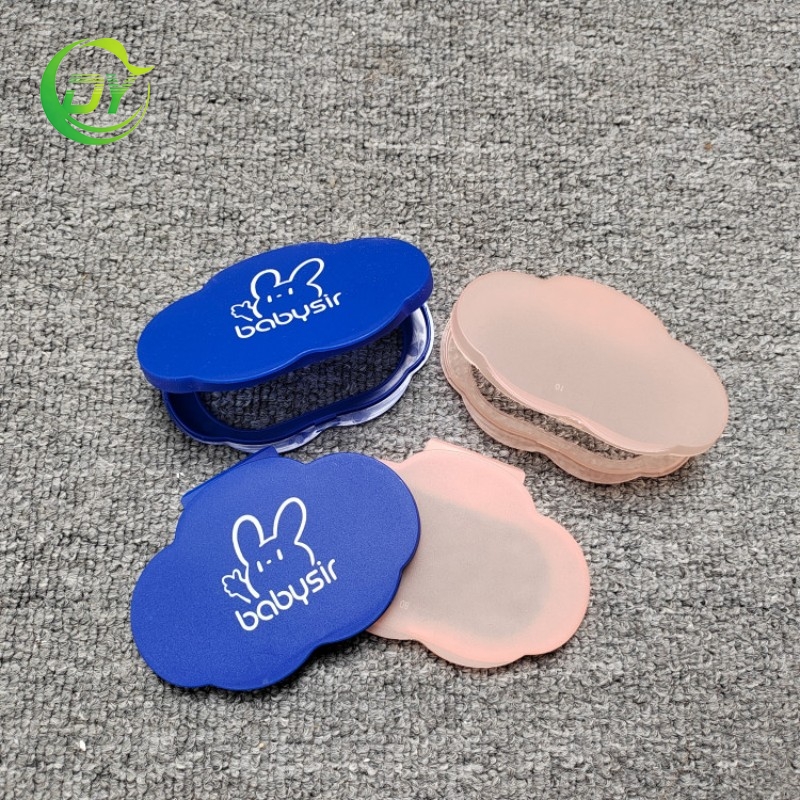
Cracked wet wipes lids can cause leakage, dry-out, poor shelf appeal, and customer complaints. Polypropylene, stress cracking, and living hinge design are the main technical terms buyers should understand. A PP wet wipes lid must resist opening force, transport impact, moisture, and chemical exposure. Injection molding quality also affects wall thickness, weld lines, and closure strength. In controlled product testing, a better material and structure can increase crack resistance by 30% to 60%, although the result depends on the lid design and test method. This guide from Dongyang explains how overseas buyers can select more reliable plastic wet wipes lids for wholesale.
1. What causes cracks in PP wet wipes lids?
Cracks usually begin when several small problems happen at the same time. A lid may look acceptable after molding but fail after repeated opening, cold storage, stacking, or long-distance shipping. The most common failure points are the hinge, snap-fit hooks, corners, screw areas, and thin sections around the dispensing opening.
Common crack triggers
- Low-grade or poorly blended polypropylene resin
- Too much recycled material without quality control
- Sharp corners and sudden wall thickness changes
- High injection pressure or incorrect mold temperature
- Weak living hinge geometry
- Stress from snap-fit closure assembly
- Contact with alcohol, fragrance, oil, or cleaning chemicals
- Impact during carton handling or cold transportation
Cracking is not always caused by one visible defect. A lid can fail because the polymer has internal stress from molding. The stress may remain hidden for days or weeks. When the lid is exposed to chemical vapors, low temperature, or repeated opening, a small mark can become a long crack.
2. How does PP material affect lid crack resistance?
Polypropylene is widely used for wet wipes lids because it is light, moisture resistant, easy to mold, and suitable for high-volume production. However, not every PP grade has the same impact strength or hinge performance. Buyers should ask whether the lid uses a homopolymer, a copolymer, or a tested blend for the intended application.
Material options for plastic wet wipes lids
| Material option | Main benefit | Possible weakness | Recommended use |
|---|---|---|---|
| PP homopolymer | Good stiffness and surface finish | Can be less impact resistant at low temperature | Standard lids used in stable indoor conditions |
| PP random copolymer | Better toughness and impact performance | May have slightly lower stiffness | Premium lids and cold-chain distribution |
| PP impact copolymer | Improved resistance to drops and transport impact | Needs careful molding for a smooth appearance | Large packs and export packaging |
| Controlled PP blend | Can balance flexibility, strength, and cost | Performance changes if the blend ratio is unstable | Customized wholesale projects |
For a flip-top wet wipes lid, toughness is often more useful than maximum hardness. A very hard material may resist surface scratches but crack around the hinge or snap-fit hook. A suitable PP grade should flex without whitening, splitting, or permanently deforming after repeated use.
Virgin resin and recycled content
Recycled PP can reduce cost and support sustainability goals. However, uncontrolled recycled content may contain different polymer grades, moisture, color particles, or degraded material. These factors can reduce impact strength and cause unstable molding. Dongyang recommends setting a clear recycled content limit and using batch testing when recycled material is part of the specification.
For demanding export packaging, buyers can request a material declaration, resin grade, color masterbatch information, and production batch record. These documents do not replace physical testing, but they help connect a crack complaint with the correct production data.
3. Which structural factors prevent cracks?
The structure of the lid controls how force moves through the part. A well-designed lid spreads stress over a wider area. A weak lid concentrates force at one sharp corner or thin wall. This is why two lids made from the same polypropylene material can have very different crack resistance.
Wall thickness and transitions
Sudden changes from a thick area to a thin area can create internal stress and uneven cooling. A smooth transition is safer than an abrupt step. Many PP lids perform better when the main wall thickness remains within a controlled range, such as 1.2 to 2.0 millimeters, depending on the product size and mold design.
Uniform thickness also helps reduce sink marks, warping, and weak cooling zones. The correct value must be confirmed by mold-flow analysis and product testing. Increasing thickness alone is not a complete solution because an oversized wall can increase shrinkage, weight, and molding stress.
Rounded corners and support ribs
Sharp internal corners act as stress points. A rounded corner with a suitable radius can lower stress concentration and reduce crack growth. Support ribs can improve stiffness around the dispensing opening, but ribs should not be too thick. Thick ribs may cool slowly and create shrinkage or internal stress near their base.
Living hinge design
The living hinge is one of the most important parts of a flip-top wet wipes lid. It bends each time the consumer opens and closes the package. A hinge that is too thin can tear. A hinge that is too thick may need excessive opening force and can crack after repeated cycles.
A reliable hinge normally uses a smooth hinge line, balanced thickness, and enough flex length. The mold gate location also matters. If the polymer flow creates a weld line across the hinge, the hinge may fail early. Buyers should request an opening and closing cycle test based on the intended product life.
Snap-fit hooks and closure force
A snap-fit hook must hold the lid closed without placing excessive stress on the surrounding wall. If closure force is too high, users may bend the lid sideways or press hard on one small area. This can create whitening, distortion, and cracks near the hook.
Good design balances retention force and user comfort. For a consumer wet wipes pack, the lid should close firmly while opening with a controlled force. The exact value depends on the lid size and customer requirements, so it should be measured with a force gauge rather than judged by hand alone.
4. How do molding conditions influence crack resistance?
Even a strong resin and good design can fail if the injection molding process is unstable. Resin temperature, mold temperature, injection speed, holding pressure, cooling time, and ejection force all affect the final lid.
Key injection molding risks
| Process issue | Effect on the lid | Possible corrective action |
|---|---|---|
| Low mold temperature | Poor flow and higher residual stress | Optimize mold temperature and filling speed |
| Excessive injection speed | Shear stress, burn marks, or weak weld lines | Use a staged filling profile |
| High holding pressure | Over-packing and ejection stress | Reduce pressure after the cavity is filled |
| Short cooling time | Deformation and stress after ejection | Allow stable cooling before removal |
| Poor gate position | Weak weld lines near the hinge or hook | Review flow direction and gate location |
Injection molding machines should be monitored by process data, not only by visual inspection. A stable process usually shows smaller variation in part weight, dimensions, opening force, and hinge performance. A weight difference of more than 2% between samples may indicate inconsistent filling or material feeding and should be investigated.
5. How can buyers test PP wet wipes lid crack resistance?
A useful test plan should copy the real risks faced by the finished product. Testing only a new lid at room temperature is not enough. A wholesale buyer should consider repeated use, transportation, low temperature, stacking, and contact with the wet wipes formula.
Recommended test sequence
- Check the lid appearance for short shots, flash, sink marks, weld lines, and whitening.
- Measure wall thickness, hinge dimensions, closure force, and key fitting dimensions.
- Open and close the lid for a defined number of cycles, such as 500 to 2,000 cycles.
- Drop filled packages from a specified height, such as 0.8 to 1.2 meters.
- Store samples at low temperature, then repeat opening and impact checks.
- Expose samples to the actual wipe liquid or a compatible chemical formula.
- Inspect cracks under normal light and, when needed, with magnification.
- Record results by mold cavity, production batch, and test condition.
Simple crack resistance workflow
- Define the lid size, resin type, formula, and expected product life.
- Identify high-risk areas, including the hinge, hook, corners, and dispensing hole.
- Make trial samples using the planned production mold.
- Test appearance, dimensions, closure force, hinge cycles, and drops.
- Repeat testing after heat, cold, and chemical exposure.
- Compare the failure location with the mold-flow and design records.
- Adjust material, structure, or process settings.
- Approve a golden sample and control future batches against it.
The most useful result is not simply pass or fail. Buyers should record the number of cycles before failure, the impact height, the temperature, and the exact crack position. This information helps the manufacturer select a practical solution instead of adding material cost without solving the real problem.
6. Material versus structure: which solution is better?
When a lid cracks, changing the resin is not always the best first step. If the crack is caused by a sharp corner or a weld line, a structural or molding adjustment may provide a faster improvement. If the lid fails after cold impact or chemical exposure, a tougher PP grade may be necessary.
| Observed failure | Likely cause | First solution to evaluate |
|---|---|---|
| Crack at the hinge after repeated use | Weak hinge geometry or weld line | Improve hinge length, flow direction, and thickness |
| Crack at a corner after dropping | Sharp corner or low impact strength | Add a radius and review impact copolymer PP |
| Crack near the snap-fit hook | High closure force or thin support wall | Balance hook design and local reinforcement |
| Fine cracks after storage with liquid | Environmental stress cracking | Check chemical compatibility and resin stability |
| Random cracks from different batches | Unstable material or molding process | Control resin batches and process parameters |
In many projects, a combined adjustment gives the strongest result. For example, a supplier may use a tougher PP grade, add a 0.5 to 1.0 millimeter corner radius, reduce residual molding stress, and improve hinge flow. The final result should be confirmed by the same test method used for the original lid.
7. What should overseas buyers ask a lid supplier?
Clear technical questions reduce the risk of receiving a lid that looks good but fails during distribution. Before placing a wholesale order, ask the supplier for the following information:
- What PP grade is used for the lid and hinge?
- Is the material virgin, recycled, or a controlled blend?
- What is the target wall thickness and acceptable tolerance?
- How many opening and closing cycles has the hinge passed?
- What drop height and temperature were used in testing?
- Was the actual wet wipes liquid used in compatibility testing?
- How are resin batches and color masterbatch controlled?
- How are mold cavities identified during quality inspection?
- What is the approved standard for whitening, flash, and visible cracks?
- Can the supplier provide samples from the intended mass production mold?
Samples made by a hand-finishing process or a different mold may not represent the final product. Dongyang recommends approving production samples that use the same resin, mold, color, and process conditions planned for the order.
8. How Dongyang supports crack-resistant wet wipes lid wholesale
Dongyang can help buyers review the complete lid system instead of focusing on material price alone. The review may include PP resin selection, hinge design, snap-fit force, wall thickness, mold flow, surface finish, and packing protection.
For new projects, the best approach is to define the application before tooling begins. Important information includes lid size, wipes formula, package weight, target opening cycles, shipping temperature, carton stacking conditions, and expected annual quantity. These details help the design team choose a suitable balance of toughness, stiffness, weight, and cost.
For existing products, failure analysis should begin with the crack location and test history. Dongyang can compare samples from different batches, inspect the hinge and closure area, and suggest a material, structural, or process change. A measured improvement, such as a 30% increase in cycle life or a lower failure rate after drop testing, is more useful than a general claim of high quality.
Conclusion: a reliable PP lid needs the right material and structure
Crack resistance in PP wet wipes lids depends on more than polypropylene selection. Resin toughness, recycled content, wall thickness, rounded corners, living hinge geometry, snap-fit force, mold flow, cooling, and chemical compatibility all work together.
For overseas buyers, the safest purchasing plan is to define the use conditions, approve production-equivalent samples, and test the lid after repeated use, impact, temperature change, and liquid exposure. A supplier that controls both material and structure can reduce leakage complaints and improve product life. With controlled design and testing, Dongyang helps distributors source plastic wet wipes lids that are more stable for high-volume wholesale markets.