
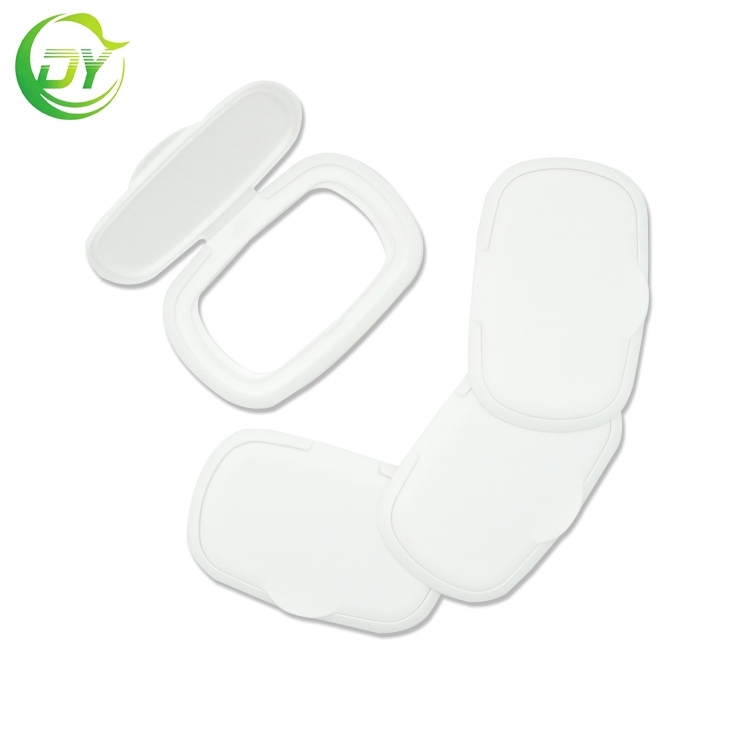
Custom Logo Options for Plastic Wet Wipes Lids help wet wipe brands improve shelf visibility and protect product quality. Good packaging design can make a lid easier to recognize and use. A clear logo also supports brand recognition in stores and online listings. However, many buyers are unsure which printing method, plastic grade, or logo size will provide the best result. A reliable tamper evident closure must open smoothly while keeping the pack sealed during transport. The lid must also match the wet wipes pouch, container, and filling process. Polypropylene material is widely used because it offers a balance of impact strength, chemical resistance, and cost.
The best custom logo option for a plastic wet wipes lid depends on order volume, logo detail, color needs, and the required surface finish. Embossing or debossing gives a durable one-color effect with no added ink. Screen printing suits simple one or two-color logos. Hot stamping creates a metallic finish for premium products. For most Plastic Wet Wipes Lid Wholesale orders, a polypropylene lid with a 35 to 55 mm logo area, a secure snap fit, and 100 percent visual inspection provides a practical balance of cost, appearance, and performance. A supplier should confirm the lid dimensions, artwork, color standard, adhesion, opening force, and sealing performance before mass production.
An embossed logo is raised above the lid surface. A debossed logo is pressed into the surface. Both methods use a mold or engraved tool instead of liquid ink. The result will not fade because of normal rubbing or contact with a hand.
Embossing works well for bold letters, short brand names, and simple symbols. A line width of about 0.4 mm or more is normally easier to reproduce than very fine artwork. A logo depth or height of about 0.2 to 0.5 mm can create a visible effect without making the lid difficult to mold.
Screen printing places ink on the top surface of the lid. It is suitable for one-color and two-color logos. This method gives more design freedom than embossing because it can reproduce fine text and flat color areas.
The supplier should test ink adhesion on the selected plastic resin. A cross-cut adhesion test based on ISO 2409 can help measure whether the ink stays attached. For a high-quality result, the printed area should remain clear after rubbing, storage, and contact with common hand lotions or cleaning agents.
Hot stamping transfers a thin foil layer to the lid with heat and pressure. Gold, silver, white, and other foil colors can create a premium appearance. This option is often used for baby wipes, cosmetic wipes, hotel wipes, and gift packs.
Typical production settings must be adjusted for the lid material, foil type, pressure, and dwell time. The supplier should confirm that the foil remains attached after a tape adhesion test and repeated opening cycles. Excess heat can deform a thin lid, so process control is important.
A label can provide photographs, color gradients, or complex artwork. In-mold decoration places a printed film into the mold during production. Both options support more detailed graphics than a raised logo.
These methods require accurate control of film thickness, position, and bonding. They may also increase tooling and setup costs. Buyers should ask whether the decoration can withstand moisture, alcohol residue, and repeated handling.
| Logo method | Best use | Color range | Durability focus | Cost level |
|---|---|---|---|---|
| Embossing or debossing | Simple, durable brand marks | Lid color or contrast by design | Very good against rubbing | Medium tooling cost |
| Screen printing | Text and one or two-color logos | One to two spot colors | Depends on ink adhesion | Low to medium |
| Hot stamping | Metallic and premium designs | Gold, silver, white, and other foils | Good after adhesion testing | Medium |
| Label or in-mold decoration | Detailed images and full-color artwork | Multiple colors | Depends on film and bonding | Medium to high |
A custom logo is only useful when the lid performs well. The lid must match the pouch opening, adhesive area, and wipe dispensing hole. Common wet wipes lids use polypropylene, also known as PP. Some products use high-density polyethylene or a mixed plastic design.
Before approving the artwork, confirm these physical parameters:
| Parameter | Typical working range | Why it matters |
|---|---|---|
| Lid outer length | 70 to 150 mm | Must fit the pouch width and logo layout |
| Lid outer width | 45 to 90 mm | Affects opening comfort and package appearance |
| Plastic wall thickness | 1.2 to 2.5 mm | Influences strength, weight, and mold filling |
| Logo area | 35 to 55 mm wide for many standard lids | Provides readable space without reaching the edges |
| Snap fit clearance | Usually controlled within 0.1 to 0.3 mm | Supports consistent opening and closing |
| Logo position tolerance | Often within plus or minus 1.0 mm | Keeps the mark centered and consistent |
These ranges are starting points, not universal specifications. The final dimensions must be confirmed with the pouch, filling machine, and mold design.
A lid that is too loose may open during shipping. A lid that is too tight may be difficult for the end user. The target opening force depends on the lid shape, hinge, snap structure, and customer group.
Many manufacturers set an internal opening force target between 8 and 25 N for a standard plastic wipes lid. The exact value should be confirmed through user testing and package trials. A resealing test can include 10 to 20 opening and closing cycles. The lid should remain attached, close evenly, and maintain contact with the adhesive area.
Small logos may look clear on a computer screen but become difficult to read after molding or printing. For most wet wipes lids, a main brand name with a letter height of 3 to 8 mm is easier to recognize. Fine lines below 0.3 to 0.4 mm may fill in during printing or become weak during embossing.
Leave a clear margin around the logo. A space of 2 to 4 mm from the lid edge can reduce visual crowding and protect the design from trimming or molding variation.
Vector artwork is preferred because it can be scaled without losing line quality. The buyer should state whether the logo uses CMYK, Pantone spot colors, or a single molded color. Plastic color can change how ink appears. A white base layer may be needed when printing a light logo on a dark lid.
A supplier can use a spectrophotometer to compare printed color with the approved reference. A common internal target is a Delta E value of 2 to 3 or less for controlled spot colors. The allowed value depends on the brand standard, plastic surface, and viewing conditions.
Polypropylene resin should be checked against the approved material specification. The inspection may include material grade, color, batch number, moisture condition, and supplier certificate. The lid should not have a strong odor, visible contamination, or excessive black spots.
For products sold in regulated markets, buyers may request documentation related to food contact, cosmetic packaging, or general consumer product requirements. The correct documentation depends on the wet wipe formula and destination market.
During injection molding, operators should monitor injection pressure, mold temperature, cycle time, cooling time, and part weight. A stable process reduces warpage and improves snap-fit performance.
Typical inspection points include:
Visual inspection should use a fixed light source and a defined viewing distance. For example, inspectors may check the lid at 30 to 50 cm under 600 to 1,000 lux lighting. The inspection standard should define acceptable limits for dust, color variation, print offset, missing ink, and foil wrinkles.
Logo position can be measured with a template or vision inspection system. A common target is a position tolerance of plus or minus 1.0 mm. The buyer may set a tighter tolerance for premium packaging.
Functional testing should use the real pouch and wet wipe formula whenever possible. A basic test plan may include the following:
| Test | Example method | Example acceptance target |
|---|---|---|
| Opening and closing | Manual or force gauge test | Smooth movement with no hinge crack |
| Opening force | Digital force gauge | Common target of 8 to 25 N, based on design |
| Resealing cycles | Open and close the lid 10 to 20 times | No broken hinge or loose snap fit |
| Print adhesion | Cross-cut tape test based on ISO 2409 | Result set by the approved quality level |
| Drop test | Packaged sample dropped from 0.8 to 1.0 m | No detached lid or major pouch damage |
| Transport simulation | Carton vibration and handling test | No widespread scuffing or lid opening |
| Moisture exposure | Store samples with wet wipes for 7 to 14 days | No major swelling, color loss, or adhesive failure |
ASTM D4169 or ISTA procedures may be selected for more formal distribution testing. The correct procedure depends on carton size, shipping method, product weight, and destination. These tests do not replace market-specific regulatory review.
Plastic wet wipes lid wholesale pricing depends on the plastic resin, lid size, mold structure, decoration method, order quantity, packing method, and inspection requirements. Tooling is usually a separate charge from the unit price.
| Cost factor | Lower-cost option | Higher-cost option |
|---|---|---|
| Logo design | One-color screen print | Full-color film or in-mold decoration |
| Surface effect | Standard smooth texture | Custom texture, embossing, or dual finish |
| Material | Standard PP grade | Special color, recycled-content grade, or certified grade |
| Tooling | Simple single-cavity prototype | Multi-cavity production mold with custom inserts |
| Inspection | Standard visual inspection | Dimensional, force, adhesion, and transport testing |
| Order quantity | Small trial order | Large production order with stable monthly demand |
Dongyang is known for manufacturing support, mold development, and plastic processing services. A supplier in Dongyang can often coordinate mold design, injection molding, logo decoration, assembly, and export packing in one production plan.
For a controlled development project, the engineering team can record the number of design revisions, mold trial results, sample approval date, and first article inspection data. A practical project record may include two to four drawing revisions, one to three mold trials, and at least 30 first article samples for dimensional and functional checks. The exact quantities depend on the mold structure and buyer requirements.
Useful equipment for custom plastic wet wipes lids includes injection molding machines, mold temperature controllers, digital force gauges, calipers, height gauges, colorimeters, adhesion test tools, vision inspection cameras, and carton vibration equipment.
For a production order, the supplier should define a sampling plan. An ISO 2859-1 based inspection plan may use a normal inspection level and an agreed acceptable quality limit. Many buyers choose a critical defect limit of zero, a major defect limit near 1.0 percent, and a minor defect limit near 2.5 percent. These values must be agreed in writing before production.
The logo should remain the main visual element. Supporting information may include wipe type, count, fragrance status, opening instructions, or recycling information. Keep important text away from the hinge and snap areas.
Keep the approved drawing, golden sample, color reference, mold number, and inspection report. These records reduce variation when the product is reordered. If monthly demand is known, the supplier can plan resin, decoration materials, mold capacity, and carton space more accurately.
Custom Logo Options for Plastic Wet Wipes Lids include embossing, debossing, screen printing, hot stamping, labels, and in-mold decoration. The right choice depends on logo detail, color requirements, order quantity, budget, and expected product life. A successful Plastic Wet Wipes Lid Wholesale project should confirm material, dimensions, logo position, opening force, resealing cycles, color control, and adhesion testing before mass production. By using clear artwork, measurable specifications, and documented inspection steps, brands can obtain reliable custom lids from a qualified supplier in Dongyang or another established manufacturing area.