
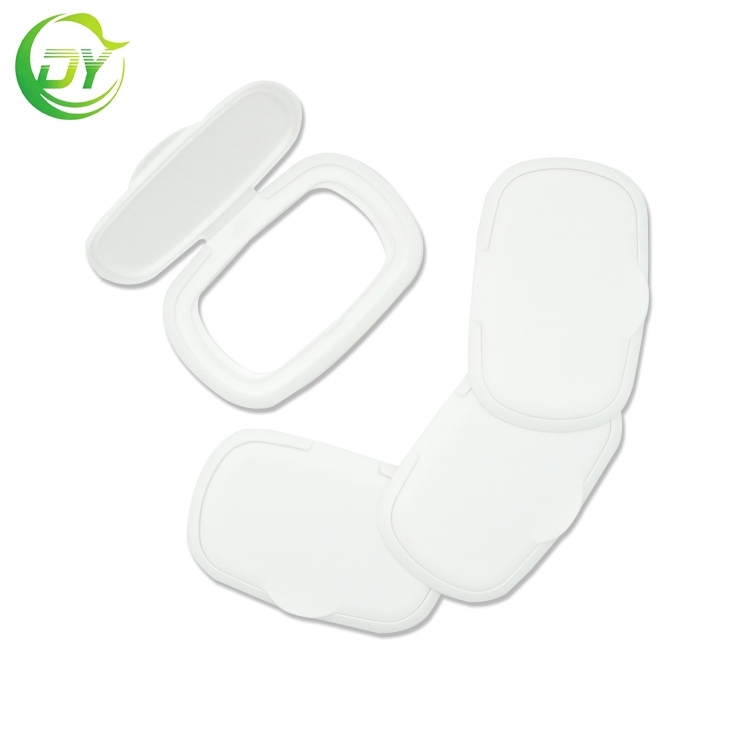
Plastic Wet Wipes Lid Wholesale buyers need a stable mold that can produce clean, safe, and consistent lids at a controlled cost. Poor wet wipes packaging can cause drying, leakage, weak hinges, and slow production. A lid may look simple, but it must fit the pack, protect the wipes, and open smoothly. A reliable flip top lid must also support high-volume filling and packing lines. The mold design affects part weight, cycle time, surface quality, and material waste. Careful injection molding development helps move a product from a drawing to mass production with fewer changes.
Custom wet wipes lid mold development should follow a controlled process: confirm the lid drawing, select the PP material, complete mold flow analysis, build and test the mold, inspect samples, run a pilot batch, and then release the mold for mass production. A well-designed mold normally controls key dimensions within about 0.05 to 0.15 mm, supports a cycle time of about 10 to 18 seconds, and uses documented tests for hinge life, opening force, fit, leakage, and surface quality. Working with an experienced wet wipes lid manufacturer in Dongyang can reduce design changes and improve delivery control.
The first stage is to convert the product idea into measurable specifications. A drawing should include the lid length, width, height, wall thickness, opening size, hinge design, snap-fit details, and attachment method. It should also state the packaging film or container type that will receive the lid.
A common PP plastic lid for wet wipes has a wall thickness between 1.2 and 2.0 mm. The outside length may range from 90 to 180 mm, depending on the pack size. The lid opening must match the wipe outlet. A mismatch of only 1 mm can make wipes difficult to pull out or allow the pack to dry faster.
Baby wipes packaging usually requires a smooth surface, rounded edges, and reliable closure force. Household cleaning wipes may need stronger chemical resistance. Medical and personal care products may require suitable raw materials, controlled production conditions, and traceable inspection records.
| Requirement | Typical target | Why it matters |
|---|---|---|
| Lid fit | Uniform contact around the pack opening | Reduces air entry and leakage risk |
| Opening force | About 8 to 25 N, based on user testing | Allows easy opening without accidental release |
| Closure force | About 15 to 40 N | Keeps the lid closed during transport |
| Part weight | Controlled within about plus or minus 3 percent | Supports cost and material control |
| Hinge life | At least 5,000 open and close cycles for development testing | Checks repeated consumer use |
A custom plastic wet wipes lid mold development project must balance part quality, production volume, mold cost, and delivery time. A single-cavity mold may suit a new product or low monthly demand. A multi-cavity mold is more suitable for wholesale orders and automated production.
| Mold type | Typical use | Main benefit | Main limitation |
|---|---|---|---|
| 1 cavity | Prototype and low-volume orders | Lower initial cost and faster design changes | Lower output per hour |
| 2 to 4 cavities | Small and medium production | Good balance of cost and output | Requires cavity balance |
| 8 to 16 cavities | Large-scale wholesale production | High output and lower piece cost | Higher mold cost and stricter maintenance |
For a high speed injection mold for wet wipes lids, the filling system must deliver equal pressure to every cavity. Uneven filling can create different weights, short shots, flash, and hinge weakness. Mold flow analysis should review filling time, pressure, weld lines, air traps, cooling balance, and shrinkage before steel cutting.
Pre-hardened steel such as P20 may be suitable for lower production volumes. Hardened steels such as H13 or S136 may be selected for higher output, better wear resistance, or improved corrosion resistance. The steel choice should match the expected number of shots, resin type, surface finish, and maintenance plan.
The mold design stage turns a 2D or 3D product drawing into a working production tool. The engineering team should review draft angles, parting lines, undercuts, ejection points, gate location, cooling channels, and maintenance access.
A draft angle of about 0.5 to 1.5 degrees can help release many smooth surfaces. Textured surfaces may need a larger angle. Sharp internal corners can increase stress and cause sink marks. Small radii, often between 0.3 and 0.8 mm, can improve material flow and reduce cracking.
The gate should be placed away from visible areas when possible. A balanced hot runner can reduce runner waste in a multi-cavity tool. A cold runner may be easier to maintain and may suit a lower volume project. The best option depends on the lid design, order volume, and material grade.
After design approval, the mold enters machining, heat treatment, polishing, assembly, and trial production. Each stage should have an inspection record. This process is important for a wet wipes lid wholesale supplier because even a small dimensional error can affect thousands of parts.
Typical equipment may include CNC machining centers, electrical discharge machines, wire cutting machines, precision grinders, laser marking equipment, injection molding machines, coordinate measuring machines, digital calipers, micrometers, and force gauges.
| Inspection item | Suggested equipment | Example control target |
|---|---|---|
| Part length and width | Coordinate measuring machine or calibrated caliper | Within drawing tolerance |
| Wall thickness | Micrometer or ultrasonic thickness gauge | Within about plus or minus 0.05 mm at key areas |
| Part weight | Precision digital scale | Average weight within plus or minus 3 percent |
| Opening and closing force | Digital force gauge | Recorded in Newtons for each trial batch |
| Color | Colorimeter | Compared with approved color sample |
| Leakage and closure | Vacuum or pressure test fixture | No visible failure during agreed test time |
| Hinge performance | Cycle testing fixture | Target commonly 5,000 or more cycles |
Sample approval should cover appearance, dimensions, fit, function, and packaging performance. The sample is not ready for mass production only because it looks correct. It must work with the actual wipes pack and filling process.
A tamper evident lid may be tested by checking the tear strip, break point, or first-opening indicator. A flip top wet wipes lid should open at the designed angle and remain connected to the pack. The hinge should not whiten, crack, or detach during repeated use.
Leak resistance testing can include an inverted pack test, pressure testing, and transport simulation. For example, a development team may test filled samples at room temperature for 24 to 72 hours. The test plan can also include storage at 5 degrees Celsius and 40 degrees Celsius to check changes in fit and material behavior.
Testing plans may refer to ISO 2859-1 sampling methods for lot inspection, ISO 527 for plastic tensile properties, ISO 178 for flexural properties, and ASTM D638 for tensile testing. These references should be used according to the product risk and the buyer's quality agreement. Food contact, cosmetic, and personal care packaging may also require material compliance documents for the target market.
The transition to mass production should be based on approved samples and stable process data. A pilot run can reveal problems that are not visible during a short mold trial.
| Process parameter | Common development range | Control purpose |
|---|---|---|
| PP melt temperature | About 190 to 230 degrees Celsius | Supports filling without excessive degradation |
| Mold temperature | About 20 to 50 degrees Celsius | Controls appearance and shrinkage |
| Cycle time | About 10 to 18 seconds | Controls output and production cost |
| Dimensional inspection frequency | First piece, hourly checks, and final lot checks | Detects process drift |
| Visual inspection | Continuous or sampling inspection | Reduces flash and appearance defects |
Actual settings must be confirmed through machine trials. They change with the resin grade, lid size, cavity count, mold cooling design, and machine capacity.
Wholesale buyers often compare the lowest mold price. A better comparison includes output, maintenance, part quality, and total cost over the expected order volume.
| Comparison factor | Basic mold solution | High-output custom solution |
|---|---|---|
| Initial tooling cost | Lower | Higher |
| Cavity count | 1 to 4 | 8 to 16 or more |
| Output per cycle | Lower | Higher |
| Runner system | Often cold runner | Often balanced hot runner |
| Automation level | Manual or semi-automatic | Suitable for automated take-out |
| Best use | New product validation | Stable wholesale demand |
| Cost focus | Lower upfront investment | Lower cost per part at volume |
Reliable production needs more than a good first sample. The mold and process must remain stable after thousands of cycles. A quality file should include the approved drawing, material certificate, mold design, inspection report, trial records, process sheet, maintenance schedule, and approved sample.
Basic maintenance may include cleaning the parting surface after each production run, checking ejector pins every 10,000 to 20,000 shots, lubricating moving parts according to the mold maker's instructions, and inspecting the hinge core, snap-fit inserts, and cooling channels at scheduled intervals.
A preventive maintenance plan can reduce unplanned downtime. The maintenance record should show the shot count, replaced components, repair date, and responsible technician.
Dongyang is known for manufacturing support across plastic products, molds, and injection molding. When selecting a supplier, buyers should review measurable experience rather than rely only on general claims.
For buyers looking for a PP wet wipes lid for baby wipes packaging, the supplier should also understand soft packaging film, adhesive bonding, product moisture retention, and consumer opening behavior. This combined knowledge helps prevent fit problems after the lid is attached to the finished pack.
| Problem | Possible cause | Practical solution |
|---|---|---|
| Flash around the lid | Excessive injection pressure or poor mold shutoff | Check clamp force, shutoff fit, and process pressure |
| Weak hinge | Improper hinge thickness, weld line, or poor cooling | Review hinge geometry and gate location |
| Warped lid | Uneven cooling or unbalanced filling | Improve cooling layout and cavity balance |
| Lid does not close | Incorrect snap-fit tolerance or shrinkage variation | Measure the mating parts and adjust the fit |
| Wipes dry too quickly | Poor seal, pack deformation, or weak closure | Test the complete pack, not only the lid |
| Color variation | Unstable masterbatch, material mixing, or temperature | Control the resin batch and mixing ratio |
| Slow production output | Long cooling time or manual removal | Improve cooling and review automation options |
Custom wet wipes lid mold development requires a clear drawing, suitable PP material, accurate mold design, controlled trial production, and documented quality testing. The best results come from checking fit, hinge life, closure force, leakage, appearance, and cycle time before mass production. For Plastic Wet Wipes Lid Wholesale projects, buyers should compare total production value instead of only the mold price. A qualified wet wipes lid manufacturer with measurable engineering and inspection experience can support the full process from drawing to mass production. With proper design reviews, mold flow analysis, pilot testing, and maintenance, a custom lid can provide stable quality and lower production risk.