
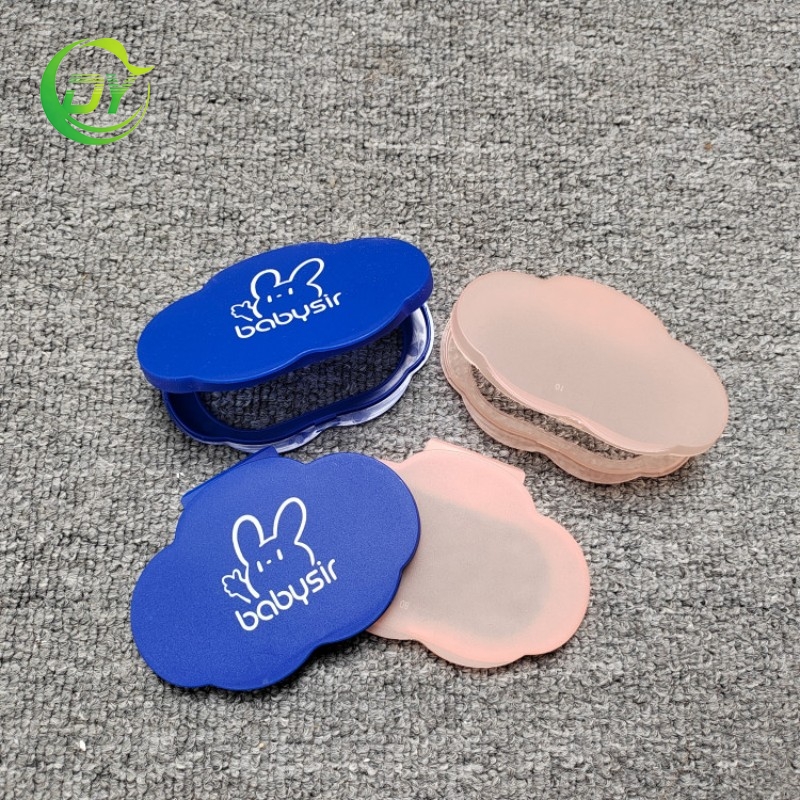
For most custom wet wipes lid projects, the practical minimum order quantity is 10,000 to 50,000 pieces, while new mold projects often require 50,000 to 100,000 pieces or more. A custom wet wipes lid can be made with a new color, logo, material, size, or structure. A plastic flip top lid for wipes also needs matching tests for fit, sealing, opening force, and production speed. The final MOQ depends on the lid design, tooling cost, order frequency, packaging method, and shipping plan. Buyers looking for wet wipes packaging should ask for a separate MOQ for samples, stock parts, custom decoration, and full production. This article explains each cost factor in simple terms so overseas distributors can plan a safe first order with Dongyang.
1. Quick Answer: What Is the MOQ for a Custom Wet Wipes Lid?
There is no single MOQ for every project. A buyer can often order fewer pieces when selecting an existing lid mold and a standard color. A fully new design usually needs a higher quantity because the mold, raw material, printing setup, and production testing must be spread across more units.
| Project type | Typical MOQ range | Best choice for |
|---|---|---|
| Existing lid, standard color | 5,000 to 10,000 pieces | Product testing and small distributor orders |
| Existing lid, custom color | 10,000 to 30,000 pieces | Brand color matching |
| Existing lid, logo printing | 10,000 to 50,000 pieces | Private label wet wipes |
| New mold and custom structure | 50,000 to 100,000 pieces | Large brands and long-term programs |
| Special material or decoration | 30,000 to 100,000 pieces | Premium or retail packaging |
These figures are planning ranges, not fixed rules. The exact quotation from Dongyang will depend on the lid drawing, dimensions, material, color standard, printing method, and delivery schedule. Ask the manufacturer whether the quoted MOQ applies to one design, one color, one size, or the total order.
2. The Main Factors That Affect Custom Wet Wipes Lid MOQ
2.1 Mold and tooling investment
The mold is often the largest reason for a high MOQ. Injection molds are made from steel or other hard materials and must be tested before mass production. A simple lid that uses an existing mold may need only 5,000 to 10,000 pieces. A new lid with a special hinge, inner seal, or opening shape may require 50,000 pieces or more.
When the design is complex, the mold may have more cavities and moving parts. This can improve production speed, but it also increases the initial cost. Manufacturers recover this cost through the total order value. A larger order lowers the tooling cost per lid.
2.2 Lid size and structure
A small round lid uses less plastic and may run faster than a large oval or rectangular lid. However, shape is only one part of the calculation. The manufacturer must also check the base diameter, snap fit, hinge thickness, sealing ring, and opening hole.
A basic hinged lid may have a lower MOQ than a lid with a leak-resistant valve or a child-resistant feature. Each additional part can require extra tooling, assembly, inspection, and production time.
2.3 Plastic material and resin availability
Common materials such as PP are widely available and usually support a lower MOQ. PP is often selected for a lightweight, durable wet wipes lid. Other materials, recycled resin blends, soft-touch compounds, or special barrier materials may require a larger material purchase.
Material color also affects quantity. Natural white and black resin are normally easy to source. A special color matched to a Pantone reference may need a custom masterbatch. If the supplier must buy a full color batch, the minimum material volume can become the real MOQ.
2.4 Custom color
Custom color is one of the most common requests from overseas buyers. The color may need to match the wet wipe bag, carton, or brand guide. A small order can be difficult when the color compound has a minimum purchase weight.
For example, if one lid weighs 4 grams and the color supplier requires 100 kilograms of compound, the color material alone could cover about 25,000 lids before production waste. This is why a custom color MOQ may be higher than a standard white lid MOQ.
2.5 Logo printing and surface decoration
Logo decoration can include hot stamping, silk screen printing, offset printing, embossing, or in-mold labeling. Each method needs different setup costs and production steps.
| Decoration method | Typical effect | MOQ concern |
|---|---|---|
| Screen printing | One or more simple logo colors | Screen setup and color registration |
| Hot stamping | Metallic or premium logo | Foil and stamping plate usage |
| Embossing | Raised or recessed brand mark | Extra mold or tooling work |
| In-mold labeling | Integrated printed label | Label production and exact positioning |
A printed logo may be possible at 10,000 pieces, but some suppliers set the minimum at 20,000 to 50,000 pieces. Buyers should ask if the printing MOQ is separate from the plastic lid MOQ.
2.6 Production line efficiency
Every production run has preparation time. The factory needs to install the mold, adjust the injection machine, clean the hopper, set the color, and check the first pieces. A short run may create more setup cost per unit than a long run.
If a factory produces 100,000 identical lids in one run, the setup cost is divided across many pieces. If it produces 5,000 pieces in five different colors, workers must change the material and settings five times. The total cost and MOQ may therefore rise even when the total piece count is similar.
2.7 Packaging and carton quantity
Wet wipes lid manufacturers usually pack lids in bags, cartons, or pallets. A standard carton may hold 1,000, 2,000, or 5,000 lids depending on the design. An order that does not fill complete cartons may create extra handling and counting work.
For international shipping, buyers should also consider pallet height, container loading, and carton strength. A higher order quantity may reduce the freight cost per lid. It may also prevent damage caused by loose or poorly packed components.
2.8 Quality control and product testing
A lid is not ready for shipment just because it looks correct. It must fit the wipes pack and remain closed during storage and transport. Common tests include opening force, hinge movement, snap strength, leak resistance, dimensional accuracy, and visual inspection.
Special markets may require additional tests for food contact, chemical safety, recycled content, or packaging regulations. These tests do not always change the MOQ directly, but their cost may make a small order less practical.
2.9 Shipping and inventory planning
The lowest factory MOQ is not always the lowest total purchasing cost. A buyer ordering 5,000 lids may pay more per unit for production and freight. A buyer ordering 30,000 lids may receive a better price and fill more efficient cartons.
However, holding too much inventory can create cash flow pressure. The correct quantity should match monthly sales, product shelf life, warehouse space, and the next production date. A useful starting calculation is:
Recommended lid order = monthly lid demand x planned stock months + quality or sales reserve.
For example, a distributor selling 8,000 packs per month may begin with 24,000 to 30,000 lids for a three-month supply. This quantity should be adjusted for damaged units, samples, and expected growth.
3. Stock Lid Versus Fully Custom Lid: Which Has the Lower MOQ?
Using a stock-compatible lid is usually the fastest way to reduce MOQ. The manufacturer already has the mold and production settings. The buyer may only need to select the color, printing, or packing method.
| Comparison point | Stock-compatible lid | Fully custom lid |
|---|---|---|
| Initial tooling | Usually not required | New mold may be required |
| MOQ | Often 5,000 to 30,000 pieces | Often 50,000 pieces or more |
| Sample speed | About 3 to 10 days, depending on decoration | About 15 to 45 days, depending on mold work |
| Design freedom | Limited to existing dimensions | High design flexibility |
| Unit price | Usually lower at the start | May become lower at large volume |
For a new brand, a stock-compatible plastic lid is often a sensible first step. After sales are proven, the buyer can move to a custom shape or special mechanism. This two-stage approach reduces financial risk and provides real market feedback.
4. Step-by-Step Process for Reducing Your Custom Lid MOQ
Buyers can often reduce MOQ by controlling the number of variables in the first order. The following process helps a distributor prepare a clear request and avoid repeated samples.
- Define the wet wipe pack size, lid dimensions, and opening style.
- Ask the manufacturer to check existing molds that match the pack.
- Select standard PP and a standard lid color for the first quotation.
- Request a sample for fit, hinge movement, closure, and appearance testing.
- Choose one logo method and provide a clear artwork file.
- Confirm whether color, printing, mold, and packaging have separate MOQs.
- Compare the price at 5,000, 10,000, 30,000, and 50,000 pieces.
- Approve the pre-production sample and written specifications.
- Place the order with an agreed inspection standard and delivery date.
- Plan the next order before stock falls below the supplier lead time.
This process turns an unclear request into measurable production information. It also helps Dongyang identify the most economical lid option for each buyer instead of quoting a high MOQ without explanation.
5. How Overseas Buyers Can Negotiate a Lower MOQ
MOQ negotiation works best when the buyer offers a practical production solution. Asking only for a lower quantity may not solve the factory's material and setup costs. Instead, discuss which parts of the order can remain standard.
- Use an existing lid mold instead of requesting a new structure.
- Choose one color for the first production run.
- Use one logo position and one printing color.
- Combine quantities for several purchase orders if the schedule is clear.
- Accept standard inner bags and cartons.
- Agree to a longer delivery schedule if it helps production planning.
- Pay the tooling or setup charge separately when suitable.
- Provide a forecast for the next three to six months.
A forecast does not always replace the official MOQ, but it gives the manufacturer confidence to reserve material and capacity. Buyers should also ask whether the factory can produce several colors in one consolidated order. This may be possible when the total quantity covers the material and setup requirements.
6. Questions to Ask Before Confirming the MOQ
A professional quotation should explain what is included. Before signing a purchase order, ask the following questions:
- Is the MOQ based on one color, one size, or the total order?
- Is the mold already available and suitable for our wet wipe pack?
- Does the price include color matching and logo printing?
- Are samples free, and who pays the shipping cost?
- What is the cost of a new mold and who owns it?
- What are the sample, production, and shipping lead times?
- What tests are completed before shipment?
- How many lids are packed in each carton?
- Can the supplier support repeat orders below the first MOQ?
- What happens if the order contains more than one color?
These questions protect the buyer from unexpected costs. They also help compare different suppliers on the same basis. A low unit price may not be attractive if it excludes the mold, printing plate, color charge, inspection, or export packaging.
7. A Simple Cost Example for MOQ Planning
Assume a distributor needs a standard flip top lid for a 60-count wet wipes pack. The distributor sells 6,000 packs each month and wants four months of stock. The basic demand is 24,000 lids. Adding a 5 percent reserve gives a target of about 25,200 lids.
If the buyer selects a standard mold, one color, and simple logo printing, a quotation near 25,000 to 30,000 pieces may be practical. If the buyer requests four colors at 6,300 pieces each, the total quantity is similar, but each color run is smaller. The factory may increase the MOQ or add a color setup charge.
| Order plan | Total lids | Production risk | Planning result |
|---|---|---|---|
| One standard color | 30,000 | Low setup complexity | Usually the best first-order option |
| Two custom colors | 15,000 each | Two material setups | May need a higher price |
| Four custom colors | 7,500 each | Small runs and more waste | May not meet the factory MOQ |
8. When Should You Choose a Higher MOQ?
A higher MOQ can be useful when the product has stable demand. Larger production runs often provide a lower unit price, better carton efficiency, and fewer production interruptions. They may also secure a color compound or material batch for future orders.
Choose a higher MOQ when monthly sales can consume the inventory within six to twelve months, the design is already approved, and the product has a clear repeat-order plan. Do not select a large quantity only to obtain a lower quoted price. Excess stock can become expensive if the wet wipe pack, artwork, lid specification, or market demand changes.
9. Final Recommendation for Custom Wet Wipes Lid Buyers
For most overseas buyers, the safest starting point is an existing wet wipes lid mold with one standard or custom color and one logo design. Plan for 10,000 to 30,000 pieces when testing a market, and consider 50,000 to 100,000 pieces when investing in a new mold or special structure.
The most important MOQ factors are tooling, material, color, decoration, production efficiency, packaging, quality testing, and inventory demand. Request a tiered quotation instead of one quantity only. Compare the landed cost at several volumes, confirm every setup charge, and approve a physical sample before mass production.
Dongyang can help buyers review the lid drawing, select a suitable plastic material, confirm packaging details, and build a production plan based on actual demand. A clear specification at the beginning makes the MOQ easier to control and reduces the risk of delays, incorrect fit, and unnecessary inventory.