
Moisture loss is one of the main causes of dry wet wipes, weak cleaning performance, and customer complaints. The solution begins with the package, especially the airtight seal, flip-top lid, and dispensing opening. These three parts control evaporation, reduce contamination, and help wet wipes keep their liquid during storage and transport. A good lid cannot fix a poor formula or damaged pouch, but it can protect the product from the moment the consumer opens the pack.
For overseas buyers and distributors, the lid is more than a plastic accessory. It affects shelf life, user experience, shipping safety, packaging cost, and brand reputation. This guide explains how a wet wipes lid retains moisture, which design features matter, how to test performance, and how to choose a reliable plastic wet wipes lid supplier.
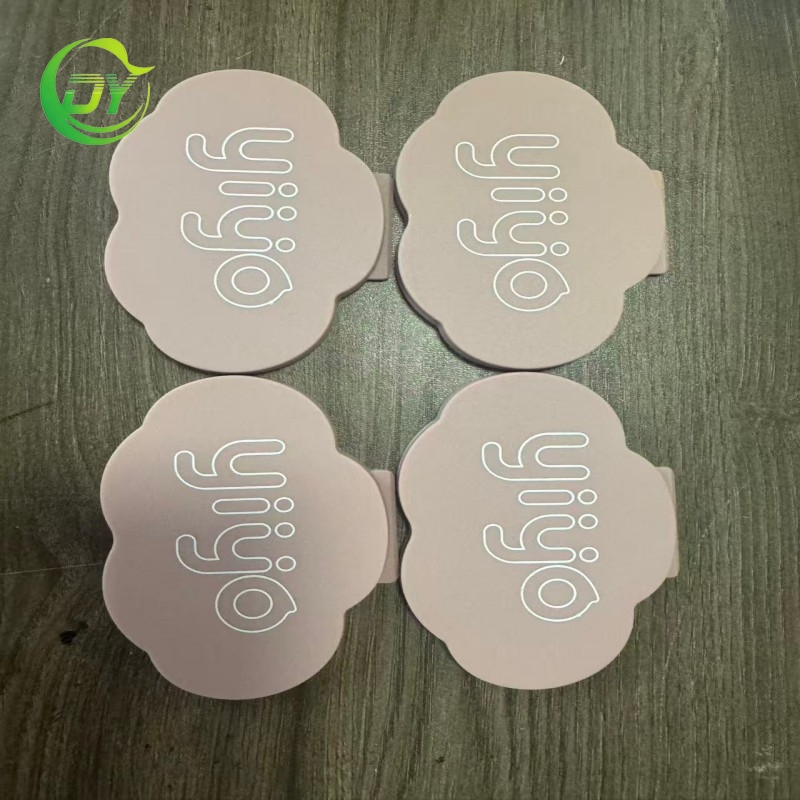
1. The Short Answer: What Does a Wet Wipes Lid Do?
A wet wipes lid covers the dispensing opening after each use. Its main job is to slow the movement of water and volatile ingredients from the pack to the outside air. It also helps prevent dust, bacteria, and accidental spills from entering the pack.
The best result comes from a complete packaging system. The flexible pouch or refill pack holds the liquid. The adhesive base connects the lid to the film. The lid cover provides a second closure. The dispensing hole controls how many wipes are pulled out. If any part is weak, moisture retention may decline.
Key conclusion for buyers
A well-designed lid can support moisture retention for a 12-month target shelf life, but the final result depends on film structure, seal quality, liquid formula, storage temperature, and opening frequency. Suppliers should confirm this target through real-time and accelerated testing instead of relying only on visual inspection.
2. Why Wet Wipes Lose Moisture
Moisture leaves a wet wipes pack when water vapor moves through the film, adhesive, lid, or dispensing area. This process is called permeation. It can happen even when there is no visible leak. A package may look closed but still lose liquid slowly over several months.
-
Air exchange through the opening
Every time a user opens the lid, dry air enters the pack. The larger the opening and the longer the lid stays open, the faster moisture can leave the upper wipes. A lid with a controlled opening reduces this air exchange.
-
Weak lid pressure
If the lid does not press evenly against the sealing area, small gaps may form. These gaps allow water vapor to escape. Uneven pressure can result from poor mold accuracy, a weak hinge, an incorrect adhesive base, or a cover that does not lock fully.
-
Film and seal problems
The pouch film may have low barrier performance, or the adhesive may not bond well to the film. Wrinkles, dust, and poor application pressure can create microchannels. These defects may cause leakage during transport and moisture loss during storage.
-
High storage temperature
Heat increases evaporation and can change the pressure inside the pack. A product stored at 40 degrees C may lose moisture faster than the same product stored at 23 degrees C. Export packaging should be checked for hot warehouses, containers, and retail shelves.
-
Repeated consumer use
A pack opened 20 times per week has a different moisture risk from a pack opened twice per week. Baby wipes, facial wipes, and household wipes may have different use patterns. The lid design should match the expected number of open and close cycles.
3. Lid Features That Improve Moisture Retention
| Lid feature | Moisture benefit | Buyer inspection point |
|---|---|---|
| Full perimeter seal | Blocks air and vapor around the opening | Check for continuous contact around all edges |
| Flexible sealing lip | Compensates for small film and lid surface changes | Check the lip shape, elasticity, and recovery |
| Firm snap closure | Maintains pressure after repeated use | Test opening and closing for at least 500 cycles |
| Strong hinge | Keeps the cover aligned with the base | Inspect for cracks, whitening, and loose movement |
| Controlled dispensing hole | Reduces unnecessary air exchange and wipe over-pull | Measure the opening and test different wipe materials |
| Suitable polypropylene material | Supports stiffness, chemical resistance, and stable closure | Request material grade and compatibility data |
The seal line matters most
Many buyers focus on color, logo printing, and lid shape. However, moisture retention depends more on the seal line than on appearance. A lid can look attractive but still allow evaporation if the sealing lip is too thin, the cover is warped, or the base is not attached evenly.
Dongyang recommends checking the complete contact path between the lid cover and the base. There should be no visible gap, sharp deformation, or incomplete pressure area. A simple paper strip test can show whether the cover presses evenly, but laboratory leak and weight-loss tests provide stronger evidence.
4. Flip-Top Lid Versus Adhesive Resealable Label
Both closure types can be used for wet wipes packaging. The right choice depends on product position, target price, opening frequency, and required shelf life.
| Comparison point | Plastic flip-top lid | Adhesive resealable label |
|---|---|---|
| Moisture protection after repeated use | Usually stronger when the seal and hinge are well designed | Can weaken when adhesive collects liquid or fibers |
| User convenience | Easy one-hand opening and closing | Requires careful alignment each time |
| Product appearance | Creates a premium, structured package | Supports a lighter and lower-cost pack |
| Durability | Suitable for high opening frequency | More affected by dust, moisture, and handling |
| Packaging cost | Higher component and application cost | Usually lower unit cost |
| Customization | Supports color, shape, logo, and surface options | Supports printed graphics with fewer molded features |
For baby wipes, makeup remover wipes, and premium personal care wipes, a plastic flip-top lid is often preferred because it gives a stronger closing experience. For promotional packs and low-cost travel packs, a resealable label may be suitable if the product has a short use period and strong barrier film.
5. How a Lid Works With the Whole Package
Moisture retention is not created by the lid alone. The lid, film, adhesive, liquid, and wipe material must work together. A high-barrier film with a poor lid may still lose moisture. A strong lid on a low-barrier film may also produce unsatisfactory results.
-
Liquid formula
Water, preservatives, oils, surfactants, and fragrance can affect evaporation and material compatibility. The lid material should not soften, crack, swell, or change color after long contact with the liquid.
-
Wipe substrate
Thick cotton-like wipes may hold more liquid than thin nonwoven wipes. The material can also pull liquid toward the opening. The dispensing test should use the actual wipe specification, not a similar sample.
-
Film barrier
Multilayer films can provide stronger resistance to vapor transmission than simple films. The package supplier should confirm film thickness, layer structure, and heat-seal performance for the target market.
-
Application process
The lid base must be placed in the correct position with enough pressure and a clean surface. Poor application can reduce the effective sealing area even when the lid itself meets its design specification.
System view
Think of the package as a series of barriers. The inner film controls vapor transmission. The adhesive base protects the cut opening. The lid cover provides a reusable barrier. The dispensing hole controls product access. Moisture performance is limited by the weakest barrier in this system.
6. Step-by-Step Moisture Retention Testing Process
Importers should ask for test evidence before placing a large order. A practical test compares the same wipes with different lid designs under the same conditions. Record the starting weight, liquid content, opening cycles, storage temperature, and final condition.
- Choose three production packs from at least three batches.
- Record the pack weight and the liquid weight at day zero.
- Store samples at normal conditions, such as 23 degrees C and 50 percent relative humidity.
- Store additional samples at an accelerated condition, such as 40 degrees C.
- Open and close each lid according to a defined use schedule.
- Weigh the packs at 7, 14, 30, 60, and 90 days.
- Inspect the top wipes for dryness, odor change, discoloration, and texture change.
- Calculate moisture loss as a percentage of the starting pack weight.
- Compare results with the buyer's shelf life and distribution requirements.
Flow chart: Sample selection - Initial weighing - Controlled storage - Repeated opening - Scheduled weighing - Wipe inspection - Moisture loss calculation - Pass or improve design.
Basic moisture loss formula
Moisture loss percentage equals the starting pack weight minus the final pack weight, divided by the starting pack weight, multiplied by 100. Use the same scale, temperature, and sample handling method throughout the test. A result from one pack is not enough to approve a production design.
| Test item | Suggested record | Why it matters |
|---|---|---|
| Opening cycles | 100, 300, and 500 cycles | Shows whether closure pressure remains stable |
| Normal storage | 23 degrees C, 50 percent relative humidity | Represents a controlled reference condition |
| Heat storage | 40 degrees C for accelerated comparison | Reveals weaknesses faster |
| Weight checks | At least 5 scheduled time points | Shows the moisture loss trend |
| Leak check | Visual, pressure, and transport inspection | Identifies liquid escape and package damage |
7. Common Lid Problems and Practical Solutions
Problem 1: The lid does not close completely
Possible causes: Warped cover, weak hinge, incorrect base position, or excess liquid around the seal.
Solution: Improve mold control, increase closure engagement, check the base application process, and test the lid with a wet and dry surface.
Problem 2: The first wipes are dry but the lower wipes are wet
Possible causes: Air enters through the dispensing hole, the opening is too large, or the cover remains open during use.
Solution: Reduce the opening size where practical, add a better sealing lip, and make the cover easier to close with one hand.
Problem 3: The lid leaks during shipping
Possible causes: Weak adhesive bonding, wrinkles under the base, high internal pressure, or compression from cartons.
Solution: Test peel strength, improve application pressure, use stronger film sealing, and perform vibration and compression tests before shipment.
Problem 4: The hinge cracks after repeated use
Possible causes: Excessive hinge thickness variation, brittle material, sharp corners, or unsuitable molding conditions.
Solution: Review polypropylene grade, hinge geometry, cooling control, and cycle testing. A reliable lid should remain functional after the expected consumer use cycles.
8. How Overseas Buyers Should Select a Lid Supplier
Price is important, but the lowest unit price may create higher costs through returns, relabeling, and customer claims. Buyers should evaluate both the component and the supplier's quality process.
-
Confirm the material
Ask whether the lid is made from polypropylene or another suitable plastic. Request information about liquid compatibility, color stability, and any recycled content requirements.
-
Review dimensional control
Check lid length, width, opening size, hinge position, and sealing lip dimensions. Small changes can affect fit and application speed.
-
Request production samples
Test samples on the actual film, wipe, and liquid formula. A lid that works on a factory sample may behave differently on another pouch structure.
-
Check cycle performance
Ask for opening and closing results at 100, 300, and 500 cycles. The cover should not become loose, cracked, or difficult to close.
-
Confirm order capacity
Discuss mold capacity, monthly output, lead time, packaging method, and spare part support. Stable supply is essential for distributors managing regular container shipments.
-
Discuss customization
Confirm custom color, logo, surface finish, lid shape, and packaging options. Dongyang can help buyers match a lid design with the product's market position and pack size.
9. How to Improve Moisture Retention Without Raising Cost Too Much
Start with the highest-risk area instead of changing every component. If the lid cover has weak pressure, improve the closure first. If the film has high vapor transmission, review the film structure. If the package loses liquid during transport, inspect the adhesive base and carton compression.
Standard lid sizes can lower tooling and inventory costs. A common color can shorten production time. A controlled dispensing hole can reduce wipe over-pull and lower product waste. These changes may improve consumer satisfaction without a major increase in the total package cost.
It is also useful to design the lid for the real user. A baby wipes pack may be opened many times each day. A disinfectant wipes pack may need stronger chemical resistance. A facial wipes pack may need a smooth appearance and low odor. The best lid is the one that fits the product and its use conditions.
10. Frequently Asked Questions
Can a wet wipes lid stop all moisture loss?
No. Every package can lose some moisture over time. The goal is to keep moisture loss within the product specification during the planned shelf life. Film barrier, liquid formula, seal quality, and storage conditions all affect the result.
Is a plastic flip-top lid better than a sticker lid?
It is often better for repeated opening and closing because it provides a fixed cover and stable alignment. However, a sticker lid may be suitable for low-cost products with a short use period. Testing on the actual pack is the best way to decide.
What material is common for wet wipes lids?
Polypropylene is commonly used because it offers a useful balance of stiffness, hinge performance, chemical resistance, and processing cost. The correct grade still depends on the liquid formula, color requirements, and production method.
How many opening cycles should buyers test?
A basic program can include 100, 300, and 500 opening cycles. The final number should reflect expected consumer use. High-use products may need a longer cycle test before approval.
What causes wet wipes to dry out in a sealed pack?
Common causes include vapor transmission through the film, an incomplete lid seal, a loose cover, a large dispensing opening, damaged adhesive bonding, high temperature, and repeated exposure to dry air.
What should a distributor ask a lid manufacturer?
Ask about material, dimensions, mold control, cycle testing, adhesive compatibility, sample approval, monthly capacity, lead time, customization, and quality inspection records. These details help reduce risk after the product reaches the destination market.
Conclusion: The Lid Is a Small Part With a Large Effect
Moisture retention in wet wipes packaging depends on a chain of barriers, and the lid is the barrier consumers use every day. A continuous seal, firm snap closure, durable hinge, suitable dispensing opening, and compatible polypropylene material can reduce evaporation and support a 12-month shelf life target.
For overseas buyers, the correct process is simple: define the shelf life, understand the use pattern, test the lid on the real package, measure weight loss, and confirm performance under transport conditions. Dongyang supports Plastic Wet Wipes Lid Wholesale projects with practical design options for personal care, baby care, household, and cleaning wipes. A well-tested lid protects moisture, reduces complaints, and helps the final product keep its value on the shelf.