
Plastic lids for personal care wet wipes must protect moisture, support easy opening, and fit the pouch without damage. The right package combines a secure flip top, a reliable pressure sensitive adhesive seal, and a clean injection molded surface. These features help wet wipe brands reduce drying, leakage, contamination, and customer complaints.
Personal care wipes are used on the face, hands, body, and sensitive skin. Their packaging must therefore do more than cover a dispensing opening. It must preserve lotion performance, provide smooth daily use, and match the safety expectations of overseas buyers and distributors. This guide explains the key requirements for selecting or developing plastic lids for wet wipes.
Dongyang supplies plastic wet wipes lids for private label brands, converters, importers, and wholesale distributors. The following checklist can help buyers compare lid designs before placing a bulk order.
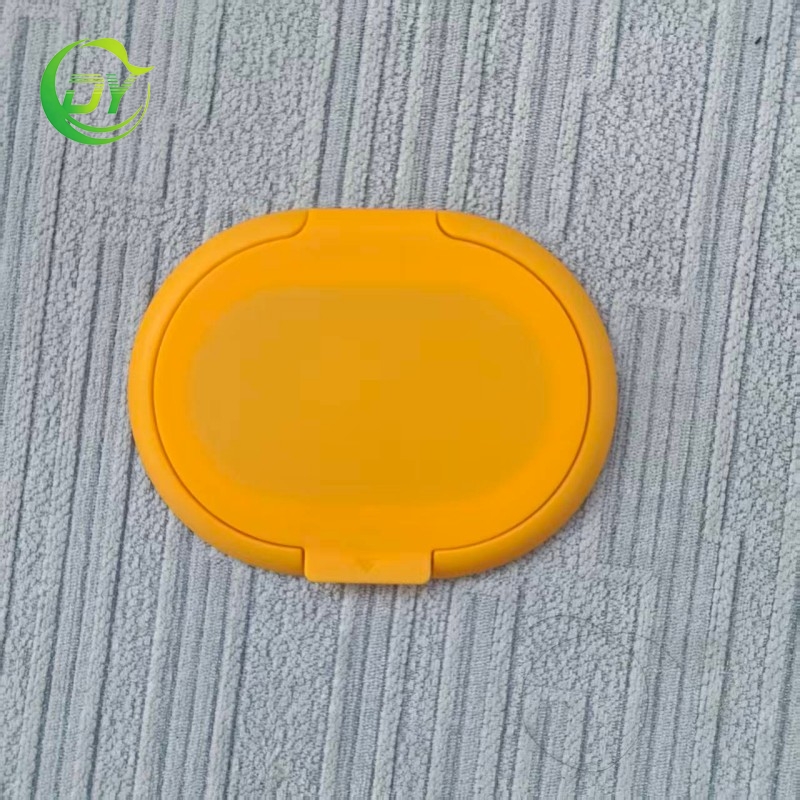
1. Moisture retention is the first packaging requirement
The main purpose of a wet wipe lid is to help keep the contents moist after the consumer opens the package. A weak lid can allow air exchange around the opening. Over time, the wipes may become dry, the lotion may change consistency, and the last wipes may be difficult to use.
How the lid helps prevent drying
A good lid works together with the inner seal and the pouch film. The lid should close evenly around the dispensing opening. Its hinge should keep the cover aligned, while the closing feature should provide enough pressure for repeated use.
The lid alone cannot create a complete moisture barrier if the pouch film, adhesive seal, or inner membrane is poor. Buyers should review the full package structure instead of judging only the plastic component.
| Packaging part | Main function | Common risk if poorly designed |
|---|---|---|
| Plastic flip lid | Protects the opening and supports repeated closing | Drying, loose closure, or broken hinge |
| Adhesive seal | Provides the first barrier before opening | Early leakage or weak resealing |
| Pouch film | Holds the wipes and liquid formula | Pinholes, swelling, or liquid loss |
| Dispensing opening | Controls wipe removal | Multiple wipes pulled out at once |
2. The closure must support one-hand daily use
Personal care wipes are often used while traveling, caring for a child, cleaning hands, or managing a busy routine. Users may need to open the lid with one hand. A good design should provide a clear finger point, smooth movement, and a stable closing position.
Important closure features
- A firm snap closure that gives clear feedback when closed
- A hinge that opens without excessive force
- A lid angle that does not block wipe removal
- A rounded edge that feels comfortable during use
- A cover that remains attached to the pouch
If the lid is too hard to open, some users may damage the pouch or stop using the cover. If it is too loose, the lid may open inside a bag. Both problems can increase product complaints.
Suggested usability checks
Manufacturers and buyers should test the lid with dry hands, wet hands, and limited hand strength. Testers can open and close the package repeatedly, remove one wipe, and place the pack in a bag. The evaluation should record opening force, closure sound, lid alignment, and damage after use.
3. Material selection must match the wipe formula
Most wet wipe lids are made from polypropylene, commonly called PP. PP is widely used because it is light, moldable, and suitable for a range of consumer packaging designs. However, the correct material grade depends on the lid thickness, hinge design, color, processing method, and formula contact conditions.
What buyers should review
- Material type and grade
- Odor performance
- Color consistency
- Resistance to the formula and moisture
- Flexibility at the hinge
- Suitability for the target market
Personal care wipe formulas may contain water, preservatives, cleansing agents, oils, fragrances, or botanical ingredients. The lid and adhesive should not show cracking, swelling, softening, or color change during storage.
Buyers should request a material declaration and test samples with the real wipe formula. A sample tested with water alone may not show the same result as a scented or oil-containing formulation.
4. The lid must fit the pouch and adhesive seal accurately
Dimensional matching is one of the most important requirements in wet wipe packaging. The lid must align with the pouch opening, adhesive seal, and printed area. A small mismatch can affect appearance, opening performance, and moisture protection.
Key dimensions to confirm
| Dimension | Why it matters | Buyer action |
|---|---|---|
| Overall lid length and width | Controls pouch appearance and available print space | Confirm with the pouch drawing |
| Opening size | Controls wipe removal and product access | Test with the folded wipe size |
| Adhesive contact area | Supports bonding to the pouch film | Check the seal width and surface |
| Hinge position | Influences lid movement and dispensing space | Review the opening angle |
| Stacking height | Affects cartons and shipping volume | Confirm packed case dimensions |
Before mass production, the buyer should approve a complete pouch sample. The lid should be tested after application, not only as a loose plastic part. This confirms whether the pouch film, adhesive, and lid work as one package.
5. The design should prevent contamination after opening
Personal care wipes may be used on skin, hands, or around infants. The lid should help keep dust, dirt, and contact from entering the dispensing area. A clean package design supports consumer confidence and protects the brand image.
Hygiene-focused design points
- Keep the inner dispensing area covered when not in use.
- Use smooth surfaces that are easy to wipe clean.
- Avoid deep gaps that can collect dust or lotion.
- Keep flash and sharp plastic edges under control.
- Use clean production and packing procedures.
The outer lid does not replace the primary seal used before the first opening. It is a secondary protection system for consumer use. The first-opening condition should be clearly visible so the user can identify whether the pack has been opened.
6. Mechanical strength must survive transport and repeated use
Wholesale wet wipe packs may travel by truck, container, air freight, and local delivery before reaching a store. Cartons can face vibration, compression, temperature changes, and rough handling. The lid should remain attached and functional throughout this process.
Recommended performance tests
- Inspect the lid for cracks, flash, deformation, and color defects.
- Apply the lid to the intended pouch using normal production conditions.
- Fill the pouch with the actual wipes and formula.
- Open and close the lid repeatedly to check hinge and snap strength.
- Place finished packs in shipping cartons and check compression.
- Perform drop or vibration testing based on the planned distribution route.
- Inspect the pack again for leakage, lid separation, and broken parts.
Testing should use production-equivalent samples. A loose lid, an empty pouch, or a small laboratory sample may not represent the final wholesale product.
7. Production quality and supply capacity affect total cost
A low unit price is not always the lowest packaging cost. A lid with poor consistency can cause line stops, rework, pouch waste, delayed shipment, and customer returns. Buyers should compare quality controls and supply reliability as well as quotation price.
Questions for a plastic lid supplier
- What plastic material and color system are used?
- What are the normal lid dimensions and tolerances?
- How are hinge strength and snap closure checked?
- Can the supplier match a custom color or logo?
- What is the minimum order quantity?
- What is the sample and mass production lead time?
- How are cartons packed for export shipping?
- Can the supplier support different pouch sizes?
Dongyang can discuss standard and custom plastic wet wipes lid options for personal care, baby care, household, and travel wipe packs. Buyers should provide pouch size, wipe count, formula information, lid color, artwork needs, and target order quantity for a more accurate evaluation.
Comparison: common lid choices for personal care wet wipes
| Option | Best use | Advantages | Points to check |
|---|---|---|---|
| Standard flip lid | High-volume everyday wipes | Simple use and efficient production | Closure fit and hinge life |
| Large opening lid | Thick or large wipes | Easier wipe removal | Moisture retention and pouch space |
| Small opening lid | Compact travel packs | Smaller package footprint | Risk of pulling several wipes |
| Custom color lid | Brand-focused retail products | Stronger shelf identity | Color matching and minimum order quantity |
Step-by-step process for developing a wet wipe lid
A clear development process reduces mistakes between the buyer, pouch converter, and lid supplier. The following flow is suitable for new products and packaging upgrades.
- Define the product: Confirm wipe type, count, lotion formula, pouch size, market, and intended use.
- Choose the opening: Select the dispensing opening based on wipe thickness and folded dimensions.
- Select the lid: Review standard dimensions, material, color, closure, and hinge structure.
- Check the pouch design: Match the lid with the film, adhesive seal, artwork, and application equipment.
- Approve samples: Test real filled packs for opening, closing, dispensing, leakage, and appearance.
- Complete validation: Perform storage, transport, and repeated-use checks based on the sales channel.
- Release production: Approve the final drawing, color, packing method, inspection plan, and order schedule.
Buyer checklist before placing a wholesale order
Use this short checklist during supplier comparison. It helps identify risks before the first container or full production order.
| Check item | Pass condition |
|---|---|
| Fit | The lid matches the pouch opening and adhesive seal |
| Closure | The cover closes securely and opens without excessive force |
| Moisture | The filled pack maintains acceptable moisture during storage testing |
| Dispensing | The user can remove one wipe without damaging the pouch |
| Appearance | Color, surface, logo, and edges meet the approved sample |
| Strength | The hinge, snap, and pouch attachment survive transport tests |
| Supply | Quantity, lead time, carton packing, and inspection terms are clear |
Final answer: what makes a reliable plastic wet wipes lid?
A reliable lid has seven basic qualities: accurate pouch fit, secure closure, suitable PP material, moisture support, clean surfaces, transport strength, and stable mass production. It should be tested with the real wipe formula and finished pouch, not only as an individual plastic part.
For overseas buyers and distributors, the best packaging choice balances user comfort, product protection, manufacturing efficiency, and shipping performance. A well-designed plastic lid can help personal care wet wipes stay fresh, look professional, and perform consistently from the production line to the final customer.
Contact Dongyang to review plastic wet wipes lid specifications, custom colors, application requirements, and wholesale supply options for your next personal care wipes project.