
When a baby-wipe lid shows fingerprints, a household-cleaning pack develops scratches, or a refill pouch loses moisture around the closure, buyers often ask whether a matte or glossy finish is the better choice. This comparison of matte Plastic Wet Wipes Lid Wholesale, a glossy plastic wet wipes lid manufacturer, and the best wet wipes lid surface finish for private label examines flip-top lid performance, polypropylene behavior, and moisture retention through measurable factors such as gloss meter readings, coefficient of friction, and injection-molding control. The practical question is not simply which finish looks better; it is which surface survives transport, repeated opening, shelf display, and everyday handling.
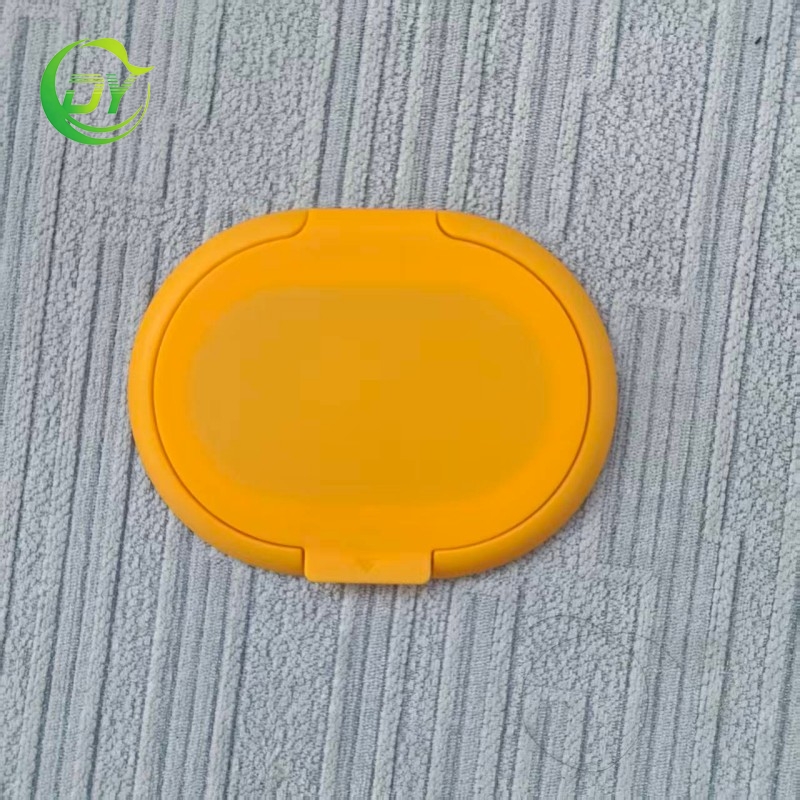
A purchasing manager may be selecting a lid for a premium facial-wipe pack, while a factory engineer may be trying to reduce scuff marks on a 100,000-piece shipment. These are different problems, even when the same polypropylene lid is used.
Glossy lids generally provide stronger color depth and a cleaner visual reflection. They are useful when packaging must stand out on a retail shelf or match a high-shine bottle, carton, or laminated pouch. Matte lids scatter light across the surface, reducing glare and making fingerprints less visible. They are often selected for baby care, sensitive-skin products, and minimalist household brands.
The surface treatment also affects handling. A smooth glossy face can feel slippery when wet, whereas a fine matte texture may increase perceived grip. However, a deep texture can collect dust, raise mold-maintenance requirements, and make printed graphics less uniform. For that reason, the right decision depends on finish depth, resin grade, mold design, colorant, packaging film, and expected opening cycles.
| Parameter | Matte Surface | Glossy Surface | Purchasing Meaning |
|---|---|---|---|
| Typical visual gloss | Approximately 5–25 gloss units at 60° | Approximately 70–95 gloss units at 60° | Matte reduces reflected glare; glossy creates stronger shelf impact |
| Fingerprint visibility | Low to moderate, depending on texture depth | Moderate to high, especially with dark colors | Matte is easier to keep visually clean in stores and bathrooms |
| Perceived grip | Usually higher because of micro-texture | Usually lower on wet surfaces | Matte can support one-handed opening during childcare or travel |
| Scratch visibility | Fine scratches are often camouflaged | Fine scratches and rub marks are easier to see under direct light | Matte is more forgiving during carton packing and transport |
| Cleaning effort | Low when the texture is shallow; higher when heavily textured | Easy to wipe clean, but fingerprints reappear quickly | Request a physical sample before approving a textured mold |
| Color appearance | Soft, muted, and less reflective | More saturated and visually deeper | Glossy is useful for strong color blocking and premium shelf presentation |
| Tooling complexity | May require controlled mold texturing and careful venting | Requires a highly polished mold surface and strict process cleanliness | Neither finish is automatically cheaper; mold specification controls cost |
| Typical unit-cost effect | Often about 2%–8% above a standard polished finish when special texturing is required | Usually the baseline when the mold is already polished | Actual pricing depends on order quantity, resin, color, mold, and decoration |
| Repeated opening performance | Surface appearance remains stable, but hinge and snap fit determine function | Surface appearance may show wear sooner, while the closure mechanism can perform equally well | Do not confuse surface appearance with seal performance |
These figures are practical specification ranges rather than universal standards. A supplier should confirm the finish using a 60-degree gloss meter, provide color plaques or molded samples, and test the complete lid rather than a flat plastic coupon. The closure’s functional quality is normally assessed through dimensional inspection, hinge-cycle testing, snap-fit force, and leakage or moisture-loss testing.
Matte is usually a strong fit for products handled frequently and viewed under uncontrolled lighting. Baby wipes may be opened beside a changing table with one hand. Facial wipes may be used after exercise, when the consumer’s hands are damp. Disinfectant wipes may be stored in kitchens where fingerprints, water spots, and cleaning chemicals are common.
A shallow matte texture can hide packaging abrasion that occurs when cartons move across a conveyor or rub against neighboring packs. It can also reduce reflected light in product photography. The limitation is that an aggressive texture may retain powder, lint, or dried formulation residue. For a lid used in a cleanroom-oriented or medical presentation, a fine satin texture is generally more practical than a deep leather-grain texture.
Glossy is effective when the package depends on color brightness, visual cleanliness at the point of sale, and coordination with glossy labels or laminated film. Premium makeup-removal wipes, hotel amenity wipes, and small travel packs often benefit from this presentation.
In production, a glossy finish demands disciplined mold and handling control. Dust on a polished cavity can create visible flow marks or dull patches. Ejector-pin marks, weld lines, and gate blush may also be easier to notice. A manufacturer should therefore inspect the lid under both diffuse light and a 45-degree reflected-light angle before mass production.
Consumers sometimes assume that a matte lid seals better because it feels more substantial. In reality, water retention is controlled mainly by the gasket or sealing land, lid flatness, snap-fit geometry, film interface, and the compatibility of the wet-wipe substrate and lotion—not by gloss level alone.
For example, a lid with a nominal sealing-land flatness tolerance of approximately 0.10–0.20 mm may perform more consistently than a visually attractive lid with warpage outside the approved range. A practical validation plan can include:
If a 60-count wipe pack loses 1.5% of its initial mass during a controlled storage test while a comparable approved pack loses 0.6%, the issue should be investigated through the seal and package system before changing from matte to glossy. Surface finish can influence handling and abrasion, but it cannot compensate for a poor sealing interface.
| Product Scenario | Preferred Finish | Reason | Risk to Monitor |
|---|---|---|---|
| Baby wipes for changing tables | Fine matte or satin | Better grip and lower fingerprint visibility | Residue accumulation in deep texture |
| Premium facial wipes | Glossy or soft matte | Glossy supports premium color; soft matte supports a skincare image | Glossy scuffs and color mismatch between lid and pouch |
| Disinfectant wipes for kitchens | Matte | Water spots and handling marks are less conspicuous | Chemical compatibility of resin and surface coating |
| Hotel and airline travel packs | Glossy for high-impact branding or matte for grip | Choice depends on visual identity and wet-hand use | Carton abrasion during distribution |
| Medical and elder-care wipes | Low-glare matte | Improves readability under strong artificial lighting | Texture must remain easy to sanitize and inspect |
| Luxury private-label launch | Glossy or controlled two-tone finish | Creates stronger shelf differentiation | Higher rejection risk from visible molding defects |
The story behind one private-label buyer illustrates the trade-off. A purchasing team launching a dark navy facial-wipe pack initially selected a high-gloss lid because the color looked deeper in the sample room. During a simulated retail-handling test, repeated touching left visible fingerprints after fewer than 20 handling events, and carton-to-carton rubbing produced bright scuff lines. The team changed to a fine satin texture, kept the same navy resin color, and reported that the lid remained visually cleaner after transport simulation and repeated opening. The change did not improve moisture retention; it improved the product’s perceived cleanliness and reduced cosmetic rejection.
Another buyer selected a deep matte texture for a household cleaning-wipe lid. After several weeks of warehouse handling, dust settled in the texture around the hinge and required additional wiping before photography. The revised specification used a shallower texture and increased the inspection standard for color uniformity. This case shows why a “matte” request is incomplete unless it includes a target gloss range, texture reference, and cleaning requirement.
Surface finish is only one line in the total cost. The major cost drivers normally include resin type and color, lid weight, mold cavities, mold texturing or polishing, decoration, quality-control requirements, packaging, tooling amortization, and order quantity.
| Cost Item | Matte Option | Glossy Option | How to Control Cost |
|---|---|---|---|
| Mold preparation | May require chemical etching, laser texture, or bead blasting | Requires polishing and protection from contamination | Use an existing approved texture or polish standard when possible |
| Material usage | Usually unchanged by finish alone | Usually unchanged by finish alone | Optimize lid weight without reducing hinge or sealing strength |
| Quality inspection | Texture uniformity and gloss variation must be checked | Gloss, flow marks, and scratches require close inspection | Define acceptance samples before mass production |
| Unit-price influence | Can add roughly 2%–8% when special tooling is needed | Can add cost when mirror polishing or cosmetic standards are demanding | Request a cost breakdown for tooling, sampling, and production |
| Commercial risk | Deep texture may reduce visual cleanliness | Scratches may increase sorting and rejection | Run transport and handling tests before approving the finish |
For wholesale orders, the cheapest quotation is not always the lowest delivered cost. If a glossy lid produces a 3% cosmetic rejection rate and a matte lid produces 0.8% under the same distribution test, the difference may exceed the initial mold-price saving. Buyers should compare finished accepted units, not only the quoted price per piece.
Feedback from packaging buyers and end users tends to cluster around four practical points: fingerprints, grip, scratches, and whether the lid feels securely closed. Matte lids receive favorable comments when customers use them with wet hands or store them in busy bathrooms. Glossy lids receive favorable comments when buyers prioritize color richness and a polished shelf appearance.
The negative comments are also predictable. A glossy black lid can show fingerprints immediately, while a heavily textured matte lid can look dusty. Some users describe glossy lids as “slippery” only when moisture is present; the same lid may feel perfectly stable when dry. Conversely, a matte lid may feel secure but can be harder to wipe if the texture is too deep.
One distributor reviewing samples from Dongyang compared a smooth glossy lid with a fine matte lid on the same refill pouch. The distributor preferred the glossy version for a premium display because its measured reflectance produced stronger contrast under retail lighting. For a supermarket cleaning-wipe line, however, the distributor selected the matte version after staff handling because fingerprints were less visible and the lid was easier to hold with damp gloves. The final decision was based on the selling environment rather than a claim that one finish was universally superior.
Dongyang can be considered when a buyer needs a plastic wet wipes lid supplier able to discuss mold texture, polypropylene grade, hinge design, color matching, and inspection criteria as one package. The important point is not the brand name alone. Ask for dimensional drawings, surface-finish samples, gloss readings, opening-cycle results, packing details, and a production approval sample before committing to a large wholesale order.
A clear technical brief prevents most misunderstandings. Instead of writing “premium matte,” specify the intended gloss range, texture reference, color standard, lid weight, closure style, and cosmetic tolerance.
Before mass production, keep one approved sample from each mold cavity when possible. This makes it easier to distinguish a finish problem from a cavity-to-cavity color or dimensional problem. It also gives the purchasing team a physical reference if the supplier changes resin, polishing condition, texture plate, or processing temperature.
Choose a matte lid when the product will be handled frequently, used with damp hands, displayed in uncontrolled lighting, or sold in dark colors that reveal fingerprints. Matte is also suitable when the brand identity emphasizes softness, practicality, low glare, or everyday cleanliness.
Choose a glossy lid when shelf impact, vivid color, reflective coordination with other packaging, and a premium appearance are the main commercial goals. Glossy is less suitable when the lid will be exposed to heavy carton abrasion, frequent touching, or dark pigment without a cleaning plan.
Neither option is ideal for every product. A very deep matte texture is not suitable for buyers who need rapid cleaning and a dust-free medical appearance. A high-gloss black lid is not suitable for a brand that cannot tolerate visible fingerprints or minor transport scuffs. In both cases, the hinge, snap fit, sealing land, and moisture-loss result deserve more attention than the surface adjective.
For the next step, request two matched samples from a qualified matte plastic wet wipes lid wholesale supplier and a glossy plastic wet wipes lid manufacturer, then compare them using the same pouch, wipe lotion, carton, lighting, and handling test. Record best wet wipes lid surface finish for private label results alongside flip-top lid grip, polypropylene compatibility, and moisture retention; verify them with a gloss meter, coefficient of friction review, and injection-molding inspection before placing the wholesale order. This evidence-based process allows Dongyang or another shortlisted supplier to quote the finish you actually need rather than a vague “matte” or “glossy” description.