
Choosing between PP vs PE wet wipes lids for packaging affects leak resistance, recyclability, molding cost, and shelf-life performance. Buyers searching for Plastic Wet Wipes Lid Wholesale or the best lid material for baby wipes packaging often compare polypropylene, polyethylene, and the required moisture barrier without checking resin data. The practical decision depends on melt flow index, tensile strength, and water vapor transmission rate—not simply on which plastic feels harder.
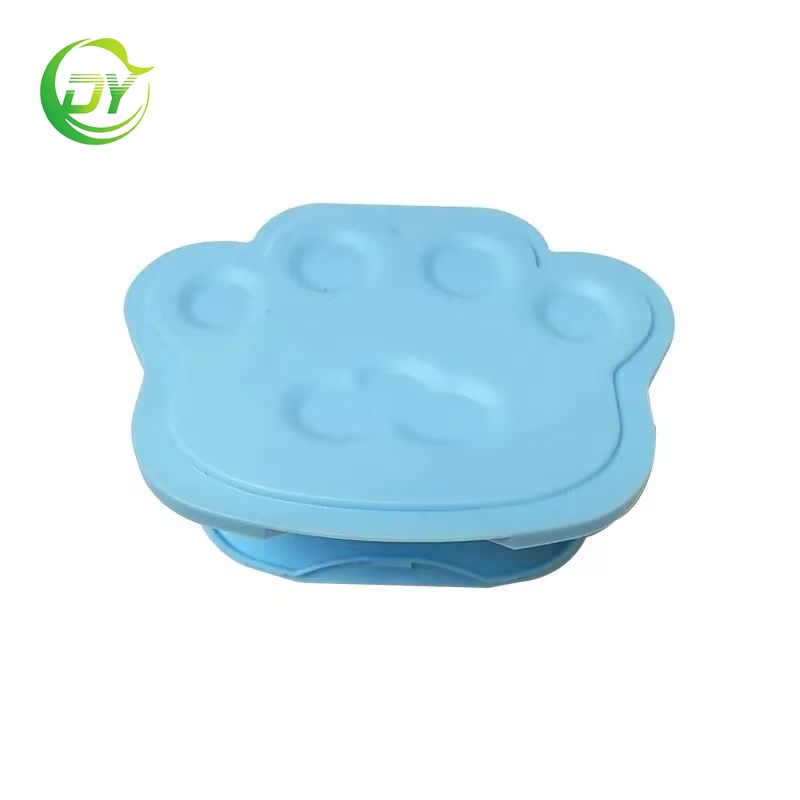
For a wipes manufacturer, the problem usually appears after filling: the lid may warp during hot storage, the snap closure may loosen after repeated opening, or the adhesive seal may peel from a low-energy film. A hospital purchasing team may prioritize chemical resistance, while a baby-care brand may care more about one-handed opening and soft edges. This comparison follows the decision from material properties to production performance, cost, customer feedback, and final selection.
PP and PE are both polyolefins, but their molecular structure gives them different behavior during injection molding and daily use. PP generally has a higher flexural modulus, while PE—particularly low-density polyethylene—offers greater flexibility and impact absorption.
| Parameter | PP lid | PE lid | Packaging implication |
|---|---|---|---|
| Typical density | Approximately 0.90–0.91 g/cm³ | Approximately 0.91–0.97 g/cm³, depending on LDPE, LLDPE, or HDPE | PP can provide a lightweight rigid component; PE performance varies considerably by grade. |
| Flexural modulus | Commonly about 1,000–1,700 MPa for unfilled injection grades | About 150–1,200 MPa, depending on PE type | PP usually gives a firmer lid and more defined hinge geometry. |
| Tensile strength | Often approximately 25–40 MPa | Often approximately 8–35 MPa | PP is generally better for a rigid snap-fit; HDPE narrows the difference. |
| Heat resistance | Melting range commonly around 160–170°C | LDPE around 105–115°C; HDPE around 125–135°C | PP normally tolerates higher filling-line and transport temperatures. |
| Living-hinge performance | Excellent when designed with suitable PP grade and thin hinge section | Flexible but less likely to provide a crisp, durable hinge in a rigid lid | PP is usually preferred for lids opened and closed repeatedly. |
| Chemical resistance | Good resistance to water, alcohol solutions, and many mild cleaning formulations | Good resistance to water and many chemicals; performance depends on additives and stress level | Both can work, but the actual wipe formulation must be tested. |
| Surface feel | Firm, clean, and suitable for textured matte finishes | More waxy or soft, especially with LDPE | PE may feel more forgiving; PP often looks more premium and precise. |
| Typical application | Baby wipes, facial wipes, household wipes, and high-volume retail packs | Flexible closures, soft-touch components, film-based packs, and impact-sensitive designs | The product format should determine the resin, rather than price alone. |
These values are representative ranges, not universal specifications. The final result depends on grade, wall thickness, pigment, talc or mineral filler, mold temperature, cooling time, and injection pressure. A supplier should provide a technical data sheet and validate the finished lid, because a 1.2 mm PP lid and a 1.8 mm HDPE lid cannot be compared fairly by resin name alone.
PP has a useful balance of rigidity and fatigue resistance. In a well-designed living hinge, the polymer can tolerate thousands of flexing cycles without cracking. That matters when a consumer opens a pack several times per day over a month.
PP also supports a stable snap-fit closure. A properly designed latch can maintain a defined engagement force after repeated use, whereas a flexible PE lid may deform and reduce the audible “click.” For premium retail wipes, this difference affects the consumer’s perception of freshness and quality.
Another advantage is thermal stability. If filled packs pass through a warm warehouse or remain in a delivery vehicle at 50–60°C, PP generally retains more shape than LDPE. This does not mean PP is immune to distortion: dark pigments, residual molding stress, and thin unsupported areas can still cause warpage.
PE becomes attractive when the package needs softness, impact resistance, or compatibility with a flexible pouch. LDPE can absorb handling impacts and may be less likely to fracture under cold conditions. HDPE offers a firmer structure than LDPE and can be considered where a manufacturer wants PE-based material with better stiffness.
PE is also useful when the lid is integrated into a flexible film system or when a softer tactile surface is part of the brand experience. However, a soft lid should not be selected for a high-cycle snap closure without testing. Excessive flexibility can lead to poor alignment, weak latch retention, or a lid that does not fully reseal.
Once the material data is understood, the decision becomes more practical. The same resin can be suitable for one pack format and unsuitable for another.
| Use case | Preferred starting material | Reason | Required validation |
|---|---|---|---|
| Baby wipes with a rigid flip-top lid | PP | Better hinge fatigue resistance, defined snap closure, and stable appearance | Opening force, hinge-cycle test, seal retention, edge safety, and odor migration review |
| Household disinfectant wipes | PP or chemical-resistant HDPE | Both may resist water-based formulations; the active ingredients determine compatibility | 30-day chemical exposure, stress-cracking test, and closure leakage test |
| Soft flexible pouch | LDPE or a PE-based structure | Better conformity with flexible film and lower fracture risk during compression | Peel strength, pouch deformation, and repeated opening test |
| Premium facial cleansing wipes | PP | More precise surface texture, stronger latch feel, and better dimensional control | Cosmetic appearance, color consistency, and compatibility with oils or surfactants |
| Cold-chain or winter distribution | Impact-modified PP or suitable PE grade | Low-temperature toughness becomes more important than room-temperature stiffness | Conditioned testing at the lowest expected transport temperature |
For a lid used on baby wipes, the closure must do more than look attractive. It should prevent moisture loss, remain easy for a parent to open with one hand, and avoid sharp flash around the perimeter. For disinfectant wipes, the formulation may contain alcohol, quaternary ammonium compounds, hydrogen peroxide, or other active ingredients that can interact differently with the polymer, colorant, adhesive, or liner.
Material price is only one part of the purchase calculation. Based on typical market quotations for high-volume injection-molded components, PP and HDPE resin prices may differ by roughly 5–15% depending on region, grade, color, order quantity, and oil-market conditions. LDPE can carry a different premium because of its processing requirements and film-oriented demand.
| Cost item | PP lid | PE lid | What changes the final price |
|---|---|---|---|
| Resin cost | Often competitive for injection molding | HDPE may be similar; LDPE may be higher for some specifications | Grade, virgin or recycled content, pigment, and resin market timing |
| Tooling | Comparable to PE for the same cavity count | Comparable, but shrinkage behavior may require different mold compensation | Number of cavities, hot-runner system, hinge design, and automation |
| Cycle time | Often about 10–20 seconds for small lids, depending on design | Often about 12–25 seconds, depending on cooling and wall thickness | Part thickness, mold temperature, cooling channel design, and ejection stability |
| Defect risk | Possible warpage, sink marks, weld lines, or hinge cracking | Possible deformation, flash, poor latch retention, or stress whitening | Gate position, injection speed, resin moisture, and dimensional tolerances |
| Long-term cost | Potentially lower when fewer returns result from closure failure | Potentially lower for flexible packs with simple closure geometry | Complaint rate, scrap rate, line speed, and filling-line compatibility |
A quotation that is 3% cheaper per lid can become more expensive if the closure loses moisture or causes a 2% increase in rejected packs. Buyers should request total-cost information: part weight, cycle time, cavity count, acceptable defect limit, packing method, and test standard. Dongyang can be evaluated on this complete basis rather than on unit price alone, especially when the project requires custom colors, logo texture, recycled-content options, or high-volume delivery scheduling.
A useful production case involves a baby-wipes buyer who compared a flexible PE lid with a PP flip-top on the same pouch structure. The PE sample was easier to press during assembly, but after repeated opening and closing, the latch became less distinct. In a controlled internal trial, the PP version maintained better alignment after 500 opening cycles, while the PE version showed visible deformation around the latch. The result did not make PP universally superior; it showed that the rigid snap-fit design favored PP.
In another representative purchasing scenario, a household-wipes brand selected HDPE because the pack was frequently compressed during delivery. The first design used a thin PP lid and developed stress whitening near the hinge after cold storage. After switching to a thicker, impact-modified structure and adjusting the hinge radius, the pack passed cold-conditioned drop testing. The lesson was that material selection, geometry, and conditioning temperature must be assessed together.
Common user feedback can be grouped into four patterns:
These comments should be treated as directional evidence rather than laboratory proof. A professional supplier should convert feedback into measurable tests, including opening force, closure retention, hinge-cycle durability, leakage, pouch peel strength, and moisture-loss rate.
Choose PP first when the pack requires a rigid flip-top, strong visual definition, repeat opening, and a stable hinge. It is the strongest starting option for baby wipes, facial wipes, and premium household wipes. Ask for the resin grade, melt flow index, part weight, hinge design, and measured opening-cycle results.
Choose HDPE when impact resistance and chemical compatibility are more important than a crisp living hinge. It can work well for household and industrial wipes, provided the closure geometry is designed around its flexibility and shrinkage behavior.
Choose LDPE when the lid must conform closely to a flexible pouch or provide a softer tactile experience. It is less suitable for a rigid, high-cycle snap-fit unless the structure is reinforced or combined with another polymer component.
If standard PP cracks in cold conditions or standard PE loses latch retention, the answer may be impact-modified PP, a higher-stiffness HDPE, a co-molded structure, or a redesigned hinge. Changing resin without changing the mold may not solve the original failure.
For a Dongyang project, request at least three samples: a standard PP option, a suitable PE option, and a modified grade matched to the product formulation. Compare them on the same pouch, with the same adhesive, wipe liquid, fill weight, and storage conditions. This produces a fairer result than testing each lid on a different package.
Before approving mass production, the buyer should complete a documented validation process:
The most reliable supplier will provide a material declaration, color information, production inspection record, and sample-testing report. For sustainability claims, confirm whether the lid is PP or PE, whether recycled resin is used, and whether the complete pouch-and-lid structure is accepted by the target recycling system. A recyclable lid does not automatically make the entire wet-wipes package recyclable.
PP is suitable for buyers needing a rigid, repeat-use lid with a defined snap-fit, stable hinge, and strong retail appearance. It is usually the better first choice for baby wipes, facial wipes, and premium consumer packaging. PE is suitable for flexible pouches, impact-sensitive logistics, softer tactile designs, and applications where the lid must conform to a deformable package. LDPE and HDPE should not be treated as interchangeable; their stiffness and closure behavior are different.
Neither material is automatically the best choice for every product. The correct selection depends on formulation, pouch film, hinge geometry, expected opening cycles, storage temperature, target price, and recycling requirements. When comparing PP vs PE wet wipes lids for packaging, plastic wet wipes lid wholesale offers, or the best lid material for baby wipes packaging, review polypropylene, polyethylene, and moisture barrier performance through measured melt flow index, tensile strength, and water vapor transmission rate data. Contact Dongyang for matched PP and PE samples, a technical quotation, and a side-by-side production trial before committing to the final mold and order quantity.