
Plastic Wet Wipes Lid Wholesale buyers need more than a basic material definition. They need to know which polypropylene option will protect moisture, support reliable opening and closing, maintain a clean appearance, meet safety requirements, and remain profitable in mass production.
This comparison focuses on the real purchasing decisions faced by wet wipes manufacturers, private-label brands, distributors, and packaging buyers. It evaluates virgin PP and recycled PP according to performance, cost, appearance, compliance, production stability, and end-use suitability.
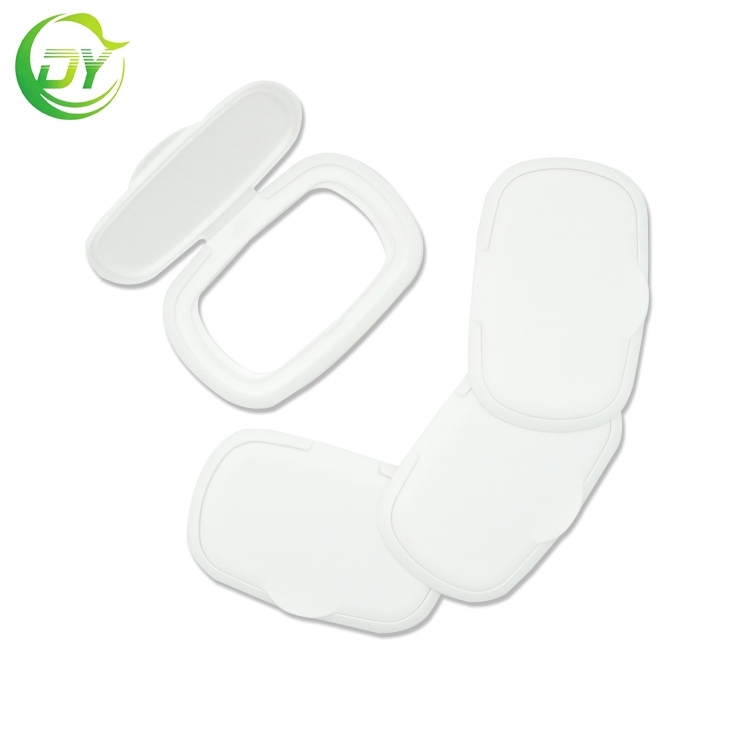
Virgin polypropylene is produced from new polymer resin that has not previously been processed into a consumer product. Its molecular structure, color, purity, and flow characteristics are generally easier to control.
For plastic wet wipes lids, this controlled composition can support:
Virgin PP is usually the safer choice when the lid is part of a premium product, a baby wipes package, a sensitive skin wipes package, or a product that must maintain a uniform white or transparent appearance.
Recycled polypropylene is made by collecting, sorting, cleaning, shredding, melting, filtering, and pelletizing polypropylene waste. The recycled material may come from post-industrial scrap, post-consumer packaging, or a controlled blend of both.
Its performance depends heavily on the recycling process and the percentage of recycled content. A well-controlled post-industrial recycled PP blend can perform consistently in a wet wipes lid. An uncontrolled recycled stream may create greater variation in color, odor, contamination, melt flow, and mechanical strength.
Recycled PP can help reduce reliance on new resin and support a lower-impact packaging strategy. However, it should not be treated as automatically equal to virgin PP. The buyer must review the material source, recycled content percentage, processing method, testing records, and intended application.
The terms virgin PP and recycled PP describe the origin of the resin, but they do not fully describe the final lid. A high-quality recycled PP compound may perform better than a poorly selected virgin grade, while a low-quality recycled material may cause serious production problems.
Before approving a supplier, purchasing teams should request:
The following table provides a practical comparison for plastic wet wipes lids. Actual results depend on the PP grade, recycled content, lid design, mold condition, processing temperature, and quality control system.
| Parameter | Virgin PP | Recycled PP | Purchasing implication |
|---|---|---|---|
| Raw material origin | New polypropylene resin | Reprocessed polypropylene from industrial or consumer waste | Ask for traceability and source control |
| Material consistency | Generally high | Ranges from moderate to high depending on sorting and compounding | Important for high-volume injection molding |
| Color consistency | Excellent and easy to control | May show gray, beige, or batch variation | Virgin PP is easier for bright white and light colors |
| Odor risk | Usually low with a suitable grade | Potentially higher if cleaning and deodorizing are insufficient | Request odor testing and production samples |
| Surface appearance | Smooth and predictable | Can be smooth, but may show specks, flow marks, or gloss variation | Critical for premium retail packaging |
| Snap-fit stability | Usually highly predictable | Can be reliable with controlled material and design | Test opening force and closing retention |
| Hinge durability | Generally stable when the hinge design is optimized | May vary with molecular degradation and recycled content | Perform repeated opening and closing tests |
| Moisture protection | Strong when the lid, adhesive, and pouch interface are properly designed | Can be comparable, but dimensional variation may affect the seal | Test the complete package rather than the lid alone |
| Food or skin-contact suitability | Usually easier to document | Requires careful source control and application-specific documentation | Confirm requirements before production approval |
| Cost predictability | Usually more stable when resin supply is stable | May offer a lower cost but can vary by recycled material supply | Compare total delivered cost, not resin price only |
| Environmental positioning | Uses new resin and may support clean, durable packaging | Can reduce demand for new resin and support recycled-content claims | Claims require documented recycled content and local compliance |
| Battery life | Not applicable because the lid is a passive packaging component | Not applicable because the lid is a passive packaging component | Use hinge cycles, seal retention, and shelf-life testing instead |
Virgin PP normally gives the production team a wider processing window. This can reduce variation in injection pressure, cooling time, part dimensions, and visual quality.
Recycled PP can also run successfully, especially when it is made from a consistent post-industrial stream and blended at a controlled ratio. However, the manufacturer may need more frequent checks of melt flow, color, odor, warpage, and part weight.
For wholesale buyers, the most important issue is not whether recycled PP can make a lid. It can. The key issue is whether the supplier can make the same lid repeatedly across multiple production batches.
Users expect a wet wipes lid to open without excessive force and close with a clear, secure fit. If the lid is too loose, the package may lose moisture. If it is too tight, the consumer may struggle to open it, especially when using one hand.
Virgin PP often provides more consistent snap-fit behavior because its flow and shrinkage are easier to predict. This supports accurate control of the lid, base, hinge, and locking features.
Recycled PP can deliver a similar experience when the material is properly compounded and the mold is designed for its specific shrinkage behavior. The supplier should test:
The lid does not work alone. Moisture retention depends on the interaction between the lid, adhesive, flexible film, dispensing opening, wipe formulation, pouch structure, and storage conditions.
Virgin PP may provide a more dimensionally stable lid, which can help maintain consistent contact with the sealing surface. Recycled PP can also perform well, but dimensional variation, warpage, or contamination may create problems if quality controls are weak.
A practical moisture-retention test should include:
A wet wipes lid may be opened many times during its service life. Therefore, hinge durability is more relevant than battery life for this product category.
Virgin PP generally offers stable hinge performance when the hinge is correctly molded and the material is not overheated during processing. Recycled PP performance depends on the level of molecular degradation and the quality of the recycled feedstock.
Ask the supplier to perform a repeated opening and closing test. The test should record:
For products used by families, travelers, hospitals, or childcare providers, repeated-use durability should be treated as a purchasing requirement rather than an optional test.
Wet wipes often have direct contact with skin, so buyers are highly sensitive to unusual odors. Virgin PP is generally easier to control for low odor because the resin history is known.
Recycled PP requires more careful review. Residual odor may come from the original product, incomplete cleaning, additives, storage conditions, or thermal degradation during reprocessing.
The purchasing team should evaluate both laboratory results and actual samples. A lid can pass a basic mechanical test while still creating a negative consumer impression because of smell, dark specks, or inconsistent color.
Virgin PP is usually appropriate for:
Recycled PP may be suitable for:
Recycled PP should be avoided or carefully restricted when the package requires extremely low odor, transparent appearance, strict medical documentation, or a very narrow color tolerance.
The material price is only one part of the wholesale decision. A lower-priced lid can become more expensive if it causes line stoppages, defective packs, moisture loss, customer returns, or delayed delivery.
Purchasing teams should calculate the total landed cost, including:
A sample approval is not enough. A supplier should demonstrate that the same material and mold combination can meet the agreed standard during repeated production runs.
Important batch-control questions include:
A lid may be technically strong but unsuitable for the customer's filling and sealing equipment. Differences in lid dimensions, adhesive area, dispensing opening, or base geometry can cause installation problems.
Before placing a wholesale order, confirm:
Using recycled PP does not automatically allow a brand to make an unlimited environmental claim. The buyer should know whether the material is post-industrial or post-consumer, how the recycled percentage is calculated, and what evidence is available.
A responsible recycled-content program should define:
If the brand cannot verify the claim, it may be safer to describe the packaging accurately without making broad environmental promises.
Start with the lid geometry rather than the resin label. The design should match the pouch opening, adhesive system, intended wipes count, and dispensing requirements.
Request samples molded using the same equipment, mold, additives, and process conditions planned for mass production. Laboratory resin pellets alone cannot show the complete performance of the finished lid.
Compare virgin PP and recycled PP samples for:
The lid must be evaluated after it is installed on the actual pouch. This is important because the adhesive, film, wipe formulation, and package filling level can change the result.
Run more than one sample batch before final approval. A material that works in a small trial may behave differently during a long production run because of heat buildup, resin variation, or mold wear.
A practical approval plan may include:
Virgin PP is generally the better fit when appearance, low odor, documentation, and consistent user experience are the highest priorities.
It is recommended for purchasing groups that sell:
Recycled PP may be the better fit when the buyer has a clear recycled-content objective and can accept a controlled range of appearance and performance.
It is recommended for purchasing groups that sell:
Many brands do not need to select only one material for every product. A blended purchasing strategy can use virgin PP for sensitive or premium lines and recycled PP for suitable household or industrial lines.
This approach can provide:
A practical decision model should assign importance to the factors that matter most for the specific product. For example, a baby wipes buyer may give greater weight to odor, documentation, and moisture retention. An industrial wipes buyer may give greater weight to cost, durability, and supply capacity.
Evaluate each supplier and material against:
The final purchase order should be supported by a clear specification rather than a general description such as recycled plastic lid or high-quality PP lid.
The specification should identify:
The best supplier is not necessarily the one that promotes only virgin PP or only recycled PP. A capable manufacturer should explain where each material works, identify the risks, and recommend a lid structure and process based on the product requirements.
Dongyang can support buyers by connecting material selection with lid design, injection molding, appearance control, closure performance, and wholesale packaging requirements. The objective is to select the right PP option for the complete wet wipes package rather than choosing a resin based on a single marketing claim.
Choose virgin PP when the product requires a clean appearance, low odor, tight dimensional control, reliable repeated opening, and straightforward documentation. It is especially suitable for sensitive skin, baby, medical, and premium wipes.
Choose recycled PP when the supplier can verify its source, control the recycled content, maintain consistent molding performance, and provide complete product testing. It is often suitable for household, industrial, automotive, and selected private-label wipes.
Neither virgin PP nor recycled PP should be approved from resin information alone. Test the finished lid on the intended pouch, measure moisture retention, inspect the hinge after repeated use, evaluate odor and appearance, and confirm stable production over multiple batches.
For Plastic Wet Wipes Lid Wholesale programs, the best choice is the material that balances performance, cost, sustainability, compliance, and supply reliability for the intended user group. Dongyang can help buyers compare these factors and develop a dependable lid solution for both virgin PP and qualified recycled PP applications.