
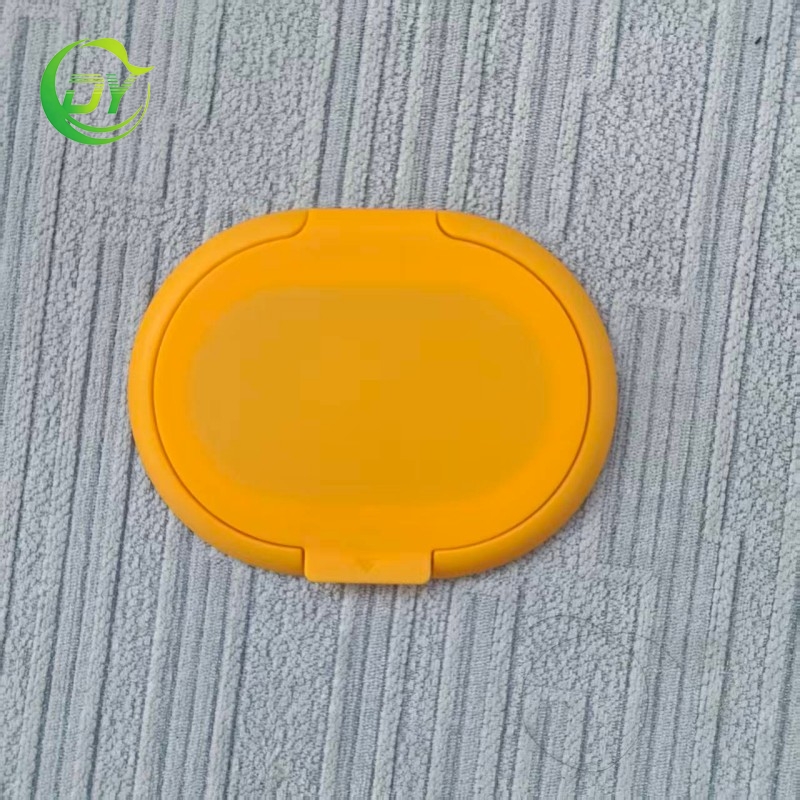
Plastic Wet Wipes Lid Wholesale buyers need a package that opens and closes with one hand without drying the wipes. A reliable flip-top closure supports moisture retention and reduces product waste. Many parents, drivers, nurses, and factory workers cannot use both hands when they need a wipe. A poorly designed snap lid can be hard to lift, break after repeated use, or stay partly open. The right flip top lid creates a simple user experience while protecting the moisture barrier. A well-made resealable wipes package also helps brands reduce complaints and improve shelf life.
Image:
The main design challenge is to balance opening force, closing force, sealing pressure, and material strength. These values must work for different users and package sizes. This article explains the design features, testing methods, production process, and wholesale selection points for a one-hand wet wipes lid.
A good one-hand wet wipes lid uses a wide thumb tab, a controlled hinge, a positive snap lock, and a continuous sealing ring. The opening force should usually stay near 8 to 15 N, while the closing force should remain near 10 to 20 N. The lid should pass repeated-use, leak, drop, and moisture-retention tests. For plastic wet wipes lid wholesale orders, buyers should also confirm resin type, mold precision, packaging compatibility, and inspection standards before production.
A thumb tab gives the user a clear place to apply force. A practical tab width is 18 to 28 mm. The tab should have a rounded edge with no sharp flash. A textured surface can improve grip when the user's hands are wet or covered with lotion.
The tab must provide enough leverage to open the lid without excessive force. A narrow tab can increase pressure on the thumb and make the package difficult for children, older adults, or users with limited hand strength.
The hinge controls how the lid moves during opening and closing. A living hinge made from polypropylene can support repeated movement when the hinge thickness and material flow are controlled. Common hinge thickness targets range from 0.25 to 0.45 mm, depending on the resin and mold design.
The lid should open to about 100 to 120 degrees. This angle keeps the lid away from the dispensing opening. It also reduces the chance that the lid will fall back onto the user's fingers during use.
A snap lock gives the user a clear closing signal. The lock should close with one firm press and should not require the user to align several small parts. A sound or tactile click can confirm that the package is closed.
The snap fit must not be too tight. A high closing force can deform the package film or cause the lid to separate from the base. It can also make the package difficult to close with one hand.
A sealing ring presses against the base around the dispensing opening. This feature limits air exchange and helps prevent liquid loss. The ring should have a smooth contact surface. A typical sealing contact width is 0.8 to 1.5 mm.
Designers should check the ring against the lid base, adhesive area, and flexible package film. Small gaps can allow moisture to escape. Excessive pressure can wrinkle the film and reduce package appearance.
Plastic wet wipes lid wholesale projects often use polypropylene because it combines low density, chemical resistance, and hinge performance. High-density polyethylene can be used for selected applications, but its hinge behavior and stiffness must be tested for the specific design.
| Item | Recommended target | Why it matters |
|---|---|---|
| Lid material | Injection-grade PP, often with 20 to 30 percent mineral filler only when required | Supports stiffness, snap performance, and stable molding |
| Lid thickness | 1.2 to 2.0 mm for the main lid area | Balances weight, strength, and cycle time |
| Hinge thickness | 0.25 to 0.45 mm for a PP living hinge | Supports repeated opening and closing |
| Thumb tab width | 18 to 28 mm | Improves one-hand leverage |
| Opening force | 8 to 15 N | Allows simple thumb operation |
| Closing force | 10 to 20 N | Creates a secure snap without excessive effort |
| Open angle | 100 to 120 degrees | Keeps the lid away from the dispensing area |
| Surface gloss variation | Within the approved master sample range | Maintains consistent brand appearance |
| Dimensional tolerance | Usually plus or minus 0.10 to 0.20 mm for key closure areas | Supports stable sealing and snap fit |
Virgin polypropylene is often selected for premium packaging because it provides consistent color, clean appearance, and predictable hinge behavior. Recycled content may reduce environmental impact, but it can also increase color variation and affect impact strength. Any recycled resin should be approved through sample testing.
Color masterbatch should be measured against an approved sample. A spectrophotometer can record color difference. Many factories use a Delta E target agreed with the buyer. Mold texture can reduce visible scratches, while a polished surface can support a glossy appearance.
A digital force gauge can measure the force needed to release the lid. The test should be performed on at least 10 samples from each production lot during development. The technician should record the first opening force and the force after repeated use.
A target of 8 to 15 N is suitable for many consumer packages. The final value depends on lid size, film stiffness, sealing design, and customer requirements.
The lid should be tested through the number of cycles expected during product use. A practical laboratory program may include 500, 1,000, or 2,000 open and close cycles. After testing, the hinge should show no complete fracture. The snap lock should still hold the lid in place, and the sealing ring should remain continuous.
Moisture retention depends on the lid, base, film, adhesive, and wipe liquid. A controlled test can weigh sealed packages before and after storage. For example, samples may be stored at 23 degrees Celsius and 50 percent relative humidity for 28 days. Weight loss should be compared with the buyer's approved limit.
Accelerated testing can use 40 degrees Celsius for 14 days, but this test does not replace normal storage testing. The same wipe formulation and film structure should be used during the evaluation.
Incoming polypropylene should be checked for color, lot number, moisture condition, and material certificate. A melt flow rate test can help confirm that the resin matches the approved grade. The factory should keep a record for each resin lot used in production.
Injection molding machines should monitor temperature, pressure, cooling time, and cycle time. A stable process reduces short shots, sink marks, flash, and warpage. Important inspection equipment includes:
Many packaging factories use ISO 2859-1 based sampling plans for routine inspection. The buyer and supplier should agree on the inspection level and acceptable quality limit before mass production. A common inspection includes appearance, dimensions, weight, hinge condition, snap function, and package fit.
| Inspection point | Example method | Typical acceptance focus |
|---|---|---|
| Appearance | Visual inspection under controlled light | No sharp flash, black spots, cracks, or major color variation |
| Dimensions | Caliper and go or no-go gauge | Key dimensions remain within approved tolerance |
| Function | Manual and force gauge testing | Lid opens, closes, and locks correctly |
| Leak resistance | Inverted package and pressure test | No visible leakage around the seal |
| Durability | Repeated cycle and drop testing | No broken hinge or failed snap lock |
| Design type | One-hand use | Moisture protection | Production considerations | Best application |
|---|---|---|---|---|
| Simple adhesive film | Fair | Low to medium after repeated opening | Low tooling cost and simple assembly | Low-cost travel packs |
| Basic flip-top lid | Good | Medium to high | Needs accurate snap and hinge control | Daily personal care wipes |
| Flip-top lid with sealing ring | Very good | High | Requires precise mold and package fit | Premium baby and hygiene wipes |
| Large ergonomic lid | Very good for limited hand strength | High when properly sealed | Uses more resin and may need stronger film support | Medical, elder care, and household wipes |
The supplier should collect package length, width, film structure, wipe count, wipe liquid, target market, lid color, and expected production volume. The buyer should also state whether the lid must be child-resistant, recyclable, tamper-evident, or compatible with a high-speed packing line.
Engineers can prepare a 3D CAD model that includes the hinge, thumb tab, snap lock, sealing ring, draft angle, and ejection points. Mold flow analysis can help identify weld lines and filling problems before steel production. A pilot mold or soft mold can reduce development risk for new shapes.
A responsible development program should test more than appearance. It should measure opening force, closing force, lid alignment, package leakage, hinge life, and moisture retention. A typical project may include 3 to 5 prototype revisions before final mold approval, depending on the package structure.
After approval, the factory should set a control plan for every major process. Production data can include cycle time, part weight, cavity balance, defect rate, and inspection results. Dongyang suppliers with injection molding and assembly experience can support sample development, mold adjustment, and high-volume plastic wet wipes lid wholesale production in one process.
| Problem | Possible cause | Practical solution |
|---|---|---|
| Lid is hard to open | Snap lock is too tight or tab is too small | Increase tab leverage and reduce lock interference |
| Lid does not stay closed | Lock dimensions or hinge position are unstable | Adjust snap geometry and improve mold accuracy |
| Wipes dry out quickly | Sealing ring is incomplete or film is wrinkled | Improve ring contact and check package assembly pressure |
| Hinge breaks | Incorrect thickness, resin flow, or excessive stress | Review hinge design, gate position, and resin grade |
| Lid is not aligned with the base | Warpage or poor positioning during assembly | Improve cooling control and add assembly fixtures |
| Color changes between lots | Unstable masterbatch ratio or mixed resin lots | Use controlled dosing and keep a color standard |
A successful wet wipes lid design for one-hand opening and closing must combine ergonomic operation with reliable moisture protection. The most important features are a wide thumb tab, a controlled PP hinge, a positive snap lock, and a continuous sealing ring. Buyers should verify opening force, closing force, hinge life, leakage resistance, package fit, and moisture retention through measured tests.
For plastic wet wipes lid wholesale projects, clear specifications and documented quality controls reduce production risk. A qualified supplier can use CAD development, injection molding control, force testing, sampling plans, and package validation to create a lid that works from the first use to the last wipe. Dongyang manufacturing support can help brands move from an initial concept to stable wholesale production with consistent quality.