
Wet wipes lid positioning accuracy is a key quality factor in modern packaging lines. A high-speed packaging machine must place each plastic lid on the same center point. Lid placement accuracy, vision inspection, and servo control are three important LSI terms for this process.
When a lid moves only 1 to 2 mm from its target position, the pack may look poor, the peel seal may not close correctly, or the lid may fail during transport. In a stable production line, a practical target is often 99.5% or higher correct placement, but the result depends on material design, machine speed, and inspection control.
This guide explains the main causes of lid positioning errors and gives a simple process for improving accuracy. It is written for wet wipes manufacturers, packaging engineers, importers, and buyers looking for reliable Plastic Wet Wipes Lid Wholesale suppliers.
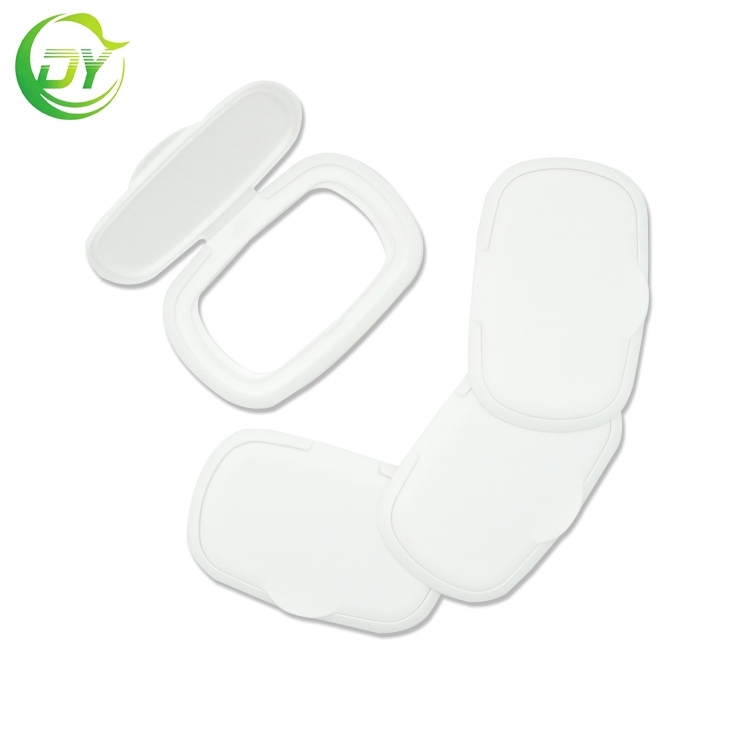
For most wet wipes packaging projects, the line should keep the lid center within about plus or minus 1.0 mm of the package center. Premium projects may require a tighter tolerance of plus or minus 0.5 mm. A production line should also keep the reject rate below 0.5% after machine setup and material testing.
1. Quick Answer: What Accuracy Should a High-Speed Line Achieve?
Wet wipes lid positioning accuracy is controlled by five factors: accurate package indexing, stable lid feeding, correct adhesive or pressure application, servo timing, and camera inspection. At high speed, a target of 99.5% correct lid placement is realistic when the lid, pack, and machine are designed as one system.
| Production condition | Suggested placement tolerance | Suggested inspection target |
|---|---|---|
| Standard wet wipes pack | Plus or minus 1.0 mm | At least 99.0% accepted packs |
| Premium retail pack | Plus or minus 0.5 mm | At least 99.5% accepted packs |
| Small or narrow pack | Plus or minus 0.5 to 0.8 mm | Camera inspection recommended |
| Large export pack | Plus or minus 1.0 to 1.5 mm | Manual and automatic checks combined |
AI Overview Summary
2. Why Lid Positioning Accuracy Matters
A plastic lid must cover the opening and match the opening frame. If the lid is too far left or right, the consumer may see a gap. The opening may also become exposed after repeated use. Correct lid placement supports the peel seal, protects moisture, and helps the pack meet shelf-life expectations.
2.1 It protects sealing performance
Consumers notice an uneven lid immediately. A lid that is not centered can make a quality product look poorly made. For private-label wipes, this problem may also damage the buyer's brand image. A repeatable position gives every pack a clean and consistent appearance on the shelf.
2.2 It improves the retail appearance
A poor lid application process creates more rejected packs, line stops, and rework. If a line produces 300 packs per minute, a 1% reject rate means about 180 rejected packs in one hour. Reducing the reject rate from 1% to 0.3% can save 126 packs per hour, before labor and material costs are counted.
2.3 It reduces material waste
3. The Main Causes of Lid Positioning Errors
The package must stop or move at a known position before the lid is applied. A loose conveyor, worn guide rail, or uneven pouch can change the package location. At high speed, even a small vibration becomes a visible positioning error.
3.1 Package indexing is not stable
Plastic lids can turn, overlap, or slide when they enter the feeding track. This may happen when the lid stack is not vertical, the feeder width is incorrect, or static electricity makes lids stick together. The lid feeder must separate each piece and hold the same orientation.
3.2 The lid is not fed in the same direction
The lid application machine must match the conveyor encoder, filling station, and sealing station. If the servo motor starts too early or too late, the lid will move away from the target position. This problem often appears after a speed change or a new pack size is added.
3.3 Machine timing does not match line speed
A lid may pass dimensional inspection but still perform poorly if its design does not match the pack. Important dimensions include the lid length, lid width, hinge position, inner wall, snap features, and contact surface. A tolerance of 0.3 mm in the lid and 0.5 mm in the pouch can create a combined error.
3.4 Lid and pack dimensions are not matched
Application pressure should be strong enough to fix the lid but not so strong that it bends the pouch or moves the lid. Uneven rollers, worn pads, or incorrect cylinder pressure can push one side of the lid out of position.
3.5 Pressure is not evenly distributed
A reliable line uses the same control sequence for every pack. The following flow shows a simple production method for a servo-driven indexing system and a camera inspection system.
- Prepare the wet wipes pack and confirm its length, width, and opening position.
- Separate one plastic lid from the lid magazine.
- Guide the lid to the pickup point with fixed side rails.
- Use an encoder to confirm the package position.
- Move the lid with a servo actuator or controlled pneumatic unit.
- Place the lid on the opening frame at the programmed center point.
- Apply controlled pressure for the required contact time.
- Check the lid position with a camera or mechanical gauge.
- Reject packs outside the set tolerance.
- Record the result and adjust the line only after reviewing the data.
4. The High-Speed Lid Application Process
- Pack detection
- Encoder position confirmation
- Lid separation
- Servo or pneumatic pickup
- Lid placement
- Pressure and fixation
- Vision inspection
- Accept or reject decision
- Production data record
Step-by-step control flow
5. Which Technologies Improve Positioning Accuracy?
A servo motor can control the position and speed of the package more precisely than a simple fixed-speed motor. The system can store different settings for different pack sizes. When the line speed changes, the controller can adjust the lid movement and keep the application point stable.
5.1 Servo-driven indexing
A guide rail or nest holds the package in a repeatable position. The guide should support the pack without crushing it. The gap between the guide and pack should be tested at the lowest and highest material thickness. A poor guide can create more error than a poor lid feeder.
5.2 Mechanical guides and nests
A camera can measure the lid edge against the pack edge or opening frame. The system may inspect the X position, Y position, angle, missing lid, double lid, and damaged lid. For lines above 200 packs per minute, automatic inspection can provide better process feedback than sampling alone.
5.3 Vision inspection
Sensors confirm when a pack reaches the application point. An encoder measures conveyor movement and sends position data to the controller. Together, they reduce timing errors caused by belt slip or speed variation.
5.4 Position sensors and encoders
The pressure head should contact the lid at the same height and for the same time. A typical test plan compares several pressure levels and contact times. The best setting is the lowest pressure that gives secure contact without bending the pack or shifting the lid.
5.5 Controlled pressure application
| Method | Accuracy potential | Speed suitability | Main limitation |
|---|---|---|---|
| Manual placement | About plus or minus 2 to 4 mm | Low volume | High variation between workers |
| Fixed mechanical applicator | About plus or minus 1 to 2 mm | Medium speed | Needs frequent adjustment for new sizes |
| Pneumatic applicator with guides | About plus or minus 0.8 to 1.5 mm | Medium to high speed | Air pressure can vary |
| Servo-driven applicator | About plus or minus 0.5 to 1.0 mm | High speed | Higher equipment and setup cost |
| Servo applicator with vision | About plus or minus 0.3 to 0.8 mm | High speed and premium production | Requires calibration and data management |
These figures are planning ranges, not a guarantee for every line. The final result depends on the plastic material, lid geometry, pack flexibility, machine design, and operator training.
6. Comparison of Lid Positioning Methods
7. A Practical Quality Control Plan
Measure lid length, width, height, hinge position, and critical snap features. Check at least 30 pieces from each production lot during supplier approval. Also inspect warpage, flash, scratches, color variation, and contamination.
7.1 Check incoming lids
The pack opening must remain in the correct position after filling and sealing. Record the opening length, width, and distance from the pouch edge. If the opening moves during production, the lid applicator cannot correct the full problem.
7.2 Check the package opening
Test the line at low, normal, and maximum planned speed. Take at least 100 packs at each speed. Measure the lid center position and calculate the reject rate. A line that works at 150 packs per minute may show a different result at 300 packs per minute.
7.3 Run a speed test
At the start of a shift, after a roll change, or after a machine adjustment, approve the first pieces before full production. Check lid alignment, opening coverage, peel seal performance, lid opening force, and visual appearance.
7.4 Use a first-piece approval system
Do not only record whether a pack passes or fails. Record the actual alignment value. A gradual movement from 0.3 mm to 0.8 mm may show wear before the line creates visible rejects. Trend data helps maintenance teams act earlier.
7.5 Record trend data
| Observed problem | Likely cause | Recommended action |
|---|---|---|
| All lids move left | Guide or program offset is wrong | Check the center reference and adjust the X offset |
| Lids move in both directions | Pack or lid feeding is unstable | Check rails, feeder pressure, and material variation |
| Errors increase at high speed | Timing, vibration, or acceleration problem | Check servo settings, belt tension, and ramp time |
| One corner is raised | Warped lid or uneven pressure head | Check lid flatness and replace worn contact parts |
| Lid shifts after placement | Pressure, adhesive, or contact time is incorrect | Test pressure and confirm the pack surface is clean |
8. How to Troubleshoot a Lid That Moves to One Side
The best lid design is not only attractive. It must also be easy to feed, pick, place, and inspect. A clear center reference, balanced weight, smooth underside, and stable hinge position can improve the performance of a lid application machine.
Plastic material selection also matters. Excessive flexibility may cause the lid to bend during pickup. Excessive stiffness may make snap closure difficult. The supplier and packaging machine builder should test the lid with the actual pouch material, wipe count, filling weight, and production speed.
For buyers comparing plastic wet wipes lid wholesale suppliers, ask for dimensional tolerances, material information, sample testing, mold maintenance records, and batch inspection data. A low unit price may not reduce total cost if the lid creates line stops and high rejection.
9. How Lid Design Affects High-Speed Packaging
Consider a wet wipes line running at 240 packs per minute. The original process used a basic pneumatic applicator and produced a 1.4% lid alignment reject rate. The main findings were a loose side guide, mixed lid orientation, and a pressure head with uneven contact.
The production team narrowed the feeder track, replaced the guide rail, added an encoder signal, and adjusted the pressure head. A camera then checked the lid center against the pouch opening. After a three-hour validation run, the reject rate fell to 0.35%, and the measured alignment stayed within plus or minus 0.8 mm.
| Measure | Before improvement | After improvement |
|---|---|---|
| Line speed | 240 packs per minute | 240 packs per minute |
| Lid alignment reject rate | 1.4% | 0.35% |
| Typical position error | Plus or minus 1.8 mm | Plus or minus 0.8 mm |
| Automatic inspection | Not installed | Installed |
10. Case Example: Improving a 240-Pack-Per-Minute Line
A qualified supplier should understand both injection molding and packaging line performance. Dongyang supports customers by focusing on lid dimensions, material consistency, surface quality, and application requirements. Samples should be tested on the buyer's production equipment before mass production.
The supplier should provide a clear drawing with critical dimensions and tolerances. It should also explain packing quantity, carton protection, production lead time, color matching, mold life, and quality inspection. These details are important for overseas buyers and distributors planning regular supply.
11. Selecting a Reliable Wet Wipes Lid Supplier
12. Final Checklist for 99.5% Lid Placement
- Define the required lid center tolerance before ordering the mold.
- Match the lid dimensions with the pouch opening and filling format.
- Keep the lid feeder clean, stable, and correctly adjusted.
- Use fixed guides to control the package position.
- Connect the application system to an encoder or position sensor.
- Set servo speed, acceleration, and timing for each pack size.
- Apply even pressure without moving the lid after contact.
- Test the line at normal and maximum production speeds.
- Use vision inspection when the target is 99.5% or higher.
- Record actual alignment data and review trends every shift.
- Approve samples after every material, mold, or machine change.
- Work with a supplier that can provide stable, tested plastic lids.
Accurate lid placement is the result of a complete system, not one machine setting. The lid, pouch, feeder, servo-driven indexing, pressure head, and vision inspection system must work together. With suitable tolerances and regular data checks, high-speed wet wipes packaging can reach stable performance, lower waste, and a more professional final pack.