
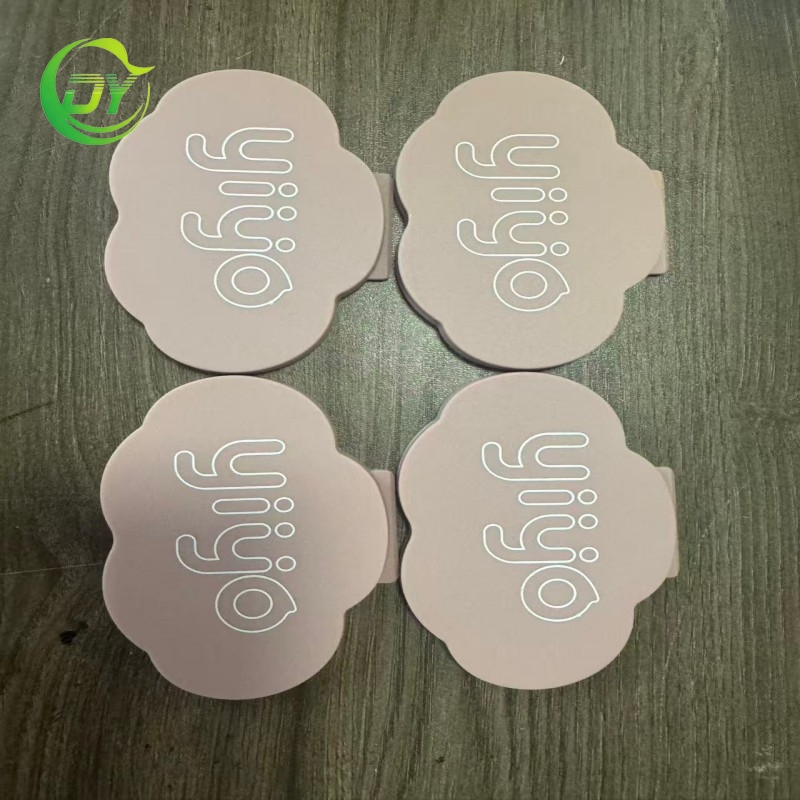
Plastic Wet Wipes Lid Wholesale buyers need a clear sample approval process before placing a large order. A small error in a lid can cause leaks, poor fit, or slow production. Package closure performance is one key factor in product safety and shelf life.
A wet wipes lid sample should match the pack opening, film, and filling line. Dimensional inspection helps control mold tolerance and assembly quality.
Buyers also need to check hinge durability, adhesive bonding, and consumer opening force. These checks reduce complaints after delivery.
For a reliable wholesale wet wipes packaging order, the lid must pass both laboratory tests and line trials. A sample that looks good by hand may still fail during high-speed production.
Important LSI terms include flip top lid design, resealable wipes packaging, and moisture retention testing. These terms describe the main technical concerns in wet wipes lid approval.
Dongyang plastic packaging manufacturers can support custom lid colors, shapes, materials, and mold designs. However, buyers should approve measured samples rather than rely only on product photos.
Approve a wet wipes lid sample only after checking its length, width, height, opening size, hinge position, and sealing surface against the final pack. Then test fit, opening force, hinge life, peel strength, leak resistance, moisture retention, drop resistance, and production-line performance. Record the approved drawing, material, color, test values, and visual standard. The approved sample becomes the reference for mass production and future quality inspections.
Start with the outside dimensions of the lid. Use a calibrated digital caliper with a resolution of 0.01 mm. Measure at least three pieces from each sample batch and record the average and maximum difference.
| Item | Common control target | Why it matters |
|---|---|---|
| Lid length | Drawing value plus or minus 0.20 mm | Controls pack appearance and label position |
| Lid width | Drawing value plus or minus 0.20 mm | Controls fit with the pouch shoulder |
| Lid height | Drawing value plus or minus 0.30 mm | Controls stacking and shipping space |
| Opening length and width | Drawing value plus or minus 0.15 mm | Controls wipe removal and film alignment |
| Wall thickness | Usually 0.80 mm to 1.50 mm | Controls strength, weight, and molding stability |
These values are sample control targets, not universal specifications. The final tolerance should be agreed with the mold maker, wet wipes manufacturer, and brand owner.
The opening must be large enough for the wet wipe to pass through without tearing. It must also support easy one-hand use. Check the opening with a plug gauge or a calibrated inspection fixture.
Inspect the sealing surface for flatness. A height difference of more than 0.20 mm across the sealing ring may create an uneven bond with the adhesive film. Use a height gauge, optical measuring machine, or flatness fixture for this check.
Check these areas carefully:
Most plastic wet wipes lids use polypropylene, polyethylene, or a material blend approved for the intended application. The supplier should state the material grade, color masterbatch ratio, and recycled content in the specification sheet.
For a common polypropylene lid, buyers can request the following records:
Material identification can be checked by supplier documents, infrared testing, or laboratory analysis. The final material must not change between sample approval and mass production without written approval.
A visual limit sample is useful for color and surface approval. Inspect the lid under a light source of about 1,000 lux. View it from a distance of 30 cm to 45 cm for 5 seconds.
| Visual item | Suggested approval rule |
|---|---|
| Color | Matches the signed color sample or agreed color value |
| Black spots | No visible spot over 0.30 mm in the main viewing area |
| Flash | No sharp flash or flash that affects fit and use |
| Warping | No rocking on a flat inspection plate |
| Surface marks | No deep scratch, burn mark, oil stain, or flow line in the approved viewing area |
| Logo and texture | Position and depth match the approved drawing |
Use a master sample and a defect limit sample. Keep both samples in a controlled file with the approval date, product code, and signatures.
Do not test the lid only on a flat sheet. Use the actual wet wipes pouch, film structure, adhesive, and product fill weight. A lid may fit an empty pouch but fail when the pouch contains wet wipes and liquid.
Check at least 30 assembled packs during the first sample review. The lid should sit in the correct position without lifting corners or creating wrinkles in the film.
Record the following results:
For a lid bonded to a flexible film, test the peel strength of the adhesive area. A tensile tester with a 90-degree or 180-degree fixture can measure the result.
A practical internal target may be 8 N per 25 mm or higher after the normal curing period. The correct value depends on the film, adhesive, lid base, and required opening experience. The test method and acceptance value must be approved before production.
Test samples after:
Resealable wipes packaging must keep the lotion inside the pouch. Weigh sealed packs before and after storage. A simple moisture retention test can use a controlled condition of 23 degrees Celsius and 50 percent relative humidity.
For an accelerated check, store samples at 40 degrees Celsius for 7 days. Compare the weight loss with the agreed specification. Also inspect the film and lid for lifting, cracking, or liquid leakage.
| Test | Equipment | Example sample size | Acceptance focus |
|---|---|---|---|
| Peel strength | Digital tensile tester | At least 5 strips | Stable bond with no unexpected adhesive failure |
| Leak test | Pressure tester or vacuum chamber | At least 10 packs | No visible leak or pressure loss beyond the limit |
| Moisture retention | Analytical balance | At least 10 packs | Weight loss stays within the approved limit |
| Wipe removal | Actual wipes and finished pack | At least 30 pulls | Wipe removes without tearing or excessive bunching |
The lid should open with controlled force. If the force is too low, the lid may open during transport. If it is too high, some users may struggle to open the pack.
Use a force gauge to measure the first opening and repeated opening. A common development target is 10 N to 25 N for initial opening, but the final range should match the product design and user group.
Test at least 10 lids. Record the minimum, maximum, and average force. Check whether the lock remains closed after repeated use.
Many flip top lid designs use a living hinge or a mechanical hinge. Open and close the lid at a steady speed. A useful development test is 500 to 2,000 cycles, depending on the product position and expected consumer use.
After the cycle test, inspect for:
For a premium reusable wipes lid, a 1,000-cycle target can provide useful design evidence. For a low-cost single-use package, the brand may set a lower target. The approved value should appear on the product specification.
Plastic can expand, shrink, or become brittle when the temperature changes. Test assembled packs at low and high temperatures before final approval.
| Condition | Example setting | Inspection point |
|---|---|---|
| Room condition | 23 degrees Celsius and 50 percent relative humidity | Base performance and dimensions |
| High temperature | 40 degrees Celsius for 7 days | Adhesion, leakage, warpage, and color |
| Low temperature | Minus 10 degrees Celsius for 24 hours | Hinge cracks and brittle failure |
| Humidity exposure | 38 degrees Celsius and 90 percent relative humidity for 48 hours | Film bond, swelling, and lock function |
These settings are development examples. The final test plan should reflect the destination market, warehouse conditions, transport route, and wipe lotion formula.
Finished wet wipes packs may fall from a conveyor, pallet, or retail shelf. Test filled packs after conditioning. A practical first check uses drops from 1.0 meter onto a hard surface. Test six faces and four corners when the package design allows it.
After the drop test, check for:
For transport validation, buyers may use ASTM D4169 or an equivalent distribution simulation standard. The test level should match the shipping method and package weight.
Use the following flow chart for a plastic wet wipes lid wholesale project:
1. Confirm product brief
2. Create 2D drawing and 3D model
3. Review material, color, and logo
4. Make prototype or trial mold sample
5. Measure critical dimensions
6. Assemble on the final wet wipes pouch
7. Run function and performance tests
8. Complete production-line trial
9. Correct mold or process problems
10. Sign the golden sample and inspection standard
11. Release the mass production order
12. Inspect production using the approved standard
Request enough samples for both approval and repeated testing. A useful starting plan is 30 pieces for visual and dimensional inspection, 30 filled packs for fit and wipe removal, and 10 to 20 pieces for hinge and opening tests.
For mass production, the supplier can use an inspection plan based on ISO 2859-1. The buyer should agree on the lot size, inspection level, and acceptable quality limit before production. For example, a plan may use a general inspection level and separate limits for critical, major, and minor defects.
| Defect class | Examples | Recommended control |
|---|---|---|
| Critical | Sharp edge, contamination, unsafe material, open package | Zero acceptance |
| Major | Leak, failed hinge, poor bond, wrong lid size | Low agreed AQL or zero acceptance for key functions |
| Minor | Small color variation, light flow mark, minor surface defect | Agreed visual AQL and limit sample |
A qualified supplier should explain how the lid is molded, trimmed, inspected, and packed. Typical equipment includes injection molding machines, automatic assembly machines, vision inspection systems, digital calipers, color measurement equipment, tensile testers, and environmental chambers.
Ask for the following information:
For example, a 16-cavity mold running a 20-second cycle can produce about 2,880 pieces per hour before downtime. The actual output depends on machine efficiency, changeover time, inspection, and packing speed.
R&D experience should be shown with records rather than general claims. A capable Dongyang supplier may present mold trial reports, dimensional capability data, hinge cycle results, and corrective action records from previous projects.
Useful evidence includes:
These numbers should be verified against actual records. They should not replace a buyer's own approval tests.
| Feature | Standard lid | Custom lid |
|---|---|---|
| Mold investment | Usually lower because the mold already exists | Higher because a new mold or mold insert may be required |
| Lead time | Often shorter after sample confirmation | Includes design, mold, trial, and correction stages |
| Dimensions | Limited to existing pouch openings | Can match a new pouch and wipe size |
| Branding | May use a label or standard surface | Can include a molded logo, texture, or color |
| Minimum order quantity | Often more flexible | Usually linked to mold cost and production efficiency |
| Approval risk | Lower if the existing lid has production records | Needs more testing because dimensions and use are new |
Buyers searching for a custom wet wipes lid with low minimum order quantity should confirm whether the supplier owns the mold, supports mold inserts, or can modify an existing design. This detail affects cost, lead time, and future replacement risk.
The final approval file should be clear enough for a different inspector to use. Include the following documents:
No supplier should change the resin, masterbatch, mold steel, hinge design, adhesive, or production location without written approval. Even a small change can affect lid fit or moisture retention.
Keep one golden sample with the buyer and one with the factory. Store both away from direct sunlight, heat, and moisture. Mark the product code, revision number, approval date, and responsible persons on the record.
Wet wipes lid sample approval should cover more than appearance. Buyers must confirm critical dimensions, material, film adhesion, opening force, hinge life, moisture retention, leakage, drop resistance, and production-line fit. A clear drawing, measured test report, golden sample, and inspection plan reduce risk in every plastic wet wipes lid wholesale order. By using calibrated equipment, defined standards, and traceable records, brands can work with Dongyang suppliers and move from sample approval to stable mass production with greater confidence.