
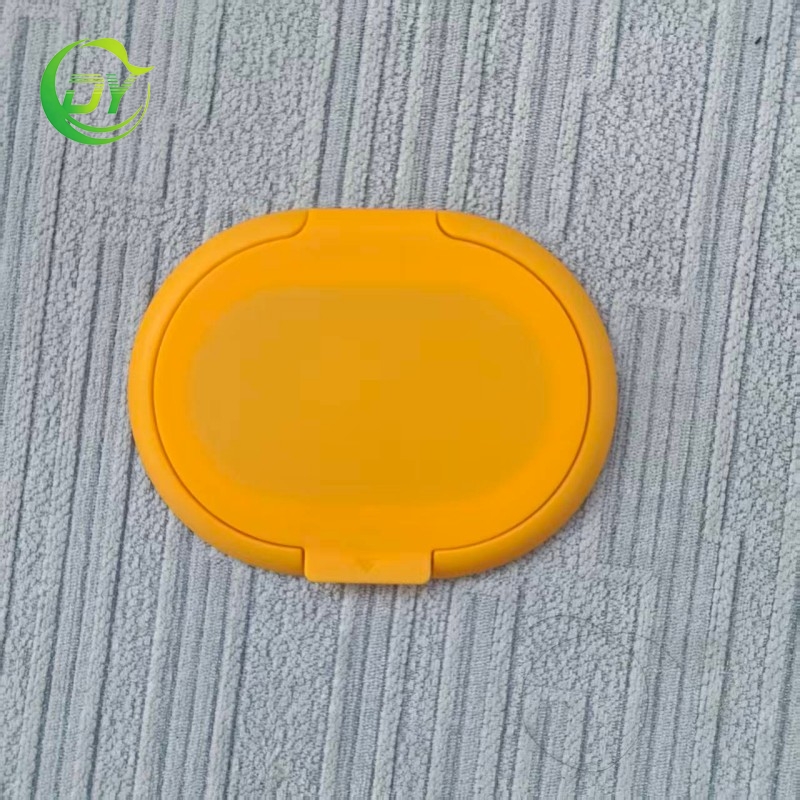
Plastic Wet Wipes Lid Wholesale buyers need a lid that protects moisture, blocks dirt, and opens smoothly during daily use. A weak wet wipes lid can cause drying, leakage, poor shelf appeal, and customer complaints. The main causes include poor adhesive bonding, lid warping, and weak package sealing. The closure system must also match the wipes pouch film, adhesive type, and production speed. This article explains the most common wet wipes packaging failures and shows how to prevent them during design, testing, and mass production.
Most wet wipes lid sealing failures come from four areas: uneven adhesive coverage, lid deformation, poor pouch surface preparation, and weak quality control. A reliable plastic wet wipes lid should maintain a flat contact surface, use an adhesive layer of about 0.15 to 0.30 mm, pass repeated opening tests, and keep the package airtight during transport and storage. Buyers should confirm the lid material, adhesive compatibility, peel strength, leak test results, and production inspection records before placing a wholesale order.
Most wet wipes lids are made from polypropylene, polyethylene, or a blend of plastic materials. Polypropylene is often selected because it offers good stiffness, chemical resistance, and heat stability. A common lid wall thickness is 1.2 to 2.0 mm. A thickness below 1.0 mm may reduce rigidity and increase the risk of warping. A thickness above 2.2 mm can increase material use, part weight, and injection molding time.
The material must also resist alcohol, preservatives, fragrances, and cleaning agents used in wet wipes. A lid should not become brittle after contact with the product formula. The final material should meet the buyer's intended food contact, cosmetic, or general consumer product requirements.
A flat lid creates even pressure on the adhesive and pouch film. A warped lid can create small air channels near the corners. These channels may not be visible during assembly, but they can allow moisture to escape over time.
For many production programs, a practical flatness target is no more than 0.5 mm across the sealing surface. The exact value depends on the lid size and pouch design. For a large lid measuring 100 mm by 70 mm, the sealing rim should remain level after cooling and storage.
Uneven adhesive coverage is one of the most common causes of a weak pouch closure. Gaps may appear near the corners, hinge side, or dispensing opening. Excess adhesive can also create wrinkles and prevent the lid from sitting flat.
A typical pressure-sensitive adhesive layer may be controlled within 0.15 to 0.30 mm. The correct value depends on the adhesive grade and pouch film. Automatic coating equipment should maintain a consistent coating width. Operators should check adhesive position at the start of each shift and after material changes.
| Adhesive problem | Typical result | Recommended control |
|---|---|---|
| Thin adhesive layer | Low peel strength and early moisture loss | Check coating thickness and adhesive pressure |
| Thick adhesive layer | Wrinkles, overflow, and difficult opening | Control coating weight and roller gap |
| Missing adhesive area | Air leakage at corners or edges | Use vision inspection and position checks |
| Dirty adhesive surface | Short bonding life | Keep the work area clean and covered |
The adhesive cannot bond correctly when the pouch surface contains dust, oil, moisture, or printing residue. Some low surface energy films also require special adhesive selection or surface treatment.
Before assembly, the pouch surface should be dry and free of visible particles. A practical production control is to inspect at least 10 packages per hour from each line. The supplier should record the pouch film structure, such as PET, PE, CPP, or a multilayer film. Adhesive performance can change when the film structure changes.
Plastic shrinkage can make the lid curve after molding. Uneven cooling, incorrect mold temperature, and poor gate design can increase this problem. A curved lid may pass a visual check but fail during a peel test.
Injection molding equipment should control mold temperature, cooling time, injection pressure, and holding pressure. A dimensional inspection can check the lid length, width, hinge position, and sealing rim. A common sampling plan measures 5 to 10 pieces from each production batch at several points on the lid.
Step-by-step control flow for lid warping:
The hinge must support repeated opening without lifting the adhesive area. A hinge that is too stiff can pull the lid away from the pouch. A hinge that is too weak may crack after repeated use.
Many wet wipes lids are tested for 500 to 1,000 opening and closing cycles. The actual requirement should match the product positioning. Baby wipes and household cleaning wipes may need more cycles because consumers open the pack many times each day.
The lid should also align with the dispensing opening. A position error of more than 1.0 mm may expose part of the opening or reduce the effective sealing area. Automatic placement equipment should use a guide fixture or camera alignment system to reduce this error.
A wet wipes lid must balance sealing strength and user comfort. Low peel strength allows moisture to escape. Excessive peel strength can tear the pouch, damage the adhesive layer, or make the package hard to use.
| Performance item | Suggested project target | Why it matters |
|---|---|---|
| Initial peel strength | About 1.5 to 3.5 N per 25 mm | Supports a secure first seal |
| Opening force | About 5 to 15 N | Allows normal consumer opening |
| Repeated opening | 500 to 1,000 cycles | Checks hinge and adhesive durability |
| Seal width | At least 3 to 5 mm where design allows | Provides a stable bonding area |
| Dimensional tolerance | Often within plus or minus 0.3 mm | Improves automatic placement accuracy |
These values are project targets, not universal legal limits. The final specification should be confirmed through packaging trials, product testing, and customer use testing.
A lid can perform well during production and still fail after several weeks. Temperature changes may soften the adhesive, shrink the film, or change the lid shape. Low humidity can accelerate moisture loss from the package.
A useful accelerated aging program stores sealed samples at 40 degrees C and 75 percent relative humidity for 7 to 14 days. The package can then be checked for peeling, leakage, lid deformation, and wipe moisture. Longer real-time storage should also be used when the product has a shelf life of 12 to 36 months.
A universal testing machine can measure the force needed to remove the lid or adhesive strip. The test speed should remain constant, such as 300 mm per minute, unless the customer specification states another value. At least five samples should be tested for each condition. The report should show the average value and the lowest result.
ASTM F88 can be used as a reference for flexible package seal strength when the test setup is suitable. ASTM D3330 may be used as a reference for pressure-sensitive adhesive peel testing. The test method must match the lid structure because a plastic lid and a thin adhesive label do not behave in the same way.
Leak testing can use vacuum chambers, pressure decay equipment, or dye penetration methods. A vacuum test may use a pressure range of 20 to 40 kPa below atmospheric pressure for 30 to 60 seconds. The exact setting depends on the pouch volume and film structure.
For production control, a supplier may test one sample from every 500 to 1,000 packages. Critical products may require 100 percent camera inspection and periodic vacuum testing. A failed sample should trigger batch isolation and root cause analysis.
The test machine should open and close the lid at a fixed angle and speed. The test should record hinge cracks, lid lift, adhesive transfer, and changes in opening force. A lid that passes 1,000 cycles without cracking or losing contact provides stronger evidence of daily-use durability.
Samples should be tested under different conditions because wet wipes are sold in many climates. A basic program can include:
| Condition | Example setting | Inspection focus |
|---|---|---|
| Normal storage | 23 degrees C and 50 percent relative humidity | Baseline seal and opening force |
| High temperature | 40 degrees C for 7 to 14 days | Adhesive softening and lid lift |
| High humidity | 40 degrees C and 75 percent relative humidity | Moisture resistance and film changes |
| Cold condition | 5 degrees C for 24 hours | Adhesive stiffness and hinge cracking |
| Transport simulation | Vibration and drop testing | Corner peeling and package damage |
The following flow chart can help a wholesale buyer review a supplier's implementation process.
Material approval
Step 1: Confirm plastic grade, adhesive grade, pouch film, lid size, and color.
Step 2: Produce 500 to 1,000 pilot pieces.
Step 3: Check lid dimensions, flatness, hinge strength, and adhesive position.
Step 4: Assemble the lid on filled wet wipes pouches.
Step 5: Run peel, leak, opening cycle, and environmental tests.
Step 6: Review test data and correct any failure.
Step 7: Approve a golden sample and signed technical specification.
Step 8: Begin mass production with first article inspection.
Step 9: Record hourly inspection results and batch traceability.
Step 10: Release the batch only after final quality approval.
A capable manufacturer should have equipment that matches the order volume and quality target. Useful equipment includes injection molding machines, automatic adhesive coating lines, lid placement machines, vision inspection systems, peel strength testers, vacuum leak testers, environmental chambers, and dimensional gauges.
Vision inspection can check missing adhesive, lid color, flash, surface marks, and placement position. A calibrated camera system may detect defects larger than 0.3 to 0.5 mm, depending on camera resolution and product color. Measurement equipment should have calibration records that are reviewed at least once every 12 months.
Before approving a plastic wet wipes lid wholesale order, request the following records:
In a Dongyang wet wipes lid project, the buyer can use a staged validation plan rather than moving directly to a large order. The project may begin with 1,000 pilot lids, followed by three mold adjustment rounds. The supplier can inspect 30 dimensions on the first article sample and test 10 assembled pouches for peel strength and leakage.
A practical implementation record may include 12 months of R&D work, 4 mold trials, 3 adhesive trials, and 2 packaging line trials. The final production plan can use hourly sampling, one vacuum test per 1,000 packages, and a 500-cycle opening test on samples from each production shift.
This type of data helps the buyer compare suppliers. It also shows whether the manufacturer has solved real sealing problems instead of only providing a product catalog.
Buyers searching for a plastic wet wipes lid wholesale supplier should ask specific questions about the product. These questions improve quotation accuracy and reduce later changes.
Wet Wipes Lid Sealing Performance: Common Failure Points usually involve adhesive gaps, poor film preparation, lid warping, hinge stress, incorrect opening force, and moisture loss during storage. A reliable Plastic Wet Wipes Lid Wholesale program should combine suitable plastic material, controlled adhesive coverage, accurate lid placement, and documented testing. Buyers should review physical dimensions, peel strength, leak test results, cycle testing, environmental conditioning, and production records. Whether the project is produced in Dongyang or another manufacturing center, measured process control is the best way to protect product moisture and reduce customer complaints.