
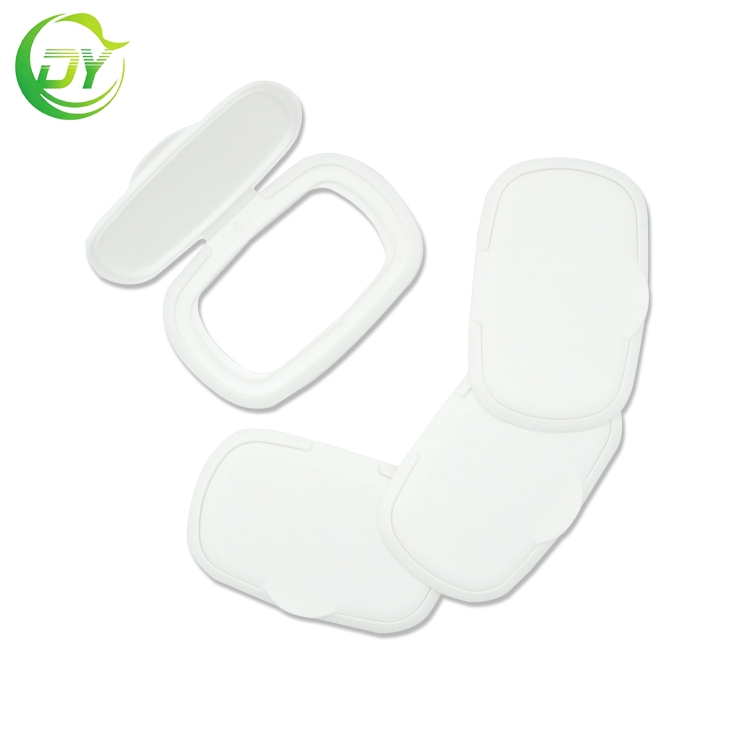
Makeup remover wipes need packaging that protects moisture, supports clean use, and looks attractive on a cosmetic shelf. The right wet wipes lids for makeup remover wipes can reduce drying, improve dispensing, and strengthen the value of the finished product. Important related terms include makeup remover wipes packaging, cosmetic packaging, and resealable closure. A flip top lid also helps users open the pack with one hand. The lid design should match the wipe material, pack size, formula, and filling process. Dongyang supplies plastic wet wipes lids for brands, converters, and overseas distributors that need stable quality and flexible wholesale service.
Many buyers compare lids only by price. This can create problems later. A low-cost closure may leak, lose its seal, or break during transport. For cosmetic wipes, the lid is part of the product experience. It affects how easily a customer removes one wipe, how long the pack stays moist, and whether the package looks premium. This guide explains the main selection points in clear steps.
1. Why Makeup Remover Wipes Need a Better Lid
Makeup remover wipes usually contain water, cleansing agents, oils, botanical extracts, or mild preservatives. These ingredients must remain inside the package until the consumer uses the final wipe. A weak opening can allow moisture to escape. A poor seal can also let air enter and change the feel of the wipes over time.
The lid must solve four common user problems: dry wipes, difficult opening, messy dispensing, and weak package appearance. A well-designed plastic lid creates a controlled opening and adds a second layer of protection over the inner seal. It also gives the package a clear visual point on a crowded cosmetics shelf.
Key function: moisture retention
The inner film seal is often the first moisture barrier. The flip top lid protects that seal from dust, accidental contact, and repeated opening. The lid cannot replace correct film sealing, but it can support the complete wet wipes packaging system.
Key function: clean and simple use
Consumers may use makeup remover wipes in a bathroom, bedroom, travel bag, or beauty salon. A lid with a clear thumb area and smooth edges makes opening easier. A stable hinge helps the lid stay attached to the pack instead of becoming a loose piece.
2. How to Choose Wet Wipes Lids for Cosmetic Packaging
Buyers should review the lid as part of the complete pack rather than as an isolated component. The container, label, flexible film, adhesive, wipe count, and filling line all affect performance. The following five factors give purchasing teams a practical evaluation method.
1. Select the correct lid size
Common cosmetic wipe packs use a lid opening that may be about 45 mm to 70 mm, depending on the pack format and wipe size. These figures are general starting points, not universal standards. The final lid must match the die-cut opening, adhesive area, and dispensing hole.
2. Check the opening and closing force
A lid that is too tight can be difficult for users with wet hands or limited finger strength. A lid that is too loose may open during shipping. Ask for opening and closing test data from production samples. The target should be easy daily use with enough resistance to prevent accidental opening.
3. Confirm the material
PP plastic is widely used for wet wipes lids because it offers a useful balance of toughness, flexibility, chemical resistance, and cost. The selected resin should be suitable for the product environment and the customer market. Buyers should also check color consistency, surface finish, odor, and regulatory requirements.
4. Review the resealing performance
A resealable closure should press down evenly and remain closed after repeated use. The lid design should not place excessive stress on the adhesive label or flexible pack. A practical test is to open and close samples at least 50 times while checking hinge strength, closure sound, and seal contact.
5. Match the lid with the brand image
White lids are common for clean beauty and sensitive skin products. Black, beige, pink, and custom colors can support premium or trend-led cosmetic ranges. A matte surface can create a soft appearance, while a gloss surface can make colors look brighter. Color samples should be approved before mass production.
3. Wet Wipes Lid Options for Makeup Remover Wipes
Different cosmetic products need different closure choices. A travel pack may need a small and light lid. A family-size cleansing wipe pack may need a larger opening and stronger hinge. The following table compares the most useful options for wholesale buyers.
| Lid option | Main benefit | Best use | Buyer caution |
|---|---|---|---|
| Standard flip top lid | Easy opening and broad market acceptance | Daily makeup remover wipes | Check hinge life and closure fit |
| Large opening lid | Faster wipe removal | Thick wipes and high-count packs | Requires suitable inner film opening |
| Low-profile lid | Reduced pack height and clean appearance | Travel and handbag packs | May offer less finger space |
| Custom color lid | Better brand matching | Private label cosmetics | Color approval is needed before production |
| Decorative surface lid | Supports a premium shelf image | Beauty and skincare collections | Surface must resist scratches and stains |
For most makeup remover wipes, the standard flip top lid is a practical starting point. It combines familiar use with efficient production. Buyers can then add color, texture, logo treatment, or size changes when the product positioning requires a stronger visual difference.
4. A Step-by-Step Process for Developing Cosmetic Wipes Packaging
Good packaging development reduces the risk of late changes. A clear process also helps overseas buyers communicate with a wet wipes lid manufacturer. The workflow below can be used for new products, private label projects, and replacement packaging.
Step 1: Define the product formula and wipe material
Step 2: Confirm wipe size, folded format, and pack count
Step 3: Select lid opening size and lid style
Step 4: Match the lid with film, adhesive, and filling equipment
Step 5: Approve color, surface finish, and samples
Step 6: Run opening, sealing, drop, and transport tests
Step 7: Confirm production specifications and inspection plan
Step 8: Start mass production and retain approved samples
Step 1: Define the finished product
Record the wipe dimensions, folded count, liquid level, pack weight, and expected shelf period. Oil-based or highly active formulas may require extra compatibility checks. The lid should not be selected before these product details are known.
Step 2: Test the complete package
Do not test the lid alone. Fill a complete sample pack and check whether the wipe can be pulled through the opening without tearing. Test the pack after it has been stored in different positions. Inspect the lid, inner seal, adhesive bond, and film for visible problems.
Step 3: Approve the production standard
The final specification should include lid material, weight tolerance, dimensions, color reference, hinge design, closure force, packaging method, and inspection level. Clear documents reduce misunderstandings between the manufacturer, converter, and distributor.
5. Common Packaging Problems and Practical Solutions
| Problem | Likely cause | Practical solution |
|---|---|---|
| Wipes dry before the final use | Weak film seal, poor adhesive, or an open lid | Improve seal control and test the complete package |
| Wipe tears during removal | Opening is too small or edges are rough | Adjust opening size and inspect edge finish |
| Lid opens during transport | Closure fit or hinge strength is insufficient | Increase closure stability and perform carton drop tests |
| Adhesive label lifts | Surface contamination or unsuitable adhesive | Clean the surface and validate adhesive compatibility |
| Color varies between batches | Unclear color standard or unstable masterbatch ratio | Use an approved color sample and controlled material process |
| Hinge cracks after use | Material stress, sharp design, or molding variation | Review hinge geometry and run repeated-use testing |
Drying is often blamed on the lid, but it can begin with the inner film seal. The lid, film, adhesive, and filling process must work together. For this reason, Dongyang recommends checking samples after filling instead of judging a lid only from an empty package.
6. Quality Checks for Plastic Wet Wipes Lids
A professional quality plan should combine appearance checks with functional tests. Visual inspection can find flash, scratches, color variation, contamination, and incomplete molding. Functional inspection can identify problems that may appear only after repeated consumer use.
Recommended inspection points
- Lid length, width, height, and opening dimensions
- Material identification and color consistency
- Hinge movement and repeated-use performance
- Closure fit and opening force
- Surface smoothness and edge safety
- Compatibility with the label and flexible film
- Carton packing, quantity, and protection during export
For export orders, buyers should request a pre-production sample, a sealed production sample, and a retained reference sample. This creates a clear basis for comparison if a quality question appears during shipment or distribution.
7. Wholesale Buying Guide for Overseas Distributors
Overseas buyers need more than a product photograph. Before placing a wholesale order, ask the manufacturer for technical drawings, material details, color options, sample timing, minimum order quantity, lead time, packing details, and available customization.
Questions to ask a wet wipes lid supplier
- Which lid sizes are available for makeup remover wipes?
- Can the lid be supplied in a custom color?
- What PP plastic or other material is used?
- Can the lid match our filling line and film opening?
- How is hinge and closure performance tested?
- What is the minimum order quantity for standard and custom products?
- How are lids packed to prevent scratches and deformation?
- Can the supplier provide samples before bulk production?
Standard lids are usually easier to source and may provide a shorter development period. Custom lids can improve brand recognition but may require mold development, color approval, and a larger order quantity. The best choice depends on the sales forecast, product launch date, and desired shelf position.
8. How Dongyang Supports Cosmetic Packaging Projects
Dongyang focuses on plastic wet wipes lids for manufacturers, distributors, and private label brands. The company can support projects that require standard flip top lids, custom colors, different opening formats, and packaging coordination. Buyers can use the sample stage to confirm the lid appearance, wipe dispensing, closure action, and fit with their existing pack.
A reliable supplier should communicate clearly about dimensions, material, production limits, inspection standards, and delivery planning. This is especially important for overseas orders, where a small packaging problem can affect a large batch of finished wipes. Dongyang works with customers to identify the correct lid specification before mass production begins.
9. Final Selection Checklist
Before approving wet wipes lids for makeup remover wipes, confirm the following points:
- The lid fits the pack opening and filling equipment.
- The opening allows one wipe to be removed without tearing.
- The closure remains secure during storage and transport.
- The inner film seal and lid work as one moisture protection system.
- The material is suitable for the product and target market.
- The color and surface finish match the cosmetic brand.
- The hinge survives repeated opening and closing.
- Samples have passed filled-pack testing.
- The supplier has confirmed order quantity, lead time, and inspection terms.
The right cosmetic packaging lid does more than close a pack. It helps preserve moisture, improve the daily user experience, and protect the visual value of makeup remover wipes. A standard flip top lid is often the most efficient starting point, while custom size, color, and finish can support a stronger private label identity. By checking the complete package and using measurable tests, overseas buyers can reduce quality risk and select a dependable wet wipes lid manufacturer for long-term supply.