
Plastic Wet Wipes Lid Wholesale helps wipes brands protect moisture, control dispensing, and improve the opening experience without redesigning the entire pack. A suitable lid can reduce dry-out risk, support private-label packaging, and simplify high-volume production. Buyers comparing a plastic wet wipes lid wholesale supplier, a flip-top wet wipes lid manufacturer, or custom plastic wet wipes lids for bulk orders should review material, seal design, hinge strength, adhesive performance, and quality testing before placing an order.
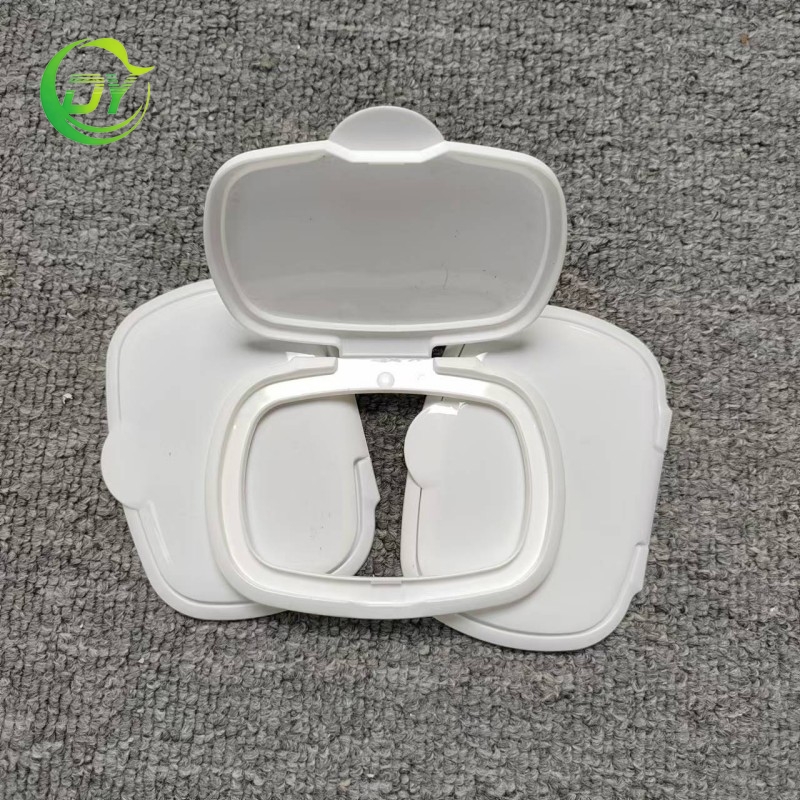
A plastic wet wipes lid is the rigid closure fitted over the dispensing opening of a wet wipes pack. It is also called a flip-top lid, wet wipes closure, or dispensing lid. The lid usually includes a hinged cover and a sealing section. It is attached to a flexible wipes pouch with pressure-sensitive adhesive or another bonding method.
Unlike the thin film opening on a basic wipes pack, a plastic lid gives the package a stable opening. It helps users open and close the pack repeatedly while keeping the wipes inside moist. The lid does not create moisture protection by itself. Performance depends on the combined design of the lid, pouch film, adhesive, wet wipe formulation, and production process.
The exact design varies by supplier, but most flip-top lids contain several functional parts. Understanding each part helps buyers compare quotations and identify the cause of leakage, dry-out, or breakage.
The base is the lower section attached to the wipes pouch. It surrounds the dispensing hole and gives the package a stronger surface for opening and closing. A wider base can provide more bonding area, but it also uses more material and may change the appearance of the pouch.
The cover protects the dispensing opening from dust, contact, and accidental opening. It may use a molded hinge or a separate hinge structure. The cover should close evenly without excessive force. If it is too loose, the pack may open during transport. If it is too tight, users may struggle to open it with one hand.
Some lids include an inner plug that fits into the dispensing hole. This part creates a second barrier against air movement. It is especially useful for baby wipes, facial cleansing wipes, and disinfecting wipes that may be used over several days.
Buyers should not judge moisture retention from the lid alone. A proper test should compare the initial package weight with the package weight after a defined storage period. The test conditions should state temperature, humidity, opening frequency, and storage time.
The opening controls how easily one wipe can be removed. A hole that is too small can cause tearing or multiple wipes to come out together. A hole that is too large may increase evaporation and allow the stack to move inside the pouch.
The best opening depends on wipe size, fabric thickness, folding method, lotion viscosity, and whether the wipes are interfolded or stacked. It is safer to test the lid with the final wipe formula rather than with dry fabric samples only.
The locking feature may be a snap edge, hook, button, or press-fit structure. It should provide clear closing feedback, such as a click or firm stop. During sampling, test the closure after repeated use because a lid that works once may not perform the same way after hundreds of cycles.
The underside of the lid may include a pre-applied adhesive ring or a flat surface for adhesive application during packaging. The adhesive must match the pouch film. Common pouch structures may contain polyethylene, polypropylene, polyester, aluminum, or multilayer laminates. Surface treatment, pouch cleanliness, temperature, and pressure all affect the final bond.
Polypropylene, often called PP, is widely used because it has a low density, good stiffness, and useful fatigue resistance for hinged parts. Polyethylene may also be used for specific flexible or soft-touch designs. The correct material depends on hinge movement, molding conditions, chemical compatibility, color requirements, and local compliance rules.
ASTM D7611 provides the resin identification code system used to identify common plastic types. A resin code supports sorting and identification, but it does not automatically mean that the finished lid is accepted in every local recycling program. Buyers should check the waste rules in the target market.
Plastic lids are used across several wipes categories. Each category has a different balance between moisture retention, dispensing speed, appearance, and cost.
Baby wipes usually require smooth edges, low odor, stable closure force, and reliable protection against drying. The lid should not have sharp flash, loose parts, or rough molding marks. Buyers should also confirm that the complete package meets the regulatory requirements of the sales market, including requirements for materials that may contact the product.
Makeup remover wipes, cleansing wipes, and intimate care wipes often use smaller or more premium-looking lids. Matte colors, custom logos, and controlled opening force can support a higher-end product position. The lid must remain compatible with oils, surfactants, fragrances, and preservatives in the lotion.
Kitchen, bathroom, and surface-cleaning wipes may contain alcohol, quaternary ammonium compounds, solvents, or strong fragrances. These ingredients can affect plastics, adhesives, and printed surfaces. A compatibility test should place the finished lid and pouch in contact with the actual formulation before mass production.
Disinfecting wipes need a package that helps control evaporation and supports repeated use. If the active ingredient is volatile, the closure and pouch combination become especially important. The package should be tested for weight loss, leakage, closure damage, and changes in the wipe formula during the intended shelf-life study.
Pet wipes are used for paws, coats, ears, and general cleaning. A larger dispensing opening may be useful when the wipe is thick or folded into a large format. The design should still prevent several wipes from being pulled out together, which increases product waste.
Travel packs, hotel amenity products, gyms, restaurants, and cleaning-service supplies often need a compact lid with strong transport performance. The package may be opened many times in changing temperature and humidity conditions, so hinge fatigue and adhesive durability are important purchasing criteria.
Wholesale purchasing is important when the lid is part of a repeated production program rather than a one-time sample project. A suitable supplier can help standardize dimensions, reduce component changes, and coordinate the lid with pouch production equipment.
Wholesale does not always mean ordering the largest possible quantity. The right order size should consider forecast demand, mold investment, color changes, warehouse space, and the shelf life of the finished wipes. A lower unit price may not be economical if the buyer must store several years of unused packaging.
Provide the supplier with the pouch material, pouch width, pouch length, opening size, wipe dimensions, folded format, product weight, and expected fill quantity. If the pouch is multilayer film, identify the layer that contacts the adhesive.
Explain whether the product must open with one hand, whether children may use it, and whether the lid should create a soft click or a firm snap. State the target surface appearance, color, logo location, and maximum lid height.
Ask for the resin specification, colorant information, safety data where applicable, and material compliance documents for the destination market. If the product is marketed for babies, sensitive skin, food-service use, or medical environments, do not assume that a general packaging statement is enough. Confirm the exact legal and customer requirements before production.
A useful drawing should show external dimensions, dispensing hole size, hinge location, adhesive area, tolerance requirements, and closure height. It should also identify the material and any critical features. Without a drawing, two suppliers may quote products that look similar but do not fit the same pouch or filling line.
Sample testing should use the actual lotion, fabric, fold, pouch film, and filling method. Check:
Packaging should be checked under the expected distribution conditions. ASTM D4169 is a recognized practice for evaluating shipping containers and systems under laboratory distribution cycles. The exact test plan should match the product’s shipping method, carton structure, pallet loading, and market route.
Useful tests may include vibration, compression, drop handling, high-temperature storage, low-temperature storage, humidity exposure, and repeated opening and closing. Set acceptance limits before the test begins. For example, define the maximum number of damaged lids, the permitted adhesive lift area, and the allowed package weight loss.
Keep one signed sample as the reference for mass production. The approved sample should include the lid color, logo position, surface finish, dimensions, closure behavior, and pouch bonding result. The factory and buyer should use the same reference during incoming inspection and final inspection.
A quality plan should turn general expectations into measurable checks. The following controls are commonly useful:
| Inspection Item | What to Check | Why It Matters |
|---|---|---|
| Dimensions | Length, width, height, hole size, and adhesive area | Ensures fit with the pouch and filling process |
| Visual appearance | Flash, short shots, color variation, scratches, and contamination | Protects appearance and user safety |
| Hinge movement | Opening angle, smoothness, and repeated-cycle performance | Reduces broken covers and poor user experience |
| Closure function | Snap force, full closure, and accidental opening resistance | Helps protect wipes during storage and transport |
| Adhesion | Peel behavior, edge lift, and bond after aging | Prevents leakage and pouch separation |
| Material identity | Resin type, colorant, and batch records | Supports traceability and consistent production |
For larger orders, request a batch inspection report and retain samples from each production lot. A simple lot number printed on cartons can help trace a complaint back to a production date, material batch, or machine setting.
Possible causes include unsuitable adhesive, dusty film, low bonding pressure, incorrect application temperature, or a pouch surface with low surface energy. The solution may require a different adhesive grade, corona treatment, wider bonding area, or better pressure control during application.
Drying can result from a poor seal, a large dispensing hole, weak pouch film, frequent opening, high storage temperature, or a lotion with high volatile content. Test the entire package rather than changing only the lid. Compare package weight and moisture content over a defined period.
This problem may be caused by an oversized hole, unsuitable folding, excessive lotion, a compressed wipe stack, or a poor interfold pattern. Adjusting the orifice is only one possible solution. The lid and wipe fold must be tested together.
Hinge failure may come from incorrect resin selection, a thin hinge section, molding stress, sharp corners, low-temperature storage, or excessive opening force. Ask the supplier for hinge-cycle data under the expected temperature range.
Color differences may result from inconsistent masterbatch dosing, recycled content variation, different resin lots, or changing molding temperatures. Establish a color standard using a physical reference or an agreed color measurement system. Inspect the first articles from each production batch.
Check the snap geometry, closure force, carton compression, and pallet loading. A strong lid can still open if the packaging is compressed in the wrong direction. Transport testing should reflect the actual carton and pallet arrangement.
The quoted unit price is only one part of the total cost. Buyers should request a clear quotation that separates the following items:
Ask whether the quoted minimum order applies to the total order or to each color, logo, and size. A buyer ordering 100,000 pieces across five colors may face five separate production minimums.
Common customization choices include:
Every customization can affect mold cost, lead time, appearance, and performance. Approve a physical sample before approving a color or logo from a digital image alone.
Plastic packaging decisions should consider the complete package, not only the lid. A plastic lid may be recyclable in principle, but the pouch, adhesive, label, residual lotion, and local collection system can affect actual recovery.
Useful steps include:
ISO 18602 addresses packaging optimization and encourages organizations to reduce packaging volume and weight while maintaining required performance. In practice, this means reducing material only after confirming seal integrity, transport strength, and user function.
A complete inquiry helps the supplier provide a more accurate design and quotation. Include:
Photos alone are not enough for a technical quotation. A drawing, sample pouch, or complete package sample can prevent errors in fit and adhesive placement.
Polypropylene is a common choice because it offers stiffness and good fatigue resistance for molded hinges. Other plastics may be selected for softness, chemical compatibility, appearance, or special performance requirements. The supplier should confirm the exact resin and test it with the final wipes formulation.
It can help reduce air exchange when the lid and seal are correctly designed, but it cannot guarantee moisture retention alone. The pouch film, adhesive, dispensing hole, lotion, storage temperature, and opening frequency also affect drying.
Test the hole with the real wipe size, fold, fabric, lotion, and count per pack. Measure whether one wipe can be pulled out without tearing and whether the next wipe remains available. A hole that works with dry fabric may not work with a wet, interfolded wipe.
Yes. Common methods include embossing, debossing, pad printing, and other surface decoration methods. The best method depends on the lid resin, surface shape, order quantity, color contrast, and required durability.
Test pouch bonding, closure function, hinge movement, dispensing performance, leakage, weight loss, chemical compatibility, storage aging, and transport durability. Use an approved golden sample as the production reference.
A wholesale lid may use an existing mold, size, and structure. A custom lid may require a new mold or changes to the hinge, hole, logo, color, or base dimensions. Custom products generally require more engineering review and may have a higher minimum order quantity.
Compare the same lid dimensions, resin type, adhesive area, packaging method, inspection standard, tooling ownership, lead time, minimum order quantity, and delivery terms. A lower unit price is not a meaningful comparison if the materials or test requirements differ.
Start by collecting the pouch drawing, wipe specifications, formula details, target quantity, and destination-market requirements. Then request samples from a qualified supplier and test the complete package under realistic storage and transport conditions. Review the supplier’s material records, quality process, mold plan, and production capacity before signing the final order.
For buyers seeking a plastic wet wipes lid wholesale supplier or a custom packaging solution, Dongyang can be included in the supplier comparison process. Ask for a technical drawing, material specification, sample package, quotation breakdown, and quality-control plan. A careful sample review before mass production is the most practical way to confirm that the lid fits the pouch, protects the wipes, and works for real users.