
Plastic Wet Wipes Lid Wholesale is important for brands that need reliable packaging at scale. A lid protects moisture, controls product access, and helps prevent contamination after opening. Buyers searching for bulk plastic wet wipes lids, a custom wet wipe lid manufacturer, or wholesale flip top lids for wet wipes should look beyond unit price. Hinge strength, seal design, material safety, mold quality, and production testing all affect the final user experience.
Wet wipes are used in homes, hospitals, restaurants, childcare centers, beauty salons, and travel kits. In these settings, a weak lid can allow the pack to dry out, open inside a bag, or collect dirt around the dispensing opening. A correctly designed plastic lid gives the flexible pouch a stable closure while keeping the product easy to use with one hand.
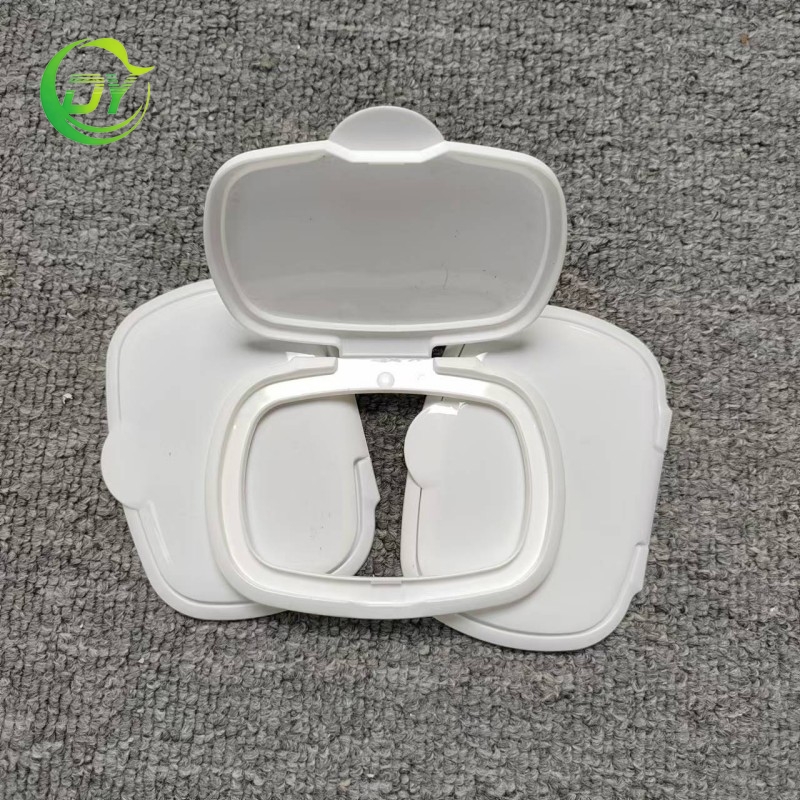
Plastic wet wipes lid wholesale refers to the bulk supply of molded plastic closures designed for wet wipe packs. The lid is usually attached to a flexible pouch with pressure-sensitive adhesive or another bonding system. It commonly includes a flip-top cover, a snap-fit feature, a hinge, and an opening that controls wipe removal.
In packaging terms, several parts are important:
Most wet wipe lids are made from polypropylene, commonly called PP. PP is widely used in packaging because it offers low density, chemical resistance, and good fatigue performance. The exact grade must still match the product formula, temperature range, bonding method, and intended market.
A loose lid is usually caused by a combination of mechanical wear, poor fit, adhesive failure, or pouch deformation. The problem is not always the plastic itself. The complete lid-and-pouch system must work together.
A living hinge bends each time the user opens the lid. If the hinge is too thin, too thick, poorly molded, or made from an unsuitable PP grade, repeated bending can create whitening, cracks, or loss of spring force. The cover may stop returning to its original position and feel loose.
The snap-fit parts can lose holding force when the locking hook and receiving edge rub against each other. Small changes in mold dimensions can also reduce the overlap between the two parts. If the lid is opened many times per day, this wear becomes more noticeable.
The lid may appear loose because the adhesive is separating from the pouch rather than because the cover is failing. Common causes include dust, moisture, low surface energy, an incorrect adhesive, poor pressure during application, or an application temperature outside the adhesive supplier’s recommended range.
A flexible pouch can wrinkle, stretch, or shrink during filling, transport, or storage. When the pouch surface changes shape, the lid may no longer sit flat. This can create a gap around the opening and reduce the user’s perception of quality.
High humidity and heat can affect adhesive performance and pouch dimensions. Storage conditions should be checked against the lid, adhesive, pouch film, and wet wipe formulation. A package designed for room-temperature storage may not perform the same way in a hot vehicle or warehouse.
Users may pull the lid sideways, close it with a wipe caught in the edge, or place heavy items on the package. These actions can damage the hinge or distort the snap-fit. Clear use instructions can reduce avoidable returns.
A reliable supplier should control hinge thickness, radius, gate position, and polymer flow during mold development. These details affect how stress moves through the hinge. A good design should be tested with the actual lid material and not judged only by a visual sample.
The locking feature should provide enough retention without requiring excessive opening force. If the force is too low, the lid may open in a bag. If it is too high, users may pull the lid sideways and damage the pouch.
Ask the supplier to report:
The adhesive must bond to both the plastic lid and the pouch film. The supplier should confirm compatibility with the pouch’s outer layer, printing ink, surface treatment, and wet wipe liquid. A peel test should be performed after application and after storage under the intended conditions.
Do not compare adhesive strength only on a new sample. A better quality plan checks samples after aging, transport vibration, temperature changes, and repeated lid use.
Injection molding defects can change the closing performance. Common problems include short shots, flash, sink marks, warpage, uneven wall thickness, and damaged hinge areas. A production control plan should define acceptable limits for these defects.
For large orders, request samples from the beginning, middle, and end of a production run. This helps identify changes caused by material drying, mold temperature, machine settings, or tool wear.
Plastic wet wipe lids are used across several product categories:
Parents often open the pack with one hand while holding a child. The lid should close easily and create a dependable seal between uses. Smooth edges are important because the package may be handled frequently.
Makeup removal wipes, facial cleansing wipes, intimate wipes, and body wipes need a clean, attractive closure. A stable lid also helps preserve the fragrance and liquid level during normal use.
Disinfecting wipes may contain alcohol, quaternary ammonium compounds, or other active ingredients. The lid, pouch film, adhesive, and ink must be checked for chemical compatibility. For regulated disinfectant products, packaging claims should match the rules in the target market.
In the United States, the regulates many antimicrobial products, including certain disinfecting wipes. Packaging performance does not replace product registration or label compliance.
Healthcare packaging may require stronger traceability, controlled manufacturing, and documented cleanliness. If the wipes are used with a medical device or sold as a medical product, the packaging requirements may be more demanding than those for general consumer wipes.
The addresses packaging for terminally sterilized medical devices. It is not automatically applicable to every wet wipe, but it is a useful reference when a project involves sterile or medical packaging.
Restaurants, airlines, hotels, and catering companies use wipes for hand cleaning and surface care. Lids for these applications should be easy to identify, easy to wipe clean, and resistant to the expected cleaning chemicals.
Industrial users may store wipes in workshops, factories, and vehicles. The package may face dust, oil residue, vibration, and temperature changes. A strong snap-fit and a properly bonded base can help reduce accidental opening during transport.
Large-volume production can reduce tooling, setup, packaging, and shipping costs per lid. The final saving depends on order quantity, lid size, decoration, material, and delivery location. Ask for a quotation that separates mold charges, unit price, packaging, freight, and taxes.
A single approved mold and color standard can improve consistency across production batches. This matters for retail brands because differences in gloss, color, or logo position can make products look uneven on the shelf.
A well-fitted lid reduces exposure of the dispensing opening to air, dust, and accidental contact. It also helps limit moisture loss. The actual result depends on the pouch film, seal quality, wipe liquid, storage temperature, and how often the pack is opened.
Wholesale lids can often be customized with color matching, embossed logos, printed graphics, or special surface finishes. Before approval, check color under a defined light source and compare the first article with the approved standard.
Bulk purchasing can reduce the risk of running out of closures during wet wipe production. A supplier should provide a realistic lead time for mold production, sample approval, mass production, inspection, and shipment.
Price is only one part of supplier evaluation. Use the following process to reduce quality and delivery risks.
Prepare the lid dimensions, pouch size, wipe count, liquid formula, target market, color, logo requirements, and expected annual volume. Also state whether the lid must resist alcohol, disinfectant ingredients, oils, or fragrance compounds.
Request the resin type, grade information, colorant details, and applicable food-contact or chemical-compliance documents. A material declaration should identify the relevant regulatory basis rather than simply stating “safe plastic.”
For packaging sold in the United States, the is a useful starting point for projects involving food-contact claims. Requirements differ by product category and country.
Ask whether the supplier owns the mold, how many cavities it has, and how dimensional changes will be controlled. Confirm who pays for mold modification if the sample fails. Test the lid on the actual pouch instead of testing the plastic lid alone.
A practical test plan may include:
ASTM D4169 provides a recognized framework for evaluating packaging performance during distribution. It is intended to be selected according to the distribution cycle and package type. Read the and ask a qualified laboratory or packaging engineer to choose the correct test schedule.
Ask for a certificate of analysis, inspection report, batch number, raw material record, and corrective-action process. A supplier with clear records can investigate problems faster when a field complaint occurs.
Keep one signed sample as the reference for color, dimensions, logo position, hinge action, closure feel, and pouch bonding. The production batch should be compared with this sample before shipment.
| Specification | Why It Matters | What to Confirm |
|---|---|---|
| Plastic material | Affects strength, flexibility, chemical resistance, and recyclability. | Polymer grade, colorant, compliance documents, and formula compatibility. |
| Lid dimensions | Determines whether the lid fits the pouch and dispensing opening. | Length, width, height, aperture size, and dimensional tolerances. |
| Hinge structure | Controls repeated-use performance. | Hinge design, material flow, bending behavior, and failure limits. |
| Closure force | Balances child-friendly use, seal security, and user comfort. | Opening force, closing force, and retention after aging. |
| Adhesive system | Prevents the lid from separating from the pouch. | Peel strength, surface preparation, application pressure, and aging results. |
| Decoration | Supports brand recognition and shelf presentation. | Color standard, print method, abrasion resistance, and logo placement. |
| Packaging and shipment | Protects lids from dust, deformation, and transport damage. | Carton count, inner bags, pallet method, labeling, and loading plan. |
Dongyang can be considered when buyers need a supplier for molded plastic wet wipe closures, custom colors, branding, and bulk production. A professional supplier should help review the pouch structure, lid dimensions, adhesive system, product liquid, and expected use conditions before recommending a design.
When contacting Dongyang, provide:
This information allows the supplier to prepare a more accurate quotation and reduce unnecessary sample changes.
Polypropylene is commonly used because it provides a useful balance of flexibility, fatigue resistance, chemical resistance, and cost. The correct grade depends on the product formula, design, and regulatory requirements.
Yes. Custom colors can usually be created with approved masterbatch or colorant systems. A buyer should confirm the color standard, acceptable variation, surface finish, and inspection lighting before mass production.
Use a suitable snap-fit, confirm the cover retention force, avoid overfilling the pouch, and test the complete package under compression and transport conditions. A tamper-evident feature may also help show whether the pack was opened.
Test the assembled pouch, not only the lid. Measure opening and closing behavior, inspect the hinge, check the lid-to-pouch bond, and expose samples to realistic temperature, humidity, storage, and distribution conditions.
Sometimes, but not always. The lid must match the pouch width, opening dimensions, adhesive area, and wipe stack. Using one lid across several sizes is possible only after fit and performance testing.
Minimum order quantity varies by supplier, mold design, color, decoration, and material. Request separate pricing for samples, trial orders, and full production. Also ask whether unused stock can be stored for a later shipment.
Recyclability depends on the plastic type, colorants, adhesive, pouch structure, and local recycling system. A PP lid may be technically recyclable, while the complete multi-layer pouch may not be accepted in the same collection stream. Confirm local rules before making a recycling claim.
Start by collecting your pouch sample, wipe formula information, lid dimensions, target quantity, and market requirements. Then request a technical quotation, material documents, samples, and a test plan from a qualified supplier. Before placing a large order, approve a golden sample and define measurable acceptance criteria for dimensions, closure force, hinge performance, bonding, appearance, and shipment quality.
For more guidance, review the packaging instructions supplied with the product and ask your supplier for a user guide covering correct opening, closing, storage, and disposal. If you are comparing bulk plastic wet wipes lids or need a custom wet wipe lid manufacturer, contact Dongyang with your pouch sample and specifications so the design can be evaluated before production.