
A plastic wet wipes lid is a molded closure fitted over the dispensing opening of a wet wipes package. It protects the wipes from contamination, reduces moisture loss, and allows consumers to remove one wipe at a time. For brands, retailers, and distributors, a reliable lid improves product usability, shelf life, packaging appearance, and customer satisfaction. Businesses sourcing Plastic Wet Wipes Lid Wholesale can also reduce packaging costs and create a consistent branded product line.
{brandname}, including suppliers serving the Dongyang packaging market, can provide flip-top lids, adhesive lids, and custom-colored closures for baby wipes, facial wipes, household cleaning wipes, personal care wipes, and industrial wipes.
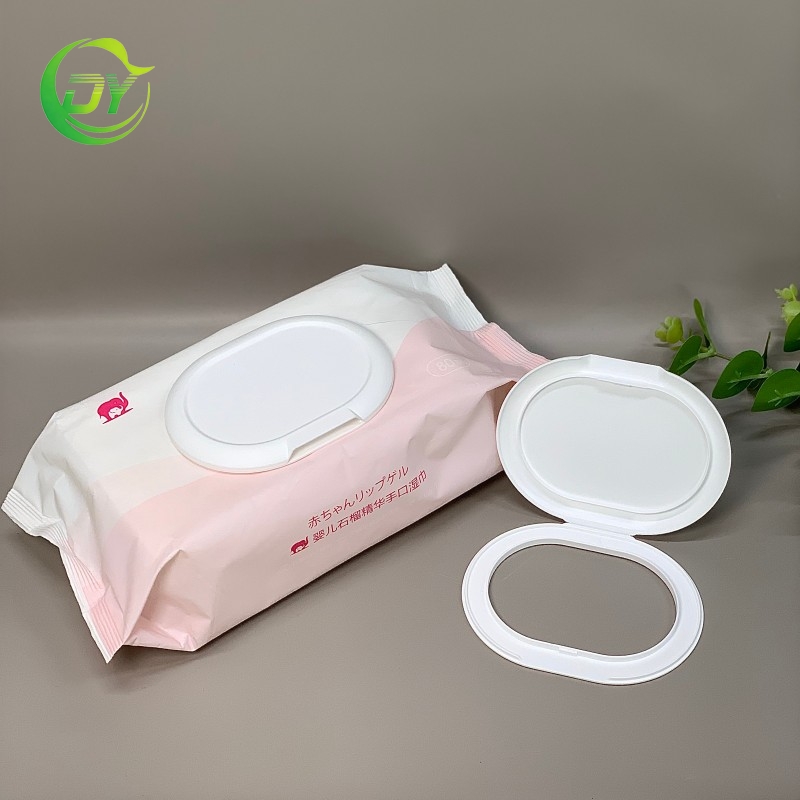
Most wet wipes lids are produced through injection molding. The closure is normally made from polypropylene (PP), polyethylene (PE), or another packaging-grade thermoplastic selected for impact resistance, chemical compatibility, and dimensional stability.
A typical lid contains several functional parts:
When the cover is closed, the lid limits air exchange around the dispensing opening. This helps slow evaporation of the wipe solution. It does not make every pouch completely airtight, because overall moisture retention also depends on the film structure, adhesive, seal design, and manufacturing process.
The lid solves several common consumer and manufacturing problems at the same time. Without a dependable closure, wipes may dry out, become contaminated, or be difficult to dispense.
Wet wipes contain water, surfactants, preservatives, fragrances, or other formulation ingredients. A properly designed cover reduces the exposed area and helps maintain the intended moisture level after the first opening.
The lid creates a physical barrier against dust, hair, splash contamination, and repeated contact with the dispensing opening. For baby wipes and personal care wipes, this protective function is especially important.
A correctly sized aperture supports smooth wipe withdrawal and can reduce multiple-wipe pull-through. The opening must be compatible with the folded format, such as interfolded, stacked, or center-pull wipes.
Color matching, embossed logos, matte or glossy finishes, and custom shapes allow the closure to become part of the packaging identity. A premium lid can communicate quality more effectively than a simple resealable film label.
For high-volume packaging lines, dimensional consistency is essential. A supplier may specify critical dimensions to a tolerance of 0.01 mm for selected tooling or inspection points, although the final tolerance should be confirmed according to the lid structure and production method.
When purchasing Plastic Wet Wipes Lid Wholesale, buyers should select the closure according to the pouch material, wipe count, formulation, and expected usage frequency. The most common applications include:
| Application | Recommended Lid Considerations | Main Business Value |
|---|---|---|
| Baby wipes | Smooth edges, secure snap closure, safe material selection | Improves hygiene and parent confidence |
| Facial and personal care wipes | Premium finish, controlled dispensing, fragrance compatibility | Supports premium positioning |
| Household cleaning wipes | Chemical resistance, robust hinge, larger dispensing opening | Supports frequent opening and closing |
| Industrial wipes | Impact resistance and compatibility with stronger formulations | Reduces packaging failure in demanding environments |
Wet wipes packaging originally relied heavily on peelable labels and simple film seals. These solutions were economical, but repeated opening could reduce adhesive performance and expose the wipes to air. As wipes became common in childcare, cosmetics, healthcare support, food service, and household cleaning, the demand for reusable plastic closures increased.
Injection-molded lids became popular because they provide repeatable geometry, attractive decoration options, and a more substantial user experience. Modern packaging development now focuses on lightweighting, resin efficiency, recycled-content strategies where technically suitable, and compatibility with automated pouching equipment.
Manufacturing centers such as Dongyang are associated with a broad supplier ecosystem for plastic components, consumer packaging, molds, and small commodity products. A Dongyang sourcing project may offer access to mold development, color matching, assembly, and export packaging through one supply chain. However, buyers should evaluate the individual factory’s quality system rather than relying only on its location.
This is incomplete. Moisture retention depends on the entire packaging system, including the pouch film’s oxygen and water-vapor barrier, heat-seal quality, adhesive performance, wipe formulation, and lid closure. A premium lid cannot compensate for a weak pouch seal.
Lids differ in aperture size, base dimensions, adhesive area, hinge position, and pouch compatibility. A closure designed for a 20-wipe travel pack may not work correctly on a 100-wipe household pack.
An excessively tight snap-fit can make the package difficult for children, older adults, or users with limited hand strength. The correct design balances retention force, usability, hinge durability, and closure feedback.
Material suitability must be verified for the intended application. Buyers should request resin identification, supplier declarations, migration information where applicable, and compatibility data for the wipe lotion. “Plastic” is not a complete compliance specification.
Appearance checks are important, but they should be supported by dimensional inspection, hinge-cycle testing, closure-force testing, adhesion or seal evaluation, and transport simulation when appropriate. A capable Plastic Wet Wipes Lid Wholesale supplier should document the inspection plan and acceptance criteria.
Testing requirements depend on the final package construction and market. The following standards can support a structured validation program:
These standards should not be treated as automatic certification of a specific lid. The test method, sample size, conditioning period, and acceptance limit should be agreed in the technical specification.
A practical supplier quality plan may include:
Consider a brand launching a #### 80-count household cleaning wipe pack. The formula contains a stronger surfactant blend, and consumers may open the pouch several times each day.
The buyer could specify a PP flip-top lid with:
The supplier could then perform hinge-cycle testing, wipe withdrawal trials, pouch adhesion testing, and ASTM D4169 distribution simulation. If the package passes these checks, the brand receives more than an attractive component: it receives a closure integrated into the complete packaging system.
Before ordering Plastic Wet Wipes Lid Wholesale, prepare a technical brief containing the following information:
Ask potential suppliers whether they can provide a 2D drawing, 3D file, material declaration, pre-production sample, mold schedule, quality-control report, and corrective-action process. A professional supplier should also explain lead times, tooling ownership, minimum order quantity, and replacement procedures for nonconforming goods. A response target of 24 hours for quotation or technical questions is a useful service benchmark, but buyers should verify actual performance.
A plastic wet wipes lid is a functional packaging component that protects wipes, reduces moisture loss, supports hygienic dispensing, and strengthens brand presentation. Its performance depends on the lid design and the complete pouch system, not on the closure alone.
For reliable results, define the wipe format, lotion chemistry, pouch material, closure force, dimensions, and testing requirements before placing a wholesale order. Whether sourcing from Dongyang or another manufacturing region, choose a supplier that can demonstrate controlled molding, documented inspection, relevant ASTM or ISO testing, and responsive technical support.
If your business is evaluating Plastic Wet Wipes Lid Wholesale, request samples and a complete technical specification from {brandname} before mass production. Comparing closure performance at the sample stage can prevent leakage, drying, dispensing, and customer-complaint problems later.