
What Manufacturing Tolerances Matter for Wet Wipes Lid Production? Manufacturing tolerances are the permitted dimensional differences between a wet wipes lid’s design value and its actual molded size. In practical production, tolerances control the lid’s snap fit, hinge movement, adhesive bonding, orifice alignment, and sealing performance. For Dongyang Plastic Wet Wipes Lid Wholesale, well-defined tolerances help brands reduce leakage, prevent lid detachment, improve packaging-line efficiency, and maintain consistent product quality across large production batches.
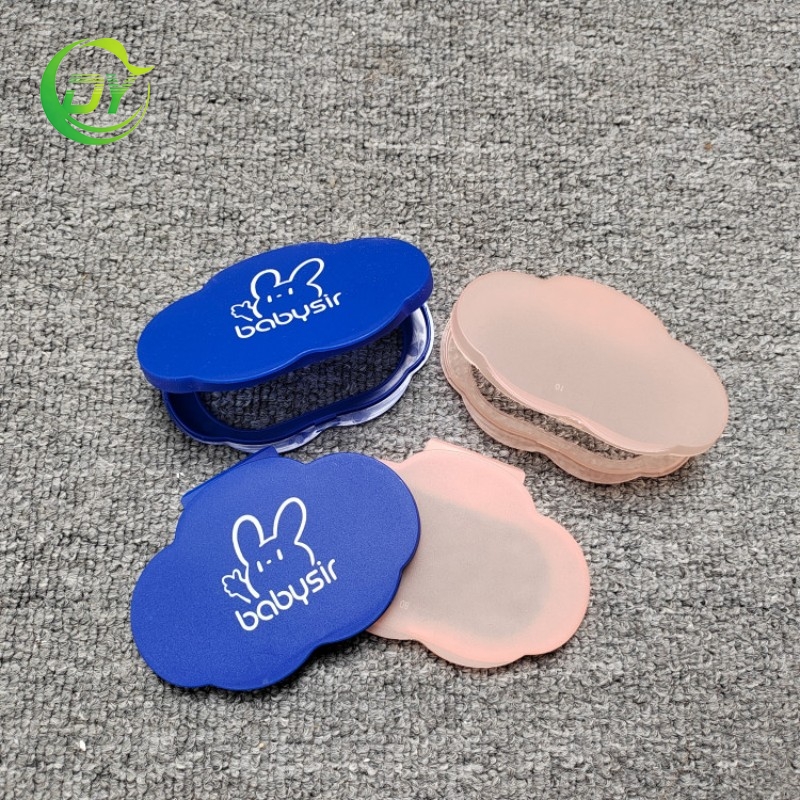
Wet wipes packaging evolved from simple folded film packs into engineered flexible packaging systems with injection-molded polypropylene or other plastic lids. As wipes became more common in baby care, personal hygiene, household cleaning, and medical environments, users began to expect packaging that could be opened repeatedly without drying out.
This change made the lid more than a decorative component. It became a functional closure system. The lid must work with:
Consequently, a tolerance that appears small on a drawing can create a major commercial problem. A variation of only 0.20 mm may affect snap engagement, adhesive contact, or the alignment between the lid opening and the wipe stack.
The outside dimensions determine whether the lid fits the intended pack format and whether it matches the customer’s artwork, die-cutting tool, and packaging machine. For many precision features, a manufacturer may manage critical dimensions to approximately ±0.10 mm or better, while non-critical cosmetic areas may use a wider tolerance.
The correct value depends on the resin, mold design, part size, shrinkage rate, and inspection method. A tolerance should never be selected only because it looks precise on a CAD drawing.
The lid base must provide sufficient stiffness without adding unnecessary material cost. Uneven wall thickness can cause injection-molding defects such as sink marks, warpage, short shots, and residual stress.
The sealing flange is especially important for a wet wipes lid dimensional tolerance program. If the flange is too narrow, adhesive bonding may be weak. If it is too wide or warped, the lid may not sit flat against the laminated film.
The hinge controls how the cover opens, remains attached, and returns to the closed position. Living hinges molded in polypropylene require consistent material flow and controlled thickness. Excessive thickness can make the lid difficult to open, while insufficient thickness can lead to cracking during repeated use.
Important hinge characteristics include:
For a new design, the supplier should define an opening-cycle requirement, such as a specified number of open-close cycles, and verify it through a documented test plan. The exact cycle count should reflect the product’s intended use rather than an arbitrary number.
A snap-fit closure depends on the relationship between the hook, undercut, mating wall, and cover. The dimensional stack-up must provide secure retention while allowing reasonable opening force.
Common failures include:
For this reason, engineers should evaluate tolerance stack-up rather than inspect the latch dimension in isolation. Cover position, hinge location, resin shrinkage, and mold-parting-line flash all influence the final closure force.
The dispensing orifice must allow the wipe to be pulled out smoothly while limiting excessive exposure to air. Its diameter, edge radius, and position affect wipe retention, dispensing force, and moisture preservation.
An orifice that is too small may tear the wipe or cause excessive pulling force. An opening that is too large may allow multiple wipes to dispense at once. Position tolerance also matters because an offset opening can interfere with the pouch’s internal wipe stack.
For a reliable wet wipe packaging closure tolerance specification, the drawing should identify:
Injection-molded plastic naturally shrinks as it cools. Differences in wall thickness, gate location, cooling efficiency, and fiber content can produce warpage. A warped cover may look acceptable visually but fail a functional sealing test.
Manufacturers should measure cover flatness on a defined reference fixture. A practical control plan may specify critical flatness to 0.10–0.20 mm, but the final limit must be confirmed through fit, seal, and consumer-use testing.
Surface finish affects brand appearance, printing, bonding, and perceived quality. Mold texture must be controlled consistently across cavities. Important cosmetic criteria include:
Cosmetic tolerances are not a substitute for functional tolerances. A lid can have an attractive appearance and still leak or fail to close correctly.
| Feature | Why It Matters | Typical Control Approach | Recommended Verification |
|---|---|---|---|
| Overall dimensions | Pack fit and machine compatibility | Critical dimensions controlled to around ±0.10 mm where required | Caliper, CMM, or optical measurement |
| Sealing flange | Adhesive bonding and leak resistance | Control width, flatness, and flash | Flatness fixture and peel or seal testing |
| Hinge | Opening performance and durability | Control web thickness and position | Opening-force and cycle testing |
| Snap-fit latch | Closure retention and user opening force | Analyze tolerance stack-up | Closure-force and retention testing |
| Dispensing orifice | One-wipe dispensing and moisture protection | Control diameter, edge radius, and location | Functional dispensing test |
| Cover flatness | Complete closure and sealing contact | Control warpage after molding and conditioning | Reference fixture or CMM inspection |
A professional Plastic Wet Wipes Lid Wholesale project should begin before mold fabrication. The supplier and buyer need to establish a technical specification that separates critical-to-quality characteristics from general dimensions.
Dongyang should review the pouch material, adhesive system, wipe size, filling quantity, intended shelf life, dispensing behavior, and packaging-line speed. The lid cannot be evaluated independently from the flexible pack.
Engineering drawings should identify datum references, measurement locations, nominal values, upper and lower limits, and inspection equipment. A drawing that says “tight tolerance” without numerical limits is not a complete manufacturing specification.
Mold-flow analysis can help identify weld lines, air traps, filling imbalance, cooling variation, and likely shrinkage. Design-for-manufacturing review should also assess draft angles, ejection, gate location, parting lines, and cavity balance.
During sampling, the supplier should inspect first-off parts and compare them with approved drawings and golden samples. Critical dimensions may be measured to 0.01 mm resolution, but measurement resolution is not the same as actual process capability.
For statistically controlled production, buyers should request capability data such as Cp and Cpk for critical characteristics. A common target is Cpk ≥ 1.33, although the required value should be agreed in the quality agreement and adjusted for product risk.
A robust flip-top lid quality control program can include:
For high-risk applications, a buyer may require 100% automated inspection of presence, orientation, color, or major flash defects. Dimensional inspection of every part is not always practical, so the inspection level should match the failure risk and process capability.
Standards provide a common language, but no single standard covers every feature of a wet wipes lid. The appropriate method depends on the material, pack construction, and customer specification.
These standards should be used with a product-specific protocol. For example, ASTM D4169 may evaluate transport durability, while a separate closure-cycle test evaluates whether the lid remains functional after repeated consumer use.
Not necessarily. An unnecessarily tight tolerance can increase mold cost, inspection time, scrap rate, and unit price without improving performance. The correct approach is to apply tighter limits only to critical-to-function features.
Plastic parts are affected by thermal shrinkage, humidity, resin variation, tool wear, and measurement uncertainty. A 0.01 mm specification may be appropriate for a small precision feature, but it may be impractical for a large thin-wall cover unless the entire process is engineered for it.
Visual inspection detects obvious flash, discoloration, and short shots, but it cannot reliably confirm hinge thickness, orifice diameter, or latch interference. Functional and dimensional inspection must work together.
Leakage can result from the lid, pouch film, adhesive, heat seal, filling process, or storage conditions. A complete root-cause analysis should examine the entire packaging assembly.
A sample confirms initial design and process performance. It does not eliminate the need for ongoing process control, cavity monitoring, incoming resin checks, and batch-level inspection.
A personal-care brand sourced a flip-top lid for a high-volume pouch. Initial samples passed visual inspection, but some covers opened during distribution. The problem was first attributed to weak adhesive.
A tolerance study identified several contributing factors:
The corrective-action plan included mold-gate optimization, tighter control of latch geometry, a cover-flatness fixture, and transport testing based on ASTM D4169. The project team also established a closure-retention test and required a documented response to quality complaints within 24 hours.
This example demonstrates why What Manufacturing Tolerances Matter for Wet Wipes Lid Production? cannot be answered by one dimension alone. Closure reliability depends on a dimensional stack-up and on the interaction between molded parts and flexible packaging.
Before placing a large Plastic Wet Wipes Lid Wholesale order, request clear evidence of process control. Useful questions include:
A trustworthy supplier should be able to explain both the specification and its limitations. Buyers should be cautious of unsupported claims such as “zero defects” or “perfect tolerance” without inspection records, test conditions, and acceptance criteria.
What Manufacturing Tolerances Matter for Wet Wipes Lid Production? The most important tolerances are not always the smallest numbers. They are the dimensions that control closure retention, hinge durability, dispensing performance, sealing contact, flatness, and compatibility with the pouch and production line.
For brands evaluating Dongyang Plastic Wet Wipes Lid Wholesale solutions, the next step is to provide the pouch construction, lid drawing, intended use, and performance requirements. A structured design review and tolerance-control plan can prevent costly leakage, dispensing, and packaging-line problems before they reach the market.