
A wet wipes lid can look simple, but a dimensional deviation of only 0.01–0.20 mm may create serious packaging failures. When the lid does not match the tub, pouch, or adhesive mounting area precisely, the closure may leak, warp, detach, or allow moisture and fragrance to escape. This is why Why Dimensional Consistency Matters in Wet Wipes Lid Manufacturing is not only a technical question—it is a commercial priority for brand owners, converters, and buyers sourcing Plastic Wet Wipes Lid Wholesale products. At {brandname} in Dongyang, we treat dimensional control as a core packaging-performance requirement because one inconsistent lid can lead to product complaints, retailer rejection, rework, and long-term damage to consumer trust.
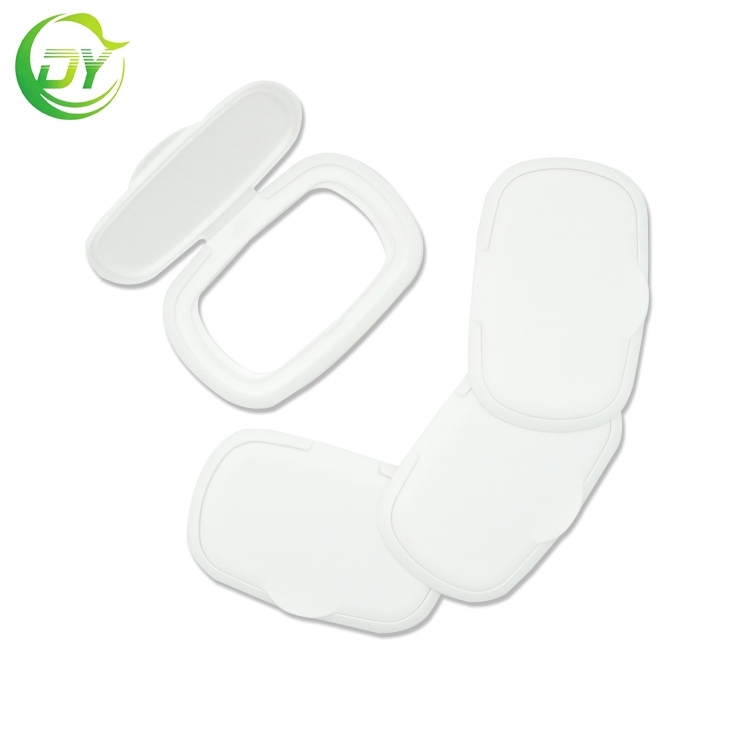
Dimensional consistency means that every lid produced within a production lot remains within the approved engineering tolerance for critical features, including:
In practical manufacturing, dimensional consistency is controlled through injection molding, mold maintenance, process parameters, resin selection, and inspection procedures. It is not sufficient for one sample to fit correctly. A reliable supplier must demonstrate that the entire lot performs consistently.
The following values are examples of commonly controlled parameters. Final tolerances should always be confirmed through the buyer’s approved drawing and functional specifications.
| Feature | Typical control focus | Example inspection target |
|---|---|---|
| Overall lid width | Container compatibility | ±0.10 mm |
| Snap-fit hook position | Closure engagement | ±0.05 mm |
| Dispensing aperture | Wipe withdrawal and drying control | ±0.10 mm |
| Hinge thickness | Opening-cycle performance | ±0.05 mm |
| Lid flatness | Adhesive contact and sealing | ≤0.20 mm deviation |
| Wall thickness | Structural strength and appearance | ±0.05 mm |
For precision Plastic Wet Wipes Lid Wholesale, inspection equipment such as digital calipers, height gauges, optical comparators, and coordinate measuring machines can help verify critical dimensions. Where necessary, {brandname} can use inspection records with precision to 0.01 mm for key features.
The reason is straightforward: a wet wipes lid is part of a complete packaging system. Its performance depends on the interaction between the lid, flexible packaging film, nonwoven wipes, adhesive, moisture formula, and consumer handling.
Wet wipes contain water, preservatives, lotions, and functional ingredients that must remain inside the package. If the lid is warped or the sealing surface is uneven, the closure may not provide uniform contact.
This can cause:
A lid that closes visibly but does not apply consistent pressure across the sealing area may still fail during storage or transportation.
A snap-fit closure depends on precise engagement between the lid hook and the container or adhesive base. If the hook is too large, consumers may struggle to open the package. If it is too small, the lid may open during transportation or fail to remain closed in a handbag, diaper bag, or retail carton.
Dimensional variation also affects:
For this reason, dimensional inspection should be combined with functional testing, including opening-and-closing cycle tests and closure retention tests.
Wet wipes manufacturers often operate automated or semi-automated lines. The lid must be picked, positioned, pressed, and bonded at high speed. Even small dimensional differences can cause:
When a customer purchases Plastic Wet Wipes Lid Wholesale quantities, dimensional stability becomes particularly important because a defect rate that appears small in a sample can become thousands of rejected parts in a full container or production order.
Understanding the causes helps buyers evaluate whether a supplier has genuine process control or is relying only on final sorting.
The injection mold determines the lid’s geometry. Over time, repeated molding cycles can wear:
Poorly maintained tooling may produce flash, undersized hooks, uneven walls, or inconsistent hinge dimensions. A professional manufacturer should maintain mold-service records and verify critical dimensions after maintenance.
Thermoplastics shrink as they cool. The final dimensions depend on:
PP and other commonly used packaging polymers can show different shrinkage behavior according to material formulation and molding direction. Changing resin suppliers without revalidating the process can therefore change the lid’s dimensions and fit.
Uneven cooling creates internal stress and deformation. Thin hinge areas may cool faster than thicker snap-fit sections, producing a lid that twists or develops a non-planar sealing surface.
Warpage is especially problematic for large-format wipes lids because a small change in flatness can reduce adhesive contact over a relatively wide area.
Inconsistent molding parameters can produce part-to-part differences. Important variables include:
Process capability analysis using Cp and Cpk can help determine whether a production process is centered and stable. For critical dimensions, many buyers specify a Cpk target of 1.33 or higher, although the correct requirement should be established through the customer’s quality agreement.
A supplier may inspect only the first piece or a small number of samples. This approach can miss cavity-to-cavity variation and defects that appear later in the production run.
A stronger quality system may include:
Where the customer specifies acceptance sampling, ISO 2859-1 may be used as a framework for lot-by-lot inspection. The sampling level and AQL must be agreed in advance rather than assumed.
For brands importing Plastic Wet Wipes Lid Wholesale products, the cost of inconsistency extends beyond the unit price of the lid.
Dimensional defects may create:
A lid costing only a few cents can generate a much larger total loss when it stops a converting line or causes finished-goods rejection.
Wet wipes are frequently purchased for babies, personal care, healthcare, hospitality, and household cleaning. Consumers expect the package to open easily and close securely. A dried-out wipe pack may be interpreted as a product-quality failure even when the wipes themselves were manufactured correctly.
Retailers and distributors may also evaluate:
In competitive private-label markets, repeated packaging complaints can influence future tender decisions.
A failed lid specification can disrupt the entire supply chain. The buyer may need to:
A supplier offering 24-hour response for urgent quality issues and documented corrective-action support can significantly reduce the commercial impact.
When we discuss Why Dimensional Consistency Matters in Wet Wipes Lid Manufacturing, we focus not only on final inspection but also on preventing variation throughout the process.
Before tooling or mass production, the buyer and supplier should confirm:
A controlled drawing revision prevents production based on outdated dimensions.
Mold validation should include:
For multi-cavity molds, parts from every cavity should be identified and checked during validation.
A stable process normally requires a documented molding window. The production team should monitor:
If part weight gradually changes during a run, it may indicate process drift before a visible dimensional defect appears.
Dimensional inspection should be combined with functional testing. Useful checks include:
For adhesive or seal-related evaluation, relevant methods may include ASTM F88/F88M for seal strength where the construction and test setup are applicable. For packaged-product distribution simulation, ASTM D4169 may be considered. These standards should be selected according to the actual packaging design rather than applied automatically.
A professional release package may include:
This information helps the buyer isolate problems quickly if a concern appears after delivery.
Consider a hypothetical wet wipes converter purchasing 500,000 lids for a promotional production run. The approved snap-fit tolerance is ±0.05 mm, but a molding process drifts beyond the specification.
If only 2% of the lids fail to engage correctly, the affected quantity is:
500,000 × 2% = 10,000 lids
Those 10,000 parts may require sorting, replacement, or manual rework. If the issue is not discovered until the finished wipes reach distribution, the company may also face reverse logistics, retailer deductions, and product replacement.
By contrast, early dimensional inspection that identifies the issue after the first production batch can limit the problem to a controlled quantity. This illustrates why Why Dimensional Consistency Matters in Wet Wipes Lid Manufacturing is directly connected to cost control, production continuity, and customer satisfaction.
Whether sourcing from Dongyang or another manufacturing region, buyers should evaluate the supplier’s quality system before placing a large order.
These questions help distinguish a manufacturer with process capability from a trading source that performs only superficial visual checks.
Ignoring dimensional control may appear to reduce inspection time or purchasing cost, but the risk increases as business conditions change. A company may move from small local orders to large export contracts, introduce automated application equipment, or launch a premium product requiring tighter closure performance.
Without a stable lid specification, the business may face:
The risk is also greater when packaging is used in healthcare, baby care, or sensitive personal-care applications. In these segments, closure integrity is closely associated with hygiene and product protection.
At {brandname}, we understand that buyers need more than an attractive plastic component. They need a wet wipes lid that fits the package, performs consistently on the production line, and remains reliable throughout distribution and consumer use.
Our approach can include:
For customers seeking Plastic Wet Wipes Lid Wholesale solutions, Dongyang manufacturing can provide a practical combination of tooling expertise, production scalability, and export support. However, the most important factor remains measurable consistency—not simply the lowest quoted price.
The answer to Why Dimensional Consistency Matters in Wet Wipes Lid Manufacturing is clear: accurate dimensions protect moisture, improve automated packaging efficiency, reduce waste, support consistent consumer experience, and protect the buyer’s commercial reputation.
Before approving a supplier, request technical drawings, tolerance data, sample measurements, functional test results, and a defined inspection plan. Do not wait until a lid fails on the production line to investigate dimensional control.
When you choose {brandname} for Plastic Wet Wipes Lid Wholesale, work with our Dongyang team to confirm the specification, validate the mold, control the molding process, and verify every critical feature before shipment. Consistent dimensions are not an optional detail—they are the foundation of dependable wet wipes packaging.