
For wet wipes brands selling multiple pack sizes or product formulas, standardizing too few lid SKUs can create packaging compromises, while too many can increase tooling, inventory, color, and purchasing complexity. A practical starting point is to standardize 1 lid SKU when package geometry is highly similar, 3 SKUs when product families have clear dimensional differences, and 5 or more only when different applications genuinely require different closures. The decision should be based on pouch opening, dispensing requirements, packaging equipment, annual volume, and customer positioning rather than simply matching every wipe product with a separate lid. Buyers can review Dongyang's plastic wet wipes lid solutions before building a standardization plan.
A wet wipes manufacturer may sell baby wipes, facial wipes, household cleaning wipes, pet wipes, and industrial wipes at the same time. If every product uses a completely different lid, procurement becomes more complicated and the business may carry multiple molds, colors, packaging cartons, inspection standards, and spare inventories.
However, reducing SKUs simply for purchasing convenience can create another problem.
A lid designed for a small facial-wipe pouch may not provide enough dispensing access for a thick household wipe. A closure designed for a large industrial pack may also be unnecessarily expensive for a small personal-care product.
The goal is therefore not to use one lid for everything. The goal is to identify where one lid platform can serve multiple products without reducing packaging performance.
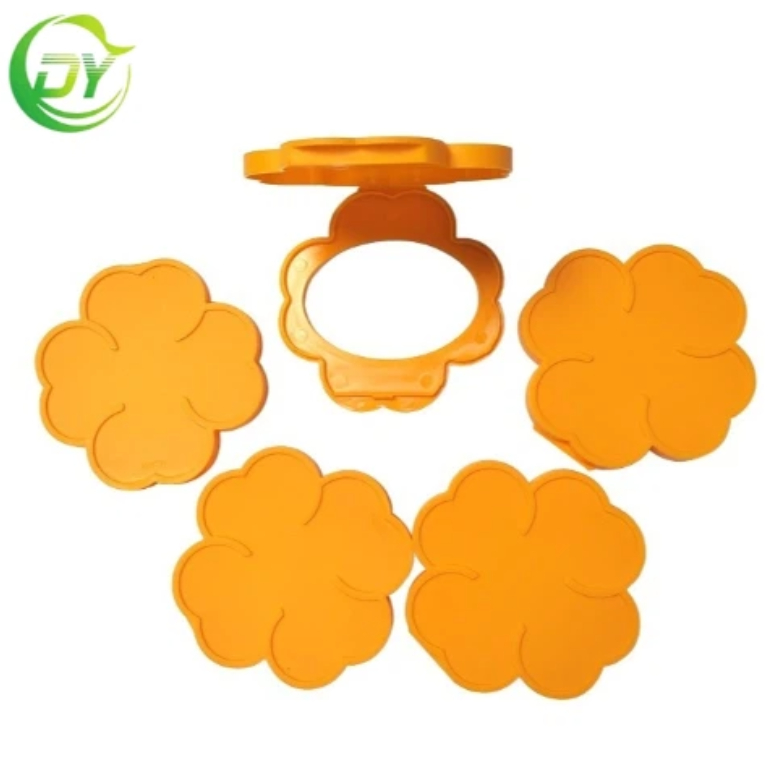
A useful procurement framework is to divide products into three levels:
| Standardization level | Typical situation | Procurement benefit | Main limitation |
|---|---|---|---|
| 1 lid SKU | Similar pouch dimensions and opening | Simplest inventory and purchasing | May restrict package design |
| 3 lid SKUs | Small, medium and large product families | Good balance between flexibility and inventory | Requires clear product grouping |
| 5+ lid SKUs | Different markets, applications or package structures | Maximum design flexibility | Higher tooling and inventory complexity |
These numbers are not universal industry requirements. They are a purchasing framework for evaluating whether additional lid designs are actually justified.
The correct number should be determined after grouping products according to physical packaging requirements.
Yes, if the products share the same critical interface dimensions and dispensing requirements.
For example, several personal-care wipes may use different fragrances or formulas while keeping the same pouch size, dispensing opening, film structure, and filling process. In that situation, changing the lid for every fragrance would add complexity without providing a meaningful packaging benefit.
A standardized lid can then be used across several SKUs while the pouch artwork changes.
The situation is different when the wipe thickness, folded format, pouch width, or dispensing opening changes significantly. In those cases, forcing the same lid onto every product may increase tearing, dispensing problems, or packaging-line rejects.
Before consolidating two lids into one design, procurement teams should compare the complete packaging interface.
The lid must cover the actual dispensing area without interfering with the pouch seal.
Two pouches may have similar external dimensions but different openings. In that situation, a common outer lid size does not necessarily mean the same internal geometry will work.
The wipe itself determines how easily it passes through the opening.
A thin facial wipe and a thicker household cleaning wipe may require different dispensing clearances. If the wipe is folded differently, the same opening can also produce different pull-out behavior.
The same lid base may behave differently on different packaging films.
PET-based laminates, PE-based films and multilayer structures can have different bonding characteristics. Buyers should therefore evaluate the complete lid-and-pouch system rather than approving the lid separately.
Manual application, semi-automatic application and high-speed automatic production can impose different requirements.
If two products run on different packaging equipment, the same lid may not automatically be the most efficient solution.
Volume is important when deciding whether a separate mold is commercially reasonable.
A high-volume product may justify a dedicated lid if it provides measurable production or user-experience improvements. A low-volume product may be better served by a standard platform with customized color or decoration.
Not necessarily.
| Product category | Common procurement priority | Can standardize with another category? |
|---|---|---|
| Baby wipes | Easy operation, smooth edges, reliable closure | Often with similar personal-care packs |
| Facial/personal-care wipes | Appearance, dispensing, resealing | Often with other consumer wipes |
| Household cleaning wipes | Chemical compatibility, larger wipe format | Depends on formula and pouch |
| Pet wipes | Wipe thickness and dispensing | Sometimes |
| Industrial wipes | Chemical exposure, larger format, durability | Less likely |
The important distinction is not the product name. It is the packaging environment.
For example, two different wipe categories may be able to share a lid if they use the same pouch opening and compatible liquid-contact conditions. Conversely, two products within the same category may require different lids because their package structures are different.
A new lid SKU is more defensible when it solves a measurable problem.
Consider creating a separate lid when:
The existing opening causes wipe tearing.
The pouch cannot provide enough bonding area.
The current lid does not fit the packaging machine.
The wipe stack is substantially thicker.
The package requires a different closure geometry.
The product uses a chemically aggressive formulation.
A premium product requires a substantially different appearance.
The existing lid creates excessive material or packaging cost.
Avoid creating a new SKU only because the marketing team wants a slightly different shape or color when the existing platform can already meet the requirement.
SKU reduction has limits.
A standardized opening may be acceptable for one wipe format but too restrictive for another.
A large lid may work technically but add unnecessary plastic and packaging cost to smaller products.
A lid designed for one package shape may look oversized or visually unbalanced on another.
A lid that fits manually may not perform equally well on another packaging line.
If every new product must conform to an existing lid, product developers may lose useful packaging options.
Therefore, SKU reduction should be treated as a cost-versus-performance decision, not an absolute target.
The opposite problem is often underestimated.
Every additional lid design can create:
Additional mold investment
More incoming inspection specifications
More finished-goods inventory
More packaging cartons
More color-management work
More purchase orders
More spare-part requirements
More opportunities for production mix-ups
If ten products could technically share three lid platforms but use ten separate lids, the purchasing team may be carrying unnecessary complexity.
The problem becomes more serious when each lid also has multiple colors.
For example, three lid geometries with four colors each create twelve purchasing combinations. Standardizing geometry while allowing controlled color customization can sometimes reduce this complexity.
Start with the packaging rather than the marketing SKU list.
Create a matrix containing:
| Parameter | Product A | Product B | Product C |
|---|---|---|---|
| Pouch dimensions | Record | Record | Record |
| Opening dimensions | Record | Record | Record |
| Wipe folded size | Record | Record | Record |
| Wipe thickness | Record | Record | Record |
| Film structure | Record | Record | Record |
| Adhesive system | Record | Record | Record |
| Lid application method | Record | Record | Record |
| Monthly volume | Record | Record | Record |
| Formula/contact conditions | Record | Record | Record |
| Target market | Record | Record | Record |
Products with similar values can be placed into the same lid family for engineering review.
The final grouping should then be confirmed through physical samples.
A useful approach is to standardize the functional platform while customizing the appearance.
For example, one lid geometry may support several:
Colors
Logo treatments
Surface finishes
Packaging artworks
Fragrance variants
Retail product names
This allows the buyer to maintain a common functional interface without making every product look identical.
Dongyang states that it supports customized sizes, shapes, colors, logo treatment and OEM/ODM development, which can be useful when a buyer wants to standardize the underlying lid structure while adapting the appearance for different product lines.
Do not evaluate only the unit quotation.
Ask the supplier to explain:
Which existing lid platforms can be shared?
Which dimensions must remain identical?
Which features can be customized without changing the mold?
What happens if the color changes?
What tooling is required for a new size?
Can one lid be tested across multiple pouch structures?
How are different lid SKUs identified during production?
How are molds, resin batches and inspection records controlled?
A supplier that can help consolidate compatible products may create more value than a supplier that simply quotes the lowest price for each individual lid.
A multi-SKU RFQ should include:
Number of existing wet wipes products
Annual or monthly volume by product
Pouch dimensions
Dispensing opening dimensions
Wipe folded dimensions
Film structure
Lid application method
Required colors
Logo requirements
Target market
Expected shelf life
Packaging and shipping requirements
Existing lid samples, if available
Also ask for two quotations when appropriate:
Option A: one standardized lid platform.
Option B: several dedicated lid designs.
This makes the long-term cost difference easier to evaluate.
For a growing wet wipes brand, a three-level architecture can be practical:
Platform A — Small consumer packs:
Used for compact facial, personal-care or travel products.
Platform B — Standard consumer packs:
Used for mainstream baby, personal-care and household wipes.
Platform C — Large-format packs:
Used where the wipe dimensions, pouch opening or application requirements are substantially larger.
This is not a mandatory three-SKU model. It is a starting framework that can be adjusted after testing.
Yes, if the underlying pouch opening, dispensing requirements and application method are compatible. The external appearance can often be changed through color or decoration without redesigning the entire functional structure.
No. Fewer SKUs can reduce inventory and tooling complexity, but an oversized or technically unsuitable standardized lid may increase material or production costs. The correct comparison should include tooling, unit price, inventory, line efficiency and failure costs.
A dedicated mold is more reasonable when an existing standard platform cannot meet the required dimensions, dispensing performance, application process or branding requirements. Confirm the pouch design and production volume before committing to tooling.
Sometimes, but the actual wipe liquid and package structure must be checked. Chemical compatibility, wipe thickness, opening requirements and bonding conditions can differ significantly between the two applications.
The number should be defined by the buyer's quality plan and the number of packaging configurations involved. At minimum, samples should be tested with the actual pouch, wipe material, liquid and intended application process rather than with the lid alone.
Dongyang provides OEM/ODM wet wipes lid development and customized dimensions and shapes. Buyers can provide several existing pouch drawings or samples and ask the supplier to identify which products could potentially share one lid platform.
If your company sells several wet wipes products, do not start by asking a supplier for ten different lids. First group the products according to pouch opening, wipe format, film, application method and volume.
Then compare a standardized one-, three- or multi-SKU strategy using total landed cost and actual packaging performance.
For buyers considering OEM or wholesale supply, Dongyang's custom wet wipes lid service can be used as the starting point for reviewing common platforms, custom dimensions, colors and branding requirements.