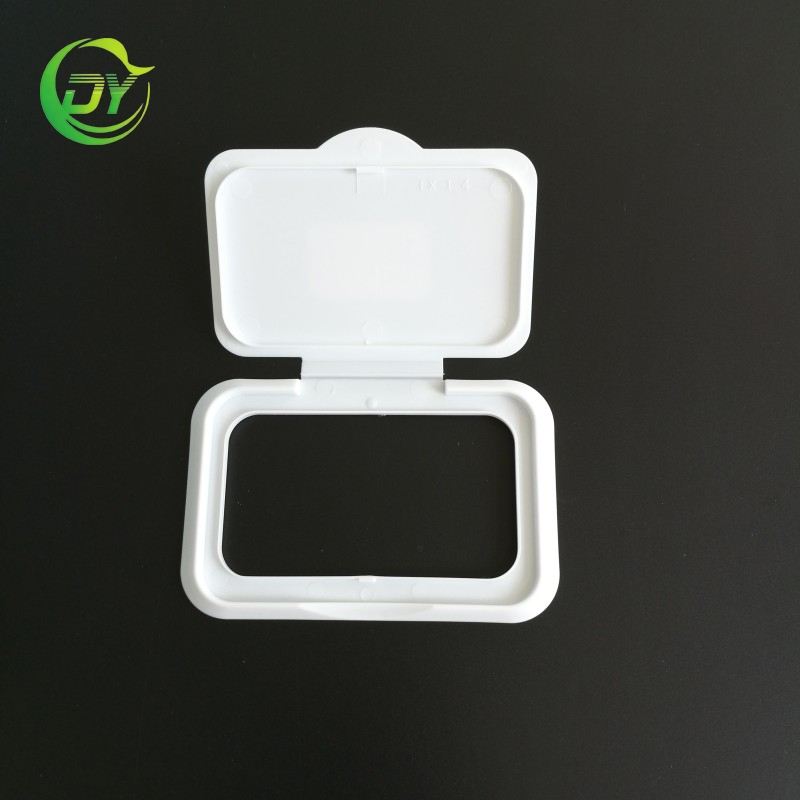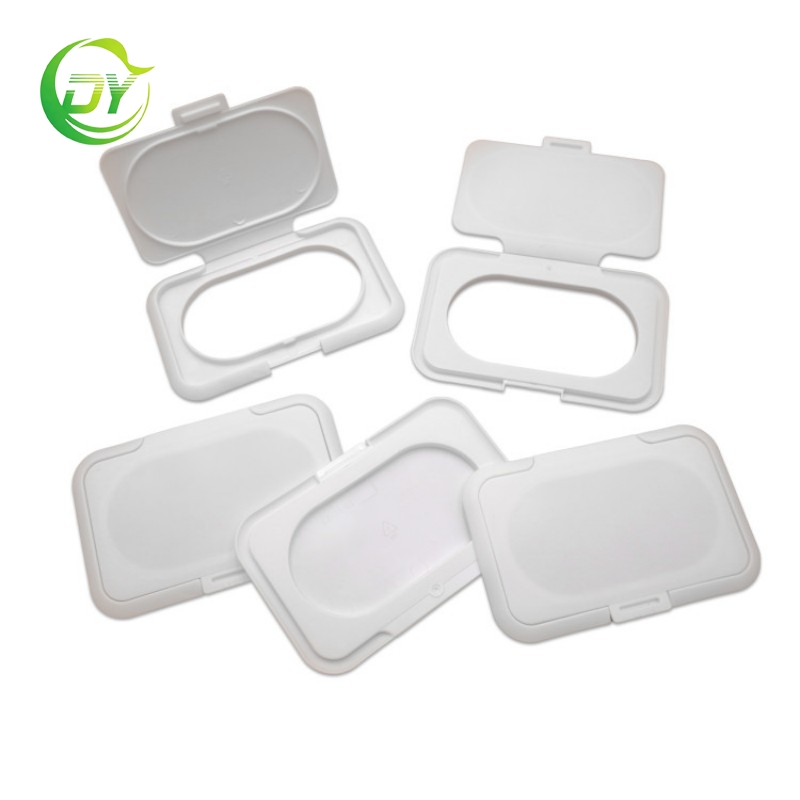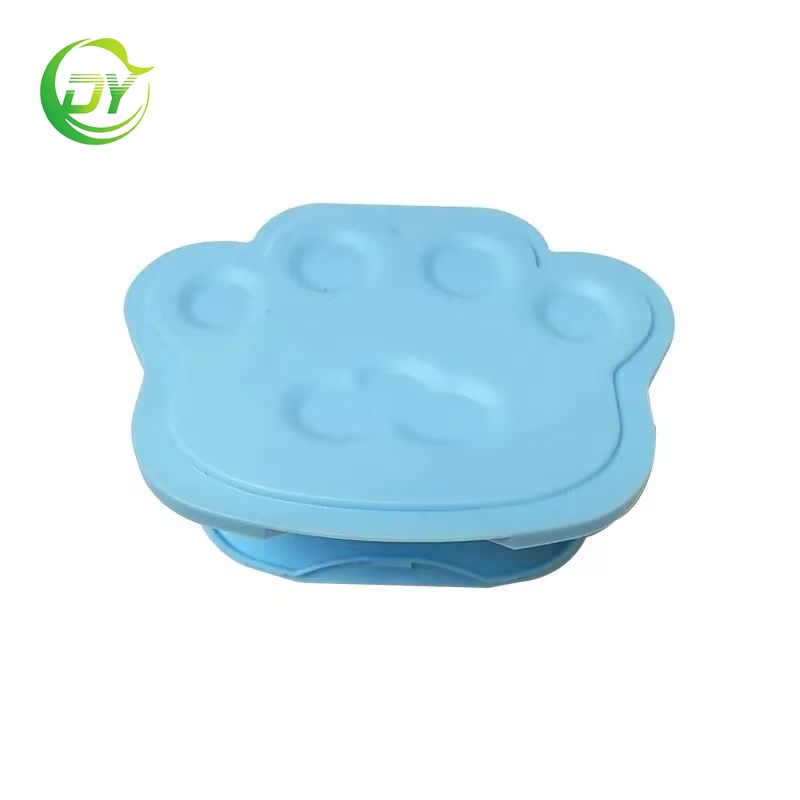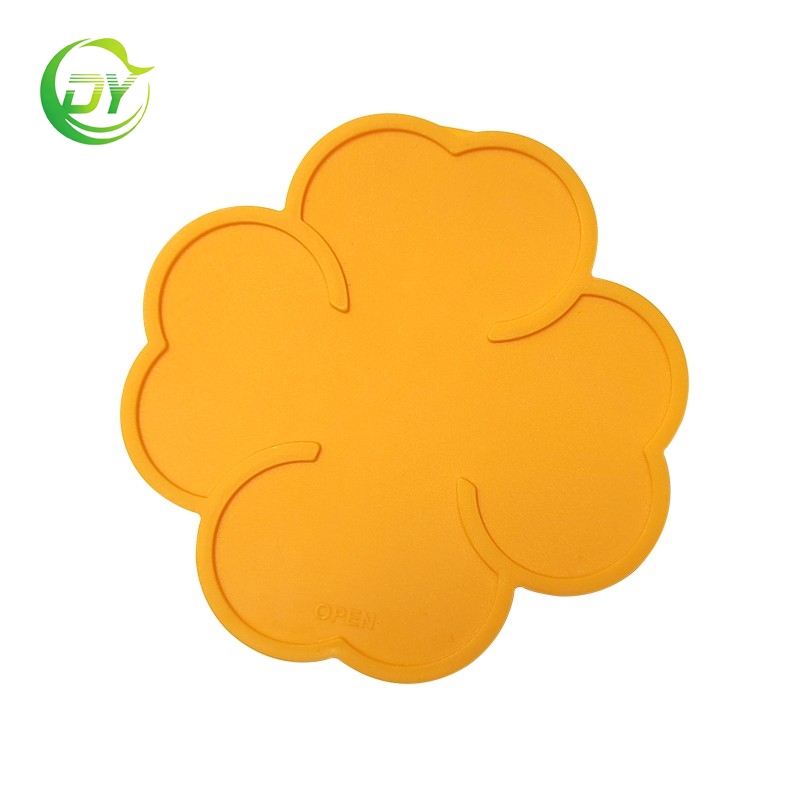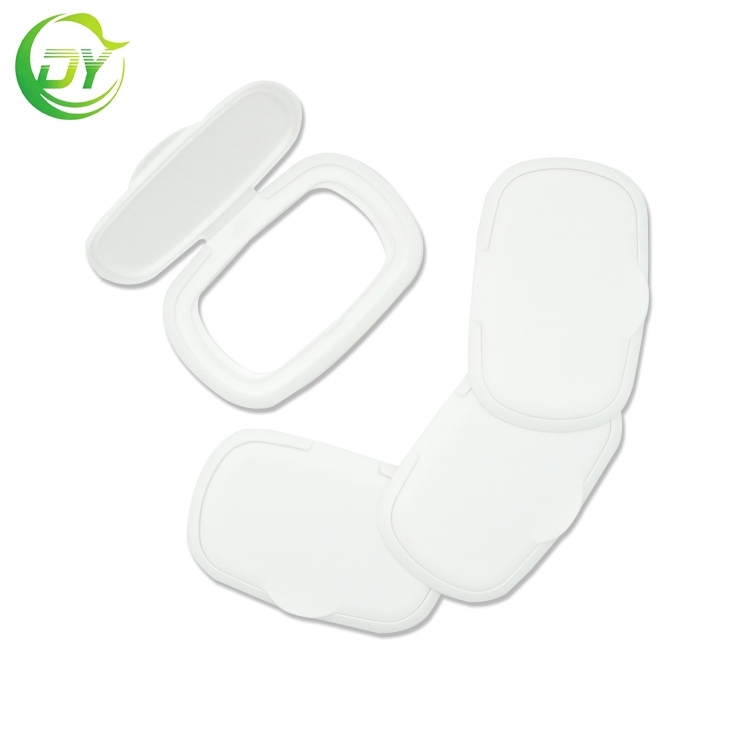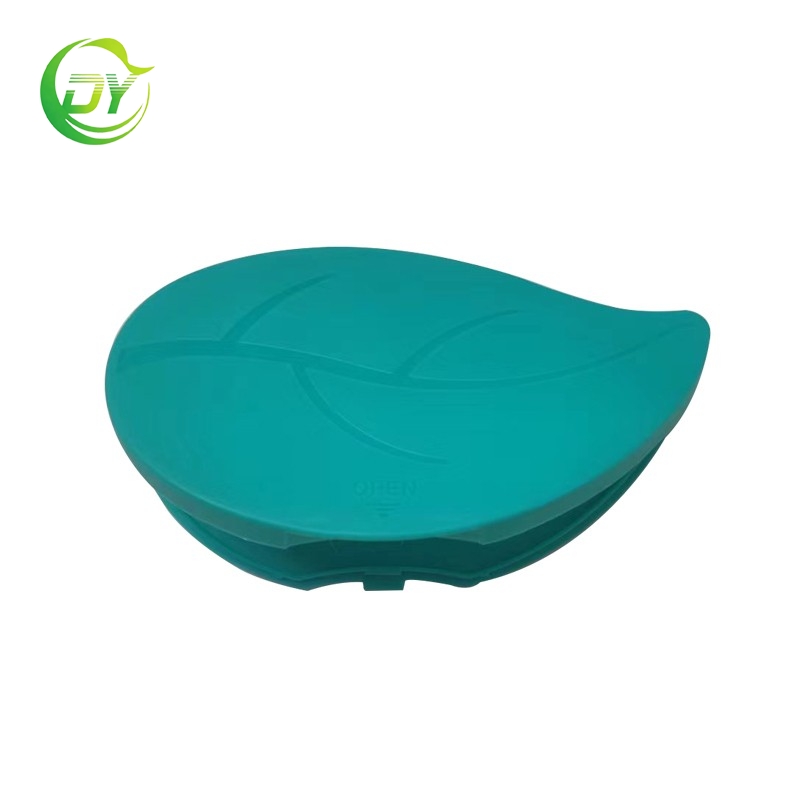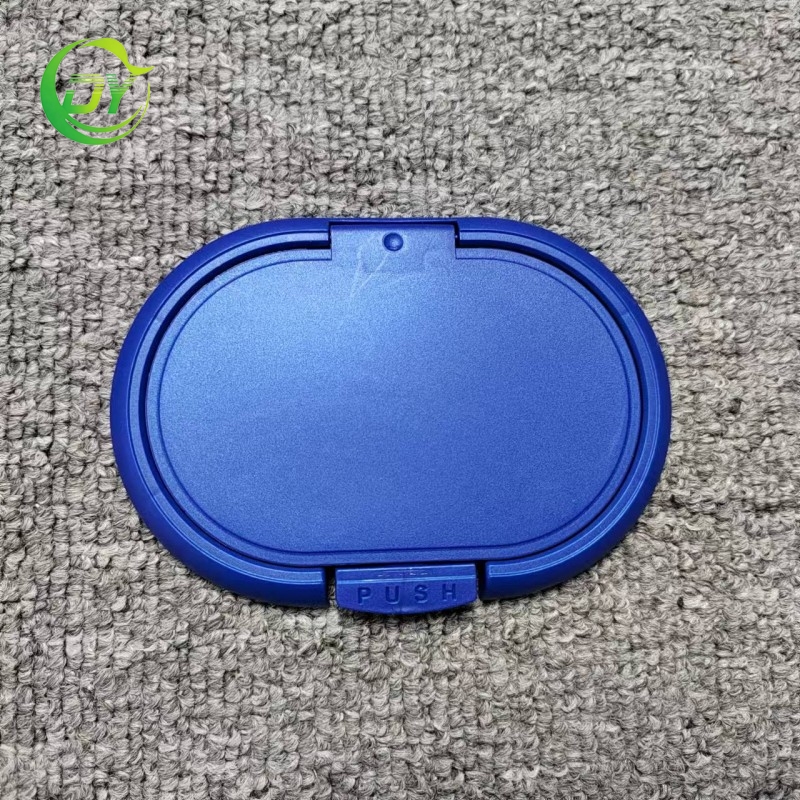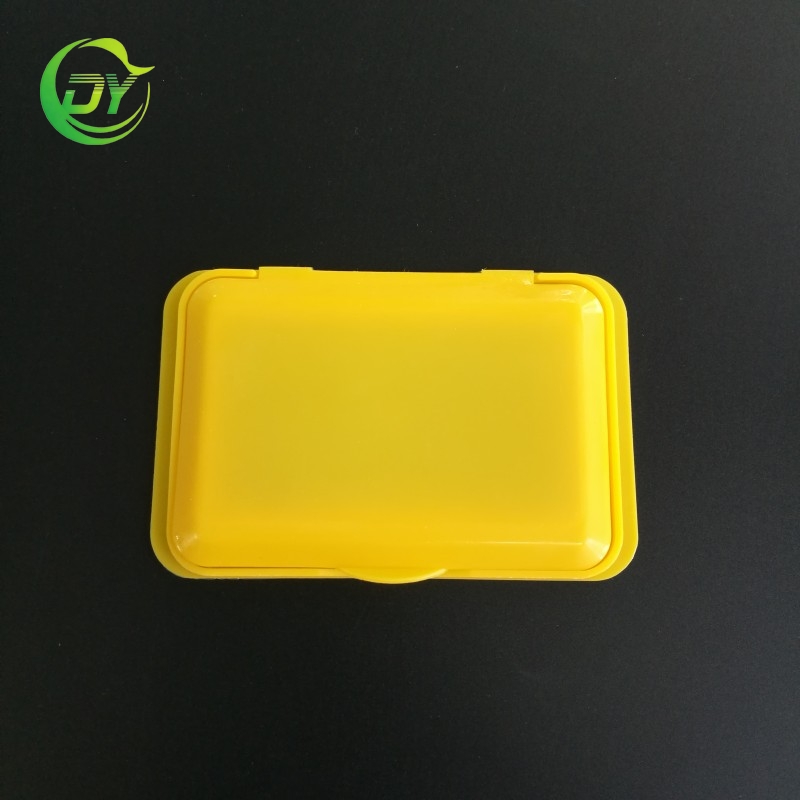
Choosing the right material for a wet wipes lid affects much more than the appearance of the finished package. The plastic material influences lid stiffness, hinge behavior, snap-closure performance, dimensional stability, impact resistance, injection molding and long-term user experience.
Polypropylene (PP) and polyethylene (PE) are both widely used packaging polymers, but they have different mechanical characteristics and should not be treated as interchangeable materials.
For conventional one-piece flip-top wet wipes lids, PP is generally the more practical starting material because it combines useful stiffness with excellent suitability for living-hinge structures. PE materials, particularly HDPE, can also be considered for selected closure designs where toughness, impact resistance or a broader PE-based packaging strategy is important.
| Selection Factor | PP – Polypropylene | PE – Polyethylene |
|---|---|---|
| Rigidity | Provides useful stiffness for rigid flip-top lid bodies and defined closure geometry. | Depends on PE grade. HDPE is considerably more rigid than LDPE or LLDPE. |
| Living Hinge | Widely used for integral living-hinge structures when grade and geometry are properly selected. | Possible in selected designs, but hinge behavior depends strongly on the specific PE grade. |
| Snap Closure | Useful stiffness supports positive snap-fit geometry. | Can be used, but softer grades may require different snap geometry. |
| Impact Resistance | Suitable for many standard consumer wet wipes packages. | HDPE can provide useful impact toughness for selected applications. |
| Dimensional Stability | Suitable for precision-molded closure components when processing is controlled. | Depends on PE grade, wall structure and molding conditions. |
| Typical Packaging Role | Rigid reusable wet wipes lids and hinged closures. | HDPE for selected rigid closures; LDPE/LLDPE more commonly for flexible packaging. |
One of the biggest problems with a simple “PP vs PE” comparison is that polyethylene includes several material families with substantially different properties.
| Material | General Characteristics | Typical Packaging Direction |
|---|---|---|
| PP | Good stiffness, low weight and strong suitability for properly designed living hinges. | Flip-top lids, hinged closures and rigid dispensing components. |
| HDPE | Relatively stiff and tough with useful impact performance. | Caps, overcaps and selected rigid closure applications. |
| LDPE | Softer and more flexible than PP or HDPE. | Films, flexible packaging, liners and softer components. |
| LLDPE | Flexible with useful toughness and film-processing characteristics. | Flexible pouch structures and packaging films. |
Therefore, procurement teams should avoid specifying only “PE wet wipes lid.” If PE is required, the actual polyethylene family and resin grade should be defined before performance comparisons are made.
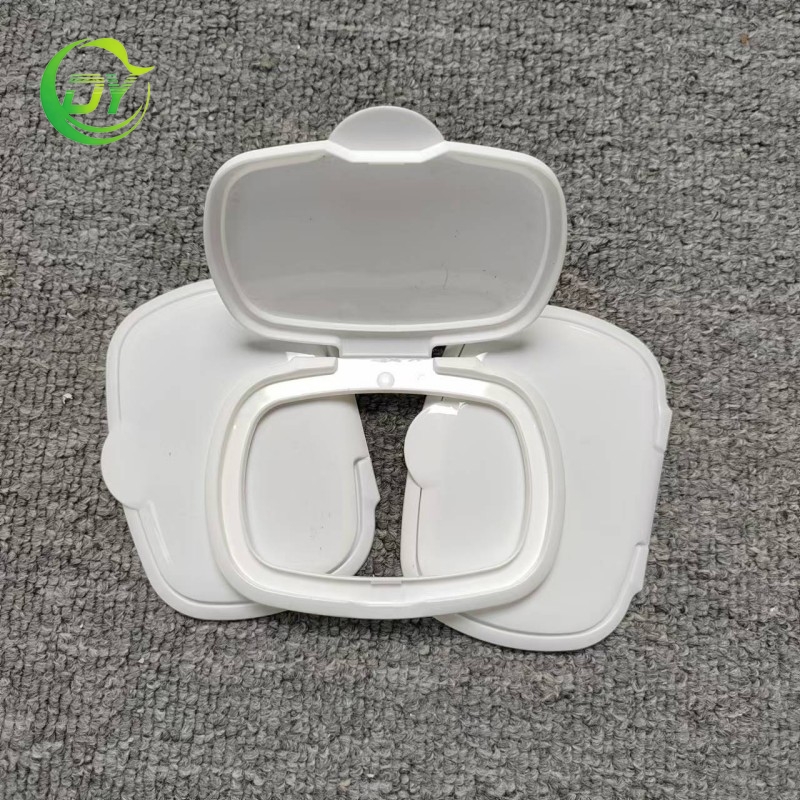
A flip-top wet wipes lid often uses an integral living hinge connecting the cap to the lid base. Unlike a mechanical hinge with separate components, this thin section is molded as part of the same plastic piece.
During normal use, the consumer may open and close the lid repeatedly until all wipes in the pack are consumed.
PP is commonly selected because appropriate PP grades can provide a useful balance between:
Specifying polypropylene alone does not guarantee a durable hinge. Actual cycle life is influenced by:
Production-equivalent samples should therefore be cycle tested before mass production.
For a deeper explanation, see Wet Wipes Lid Cycle Life: What Affects Hinge and Closure Durability?
The base of the wet wipes lid needs sufficient structural stiffness to remain stable during transportation, automatic application and consumer use.
Adequate rigidity helps maintain:
Most reusable flip-top wet wipes lids need a positive closing action so consumers know the package has been properly closed.
| Closure Factor | Why It Matters |
|---|---|
| Opening Force | The lid should be convenient for the intended consumer to open. |
| Closing Force | The cap should engage without excessive pressure. |
| Snap Retention | The lid should remain closed during normal handling. |
| Cycle Stability | Closure geometry should remain functional after repeated use. |
PE should not simply be classified as a lower-quality alternative to PP. Different polyethylene grades are useful for different packaging structures.
HDPE can be used for many rigid caps and closure components. In a wet wipes packaging project, it may be considered when the closure is specifically engineered around HDPE characteristics.
LDPE and LLDPE are substantially softer and more flexible than the materials normally used for a rigid flip-top lid.
Within wet wipes packaging, these materials are more commonly associated with flexible pouch films, sealant layers, liners and other flexible packaging structures.
Dongyang supplies molded wet wipes lids for baby wipes, personal-care wipes, disinfectant wipes and household cleaning wipes. Share your pouch dimensions, dispensing opening, film structure, wipe count, target lid size and closure requirements so an existing lid or customized solution can be evaluated.
No. This is one of the most important points when comparing PP and PE wet wipes lids.
The polymer affects the stiffness and mechanical behavior of the closure, but moisture retention is determined by the complete packaging system.
For this reason, it is inaccurate to conclude that a PP lid automatically provides better airtightness simply because it is made from PP.
| Application | Material Direction | Key Requirements |
|---|---|---|
| Baby Wipes | PP is a common starting point for reusable flip-top lids. | One-hand operation, repeated cycling and reliable closure. |
| Personal-Care Wipes | PP flip-top closure commonly suits consumer-facing packaging. | Appearance, easy opening and brand customization. |
| Household Cleaning Wipes | PP or another validated rigid closure material. | Large-pack durability and repeated use. |
| Disinfectant Wipes | PP or selected HDPE grade after compatibility testing. | Formulation compatibility and storage performance. |
| PE-Oriented Packaging | HDPE or another PE-based closure can be evaluated. | Package-material strategy and production compatibility. |
Disinfectant wipes require additional attention because their formulations may contain ingredients that differ substantially from conventional baby or personal-care wipes.
Material selection should therefore be validated using the actual formulation and storage conditions.
For more detail, see Wet Wipes Lids for Disinfectant Wipes: Material and Sealing Considerations .
A procurement specification that only says “PP wet wipes lid” is often incomplete. Different PP and PE grades can provide different flow, stiffness, impact and molding characteristics.
| Specification | What Buyers Should Confirm |
|---|---|
| Polymer Family | PP, HDPE or another clearly identified material. |
| Specific Resin Grade | Especially important after production samples have been approved. |
| Virgin / Recycled Content | Confirm according to project quality and regulatory requirements. |
| Color Masterbatch | Colorant should be compatible with the selected polymer. |
| Material Change Control | Supplier should control substitutions after sample approval. |
Material datasheets are useful during development, but procurement teams should approve the actual molded lid and assembled wet wipes package.
| Test | What It Checks |
|---|---|
| Opening & Closing Cycle Test | Hinge cracking, stress whitening, deformation and snap retention. |
| Opening Force | Whether the cap remains easy and consistent to open. |
| Closing / Snap Force | Whether the closure engages securely without excessive pressure. |
| Flatness / Warpage | Whether the adhesive base maintains reliable pouch contact. |
| Formulation Compatibility | Changes caused by the actual wet wipes formulation. |
| Moisture-Loss Test | Performance of the complete filled package. |
| Production-Line Trial | Feeding, positioning, adhesive application and placement. |
| If Your Project Requires... | Material Direction |
|---|---|
| One-piece reusable flip-top lid with living hinge | Start with PP |
| Defined snap-fit closure for frequent opening | PP is usually the first option to evaluate |
| Rigid closure requiring specific impact performance | Compare suitable PP and HDPE grades |
| PE-focused packaging structure | Evaluate HDPE or another PE-based closure |
| Flexible film or soft packaging component | LDPE / LLDPE may be more relevant |
| RFQ Information | What to Provide |
|---|---|
| Wet Wipes Type | Baby, personal care, disinfectant, household, healthcare or industrial wipes. |
| Pouch Dimensions | Finished package length and width. |
| Dispensing Opening | Opening length, width and location. |
| Wipe Count | Number of wipes per package. |
| Pouch Film | Flexible packaging material or laminate structure. |
| Preferred Material | PP, HDPE or request supplier recommendation. |
| Wipes Formulation | Relevant formulation information for compatibility evaluation. |
| Customization | Color, logo, shape, finish and mold requirements. |
| Order Quantity | Sample, trial order and estimated mass-production volume. |
Dongyang supplies standard and customized wet wipes lids for baby wipes, personal-care wipes, disinfectant wipes, household cleaning wipes and other applications. Send your pouch drawing, opening dimensions, film structure, wipe formulation, preferred lid size, color and branding requirements to evaluate a suitable existing product or customized lid solution.
PP and PE both have important roles in wet wipes packaging, but they serve different structural requirements.
For conventional one-piece flip-top wet wipes lids, PP is usually the first material to evaluate because it provides a useful combination of stiffness, moldability, snap-fit performance and living-hinge capability.
HDPE can be considered for selected rigid closure applications, while LDPE and LLDPE are generally more relevant to flexible packaging structures than conventional rigid reusable lids.
Most importantly, a successful wet wipes closure cannot be selected from the resin family alone. The material grade must work together with hinge geometry, snap design, wall thickness, adhesive system, pouch structure, wipe formulation and production process.
For procurement teams, the most reliable approach is to define the complete package requirements, test production-equivalent samples and approve the final assembled wet wipes package before mass production.
```